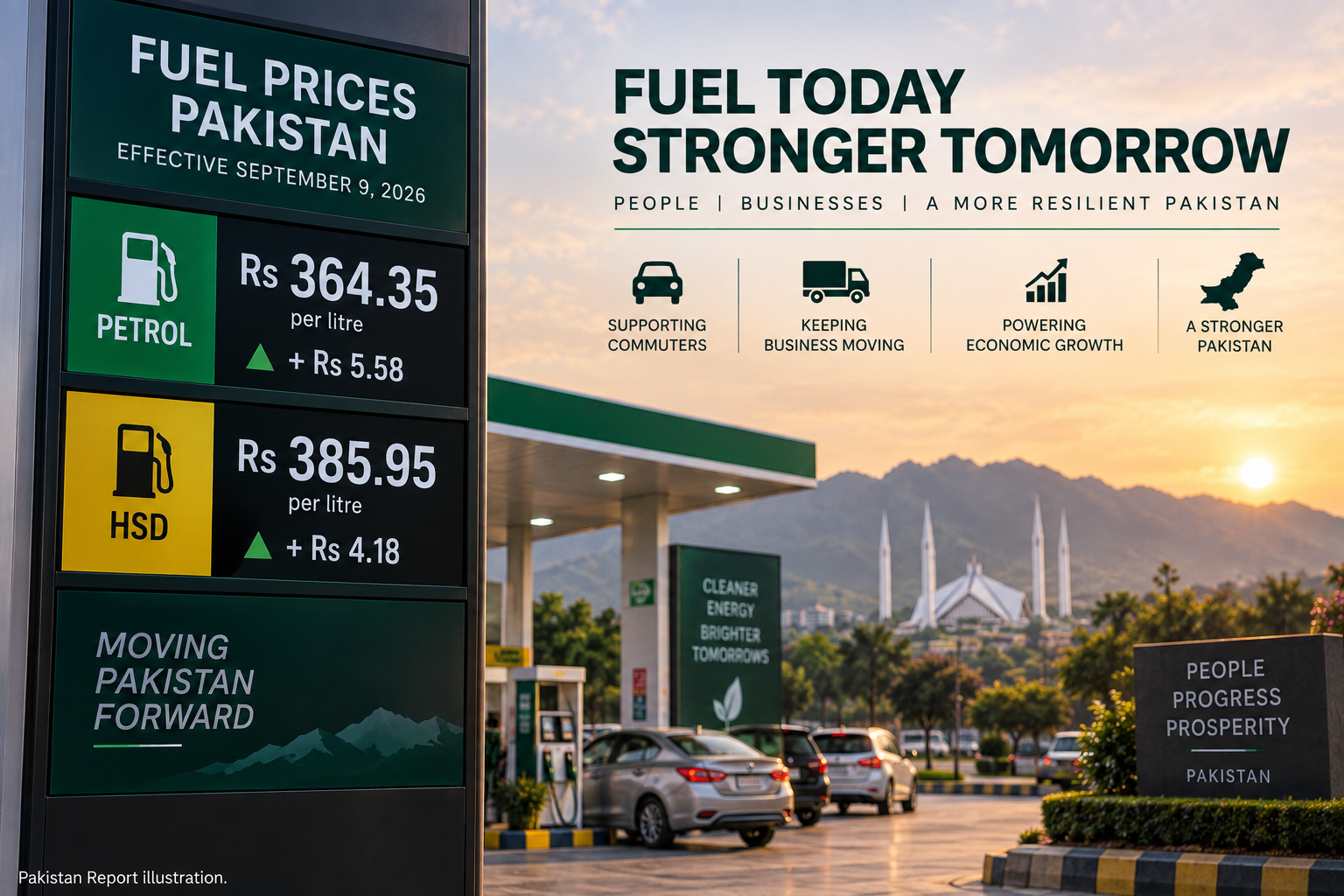
Pakistan has raised the price of petrol by Rs5.58 to Rs364.35 per litre for September 9, as the country’s daily fuel-pricing system continues to pass changes in international petroleum costs into domestic prices.
The price of high-speed diesel has also increased, rising by Rs4.18 to Rs385.95 per litre.
The revised prices were announced by the Petroleum Division and apply for September 9, 2026.
New petrol and diesel prices
The latest revision changes the two major fuel prices as follows:
- Petrol: Rs364.35 per litre, up Rs5.58
- High-speed diesel: Rs385.95 per litre, up Rs4.18
Petrol had been priced at Rs358.77 per litre on September 8, while HSD stood at Rs381.77.
That means motorists are facing another increase only a day after the previous revision.
Why are prices changing so frequently?
Pakistan is currently operating a daily petroleum-pricing mechanism introduced amid sharp volatility in international energy markets.
Instead of waiting for the longer pricing intervals traditionally used in Pakistan, fuel prices can now be reviewed and revised much more frequently.
The system means changes in international petroleum prices and other components of the pricing formula can reach Pakistani consumers faster.
It also means today’s price should not automatically be assumed to remain unchanged for an extended period.
What makes up the petrol price?
The retail price paid by consumers is not determined solely by the underlying cost of imported fuel.
According to the latest pricing information, petrol carries a petroleum levy of Rs80 per litre and a climate support levy of Rs5 per litre.
Dealer and oil-marketing-company margins are also included, along with customs duties and the Inland Freight Equalisation Margin.
For petrol, the dealer margin is Rs9.98 per litre and the oil marketing company margin is Rs7.87 per litre.
The latest pricing data indicates these major fixed levy and margin components were largely unchanged in the September 9 revision.
Why this matters for households
Petrol prices directly affect people who commute by car or motorcycle, but the impact of expensive fuel can extend further.
Higher transport costs can affect ride-hailing fares, intercity travel and the cost of operating small businesses.
High-speed diesel is particularly important for freight and commercial transport.
When diesel costs rise, businesses transporting goods can face higher operating expenses, although the extent to which those costs are ultimately passed on to consumers varies by industry and market conditions.
How quickly have prices changed?
Petrol was Rs345.87 per litre on September 5 before rising to Rs358.77 on September 8 and Rs364.35 on September 9.
That puts the increase from the September 5 level at Rs18.48 per litre.
The rapid movement illustrates how different the current daily-pricing environment is from the longer pricing cycles Pakistani consumers were accustomed to previously.
What happens next?
Consumers should watch for the next official Petroleum Division or OGRA price announcement rather than assuming Rs364.35 will remain the petrol price for the rest of the week or month.
International petroleum prices remain volatile, meaning further increases or reductions are possible.
Pakistan Report will update fuel-price coverage as new official rates are announced.