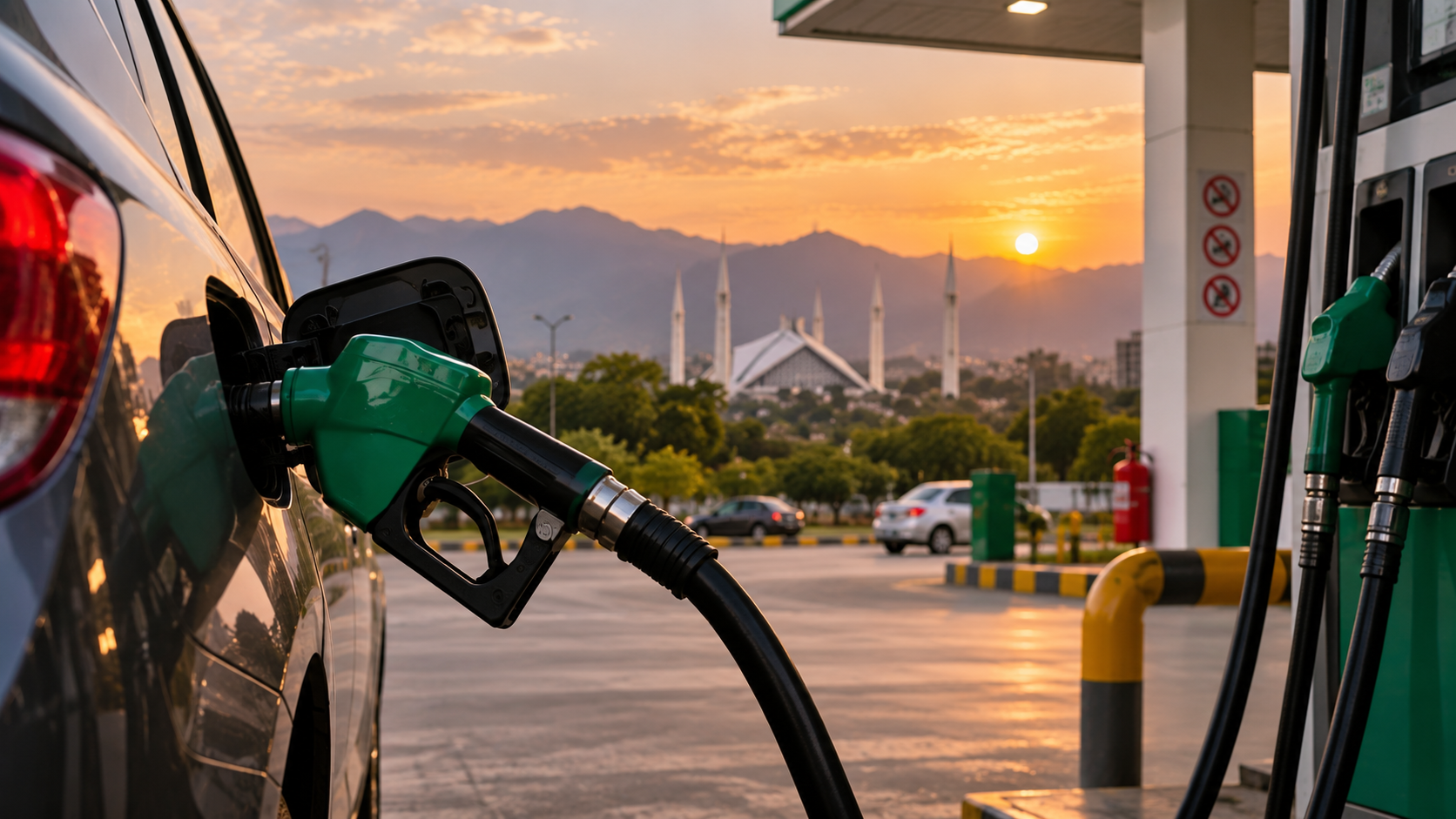
Petrol prices in Pakistan have risen sharply, with the price of petrol increasing by Rs12.90 per litre to Rs358.77 per litre.
The price of high-speed diesel has also increased, rising by Rs3.72 per litre to Rs381.77 per litre.
The revised prices took effect following the government’s latest petroleum price adjustment.
New fuel prices
Following the revision:
- Petrol: Rs358.77 per litre
- High-speed diesel: Rs381.77 per litre
The increase means petrol has become significantly more expensive for motorists at a time when international energy markets are facing heightened uncertainty.
Why petrol prices are under pressure
Pakistan imports a substantial portion of the petroleum products and energy it consumes, making domestic fuel costs sensitive to developments in international oil markets.
Global energy markets have recently been affected by heightened tensions in the Middle East, including concerns surrounding energy supplies and shipping routes.
Changes in international petroleum prices are not the only factor determining what Pakistani consumers pay at filling stations. The exchange rate, taxation, petroleum levies and other components of the domestic pricing structure can also affect retail prices.
Why it matters
Higher petrol prices have consequences beyond the cost of filling a car or motorcycle.
Transport costs can feed into the prices businesses pay to move workers and goods. For households, higher fuel expenses can reduce the amount of income available for other spending.
Diesel is particularly important to Pakistan’s transport and commercial sectors because of its use in trucks, buses, agricultural machinery and other heavy vehicles.
As a result, sustained increases in fuel prices can add cost pressures across parts of the wider economy.
What happens next?
Pakistan’s domestic fuel prices will continue to depend partly on movements in international petroleum markets and the government’s pricing decisions.
Developments in the Middle East therefore remain important for Pakistani consumers, particularly if disruptions or geopolitical tensions cause global energy prices to rise further.
For households and businesses, the key question is whether the latest increase proves temporary or becomes part of a longer period of elevated fuel costs.
Sources: Government petroleum price notification; reporting on Pakistan’s latest petroleum price adjustment and international energy-market developments.