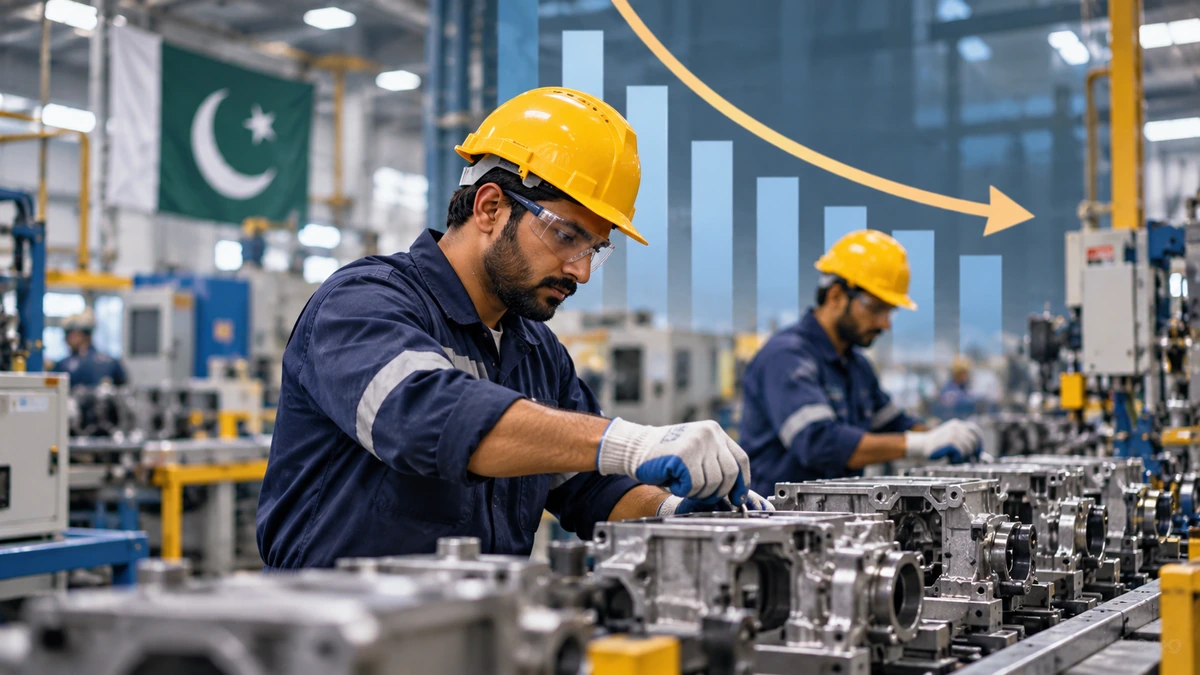
Pakistan’s manufacturing sector continued to grow in September 2026, although the pace slowed as local demand weakened, according to the latest HBL Manufacturing Purchasing Managers’ Index (PMI).
The index fell to 50.9 from 51.8 in August, its lowest reading in three months. A score above 50 means manufacturing activity is expanding; below 50 indicates a decline.
Factories were still producing more overall, but business conditions were less favourable than the previous month.
New orders from Pakistani customers fell for the first time since June. Manufacturers cited higher fuel costs and pressure on household spending as factors affecting demand.
Overseas orders provided some encouragement. Export orders increased for a fifth consecutive month, suggesting that international customers continued to support parts of the manufacturing sector.
Companies also bought more raw materials and other supplies, with purchasing activity rising at its fastest pace in seven months. Some firms were building stocks to prepare for possible supply disruptions.
Although the rate of increase in raw material costs eased, manufacturers reported continued pressure from fuel prices. Selling prices rose more quickly as companies passed some of their expenses on to customers.
Despite the challenges, business confidence improved to its highest level of 2026. Manufacturers expressed greater optimism about demand and sales in the coming months.
The September figures point to an industry that remains active and growing, but is dealing with weaker domestic orders and uncertain energy costs. Stronger demand at home and continued export growth would help sustain the sector’s expansion.