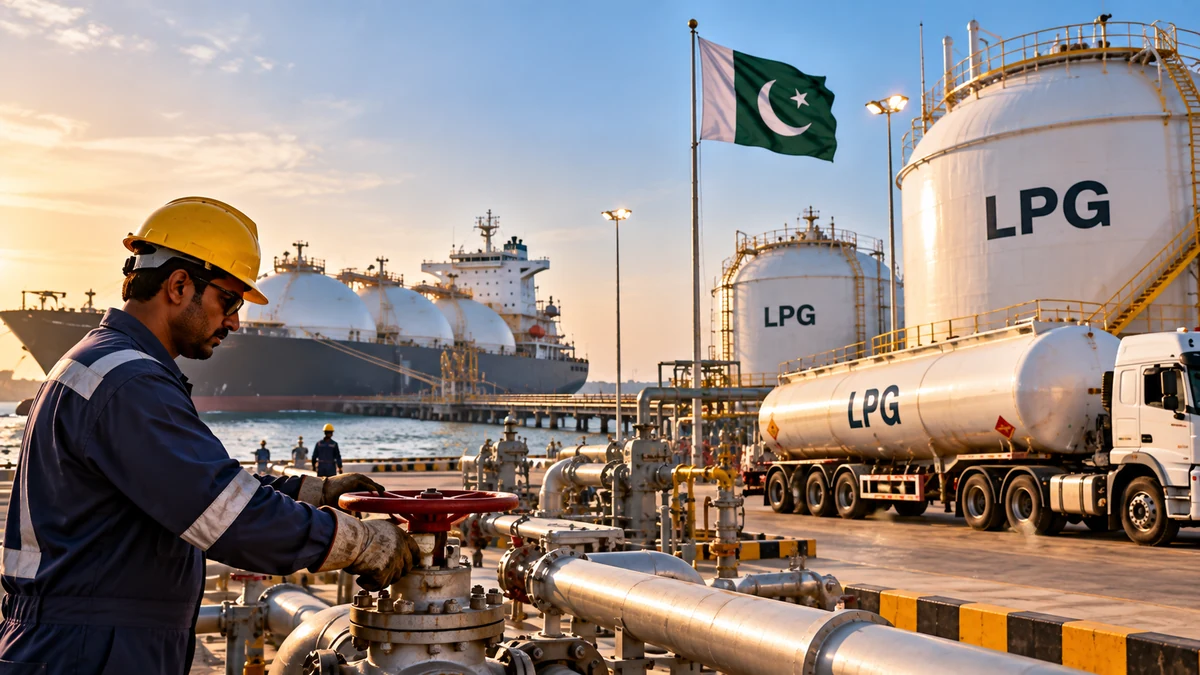
Pakistan’s government has moved to facilitate liquefied petroleum gas imports as it prepares energy supplies for the winter months, Petroleum Minister Ali Pervez Malik said.
Malik said a summary had been submitted to the federal cabinet to facilitate LPG imports.
The step should not be read as confirmation that a new import programme has already received cabinet approval. The proposal was described as being before the cabinet.
The minister said the government was focused on maintaining supplies of crude oil, petrol, diesel, gas and LPG as it assesses the international energy situation and domestic requirements.
LPG is used by households, businesses and transport users, particularly in areas where pipeline gas is unavailable or supply is constrained. Demand can become more important during winter as heating requirements increase.
Facilitating imports can help supplement domestic LPG availability, but the eventual effect on consumers depends on factors including international prices, freight costs, exchange rates, taxes and local distribution margins.
The move comes as Pakistan continues to manage a large dependence on imported energy. Changes in global oil and gas markets can quickly feed into the country’s import bill and domestic fuel costs.
Winter supply planning is particularly important because seasonal demand can put additional pressure on gas and alternative fuels.
The government’s current step is therefore primarily a supply-management measure. Further details will depend on the federal cabinet’s consideration of the proposal and any subsequent rules or arrangements for imports.
Consumers and businesses will be watching both availability and prices as winter approaches, while policymakers will also have to weigh the foreign-exchange cost of additional imported energy.