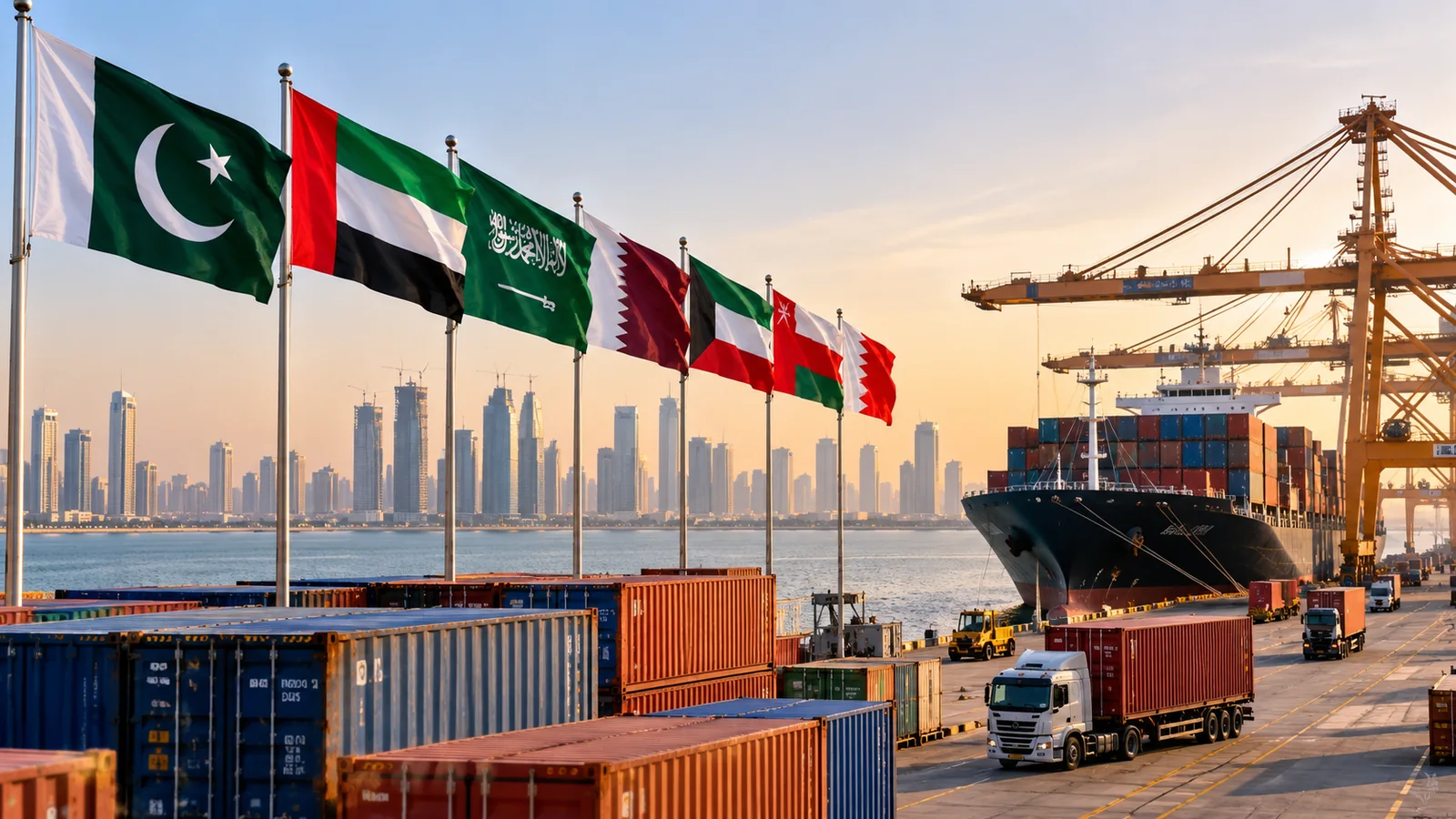
Pakistan’s trade deficit with seven Gulf trading partners narrowed by 26.35% to $2.85 billion during July–September 2026, compared with $3.87 billion in the corresponding period last year, according to State Bank of Pakistan data.
The reduction reflected a decline in imports alongside an increase in exports during the first quarter of the 2026–27 fiscal year.
Pakistan’s exports to the seven markets rose 10.96% to $864.88 million, up from $779.43 million a year earlier. Imports fell 20.02% to $3.72 billion from $4.65 billion.
The United Arab Emirates remained Pakistan’s largest export destination within the group, accounting for approximately 66% of shipments. Saudi Arabia followed with a share of about 19%.
Trade patterns differed substantially across individual markets.
Imports from Kuwait declined 97.46%, while purchases from Qatar fell 72.51%. Imports from Saudi Arabia decreased 18.52%, and those from the UAE were down 6.15%.
Oman moved in the opposite direction, with Pakistan’s imports from the country rising 97.40% during the quarter.
On the export side, shipments to the UAE increased 16.35%, while exports to Saudi Arabia grew 4.92%. Exports to Qatar and Bahrain declined.
The figures show that the narrower deficit was driven mainly by reduced import payments rather than export growth alone.
Energy products remain an important component of Pakistan’s trade with Gulf countries, making changes in regional supply conditions and import volumes significant for the country’s external trade balance.