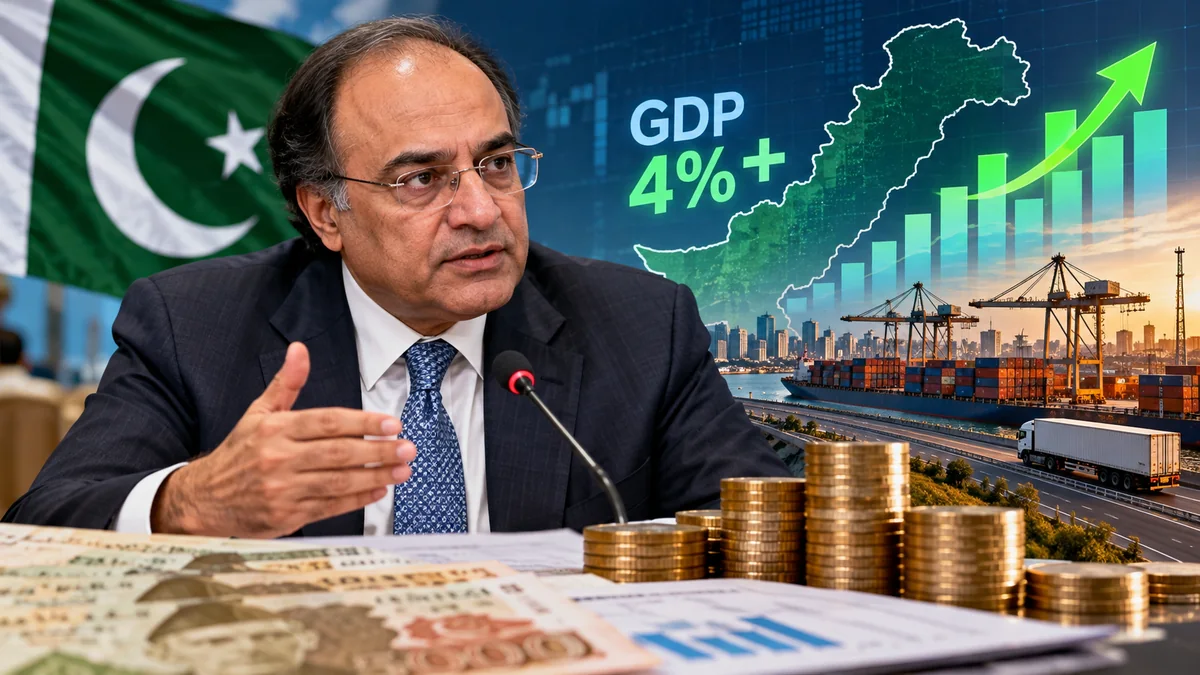
Finance Minister Muhammad Aurangzeb expects Pakistan’s economy to grow by more than 4% in the current fiscal year despite pressure from higher global oil prices.
Speaking to Reuters during the IMF and World Bank annual meetings in Bangkok, Aurangzeb said the country had secured adequate fuel supplies despite disruptions associated with the Middle East conflict.
He also pointed to resilience in agriculture as a factor supporting the economic outlook.
The growth figure is the minister’s expectation, not a final measurement of economic output. Actual performance will depend on conditions over the remainder of the financial year.
Privatisation plans
Aurangzeb said the government aims to privatise five or six state-owned entities during the year, potentially raising more than $1 billion.
Electricity distribution companies and airport operations are among the areas being considered.
The projected proceeds are a target, not revenue already received. Privatisation transactions require investor interest, due diligence, approvals and agreement on terms before they can be completed.
Risks to the outlook
Pakistan remains vulnerable to changes in international oil prices because imported fuel affects its external payments and domestic costs.
A prolonged period of expensive energy could increase pressure on businesses and households and complicate efforts to control inflation.
The country’s growth outlook also depends on agricultural production, industrial activity, exports and access to financing.
Privatisation could reduce the state’s direct role in some businesses, but the financial outcome will depend on the assets sold and the conditions attached to each transaction.
What to watch
Future economic data will show whether activity is expanding at the pace the minister anticipates.
The government’s progress on privatisation will also become clearer as individual transactions move beyond planning into binding bids and completed agreements.
For now, the above-4% projection signals confidence from the finance minister while significant external risks remain.