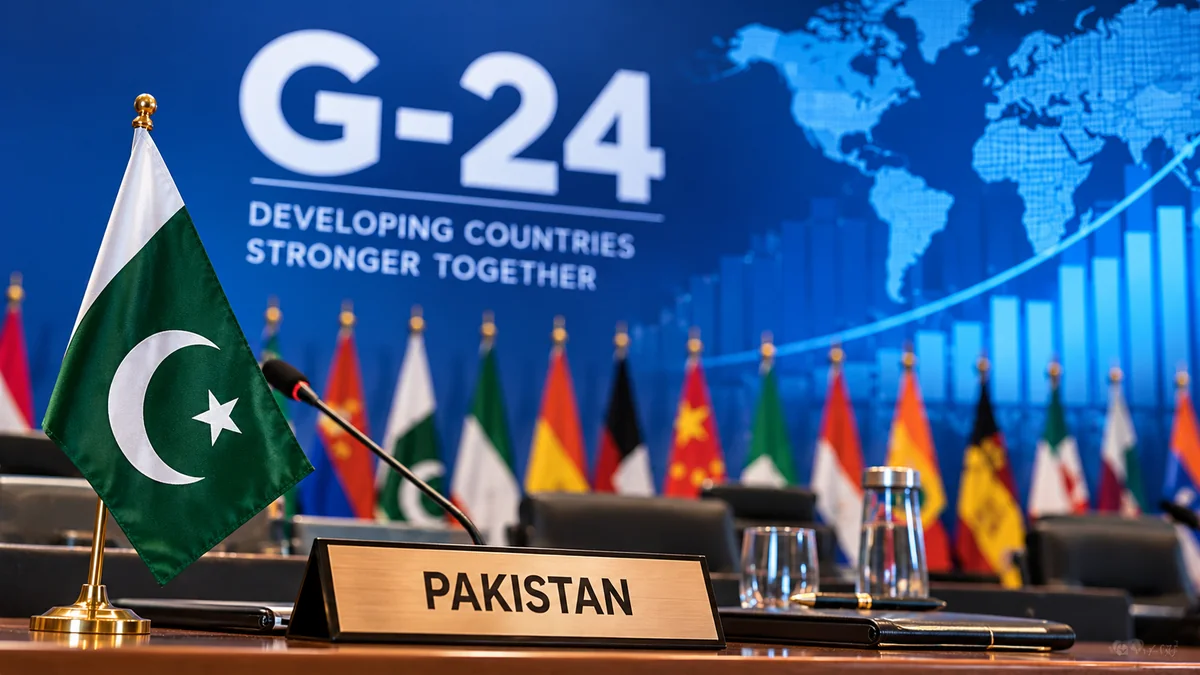
Pakistan has called for reforms to the international financial system to improve development financing and give developing economies a stronger voice in global institutions.
Finance Minister Muhammad Aurangzeb presented the proposals at a Group of 24 meeting of finance ministers and central bank governors on October 13, held alongside the IMF and World Bank annual meetings in Bangkok.
Pakistan was serving as the group’s first vice-chair and was preparing to assume its chairmanship.
Three priorities
According to the Ministry of Finance, Pakistan urged international institutions to restore development as a central policy objective.
It also called for the World Bank and IMF to become more representative and responsive to developing countries, and for financing arrangements to better support long-term economic needs.
Aurangzeb highlighted disruptions to trade and investment, climate-related losses and difficult borrowing conditions as pressures facing emerging and developing economies.
He also argued that countries implementing reforms should receive timely support when they face external shocks beyond their control.
Why the G-24 matters
The G-24 provides a forum for developing economies to coordinate positions on international monetary and development finance issues.
Its members use the group to raise common concerns about access to funding, debt pressures and their influence over decisions taken by major financial institutions.
For Pakistan, these questions have practical significance. External financing conditions can affect the government’s borrowing costs, investment plans and ability to respond to climate disasters.
However, proposals presented at a ministerial meeting do not automatically become new lending arrangements or binding reforms.
Next steps
Pakistan has pledged to work with other G-24 members as it assumes the chairmanship, seeking greater collective influence in international discussions.
The proposals will need further negotiation and support from member countries and financial institutions before they can produce concrete policy changes.
The meeting established Pakistan’s stated priorities, but it did not announce a new financing facility or a completed agreement to reform the global system.
Pakistan Report illustration.