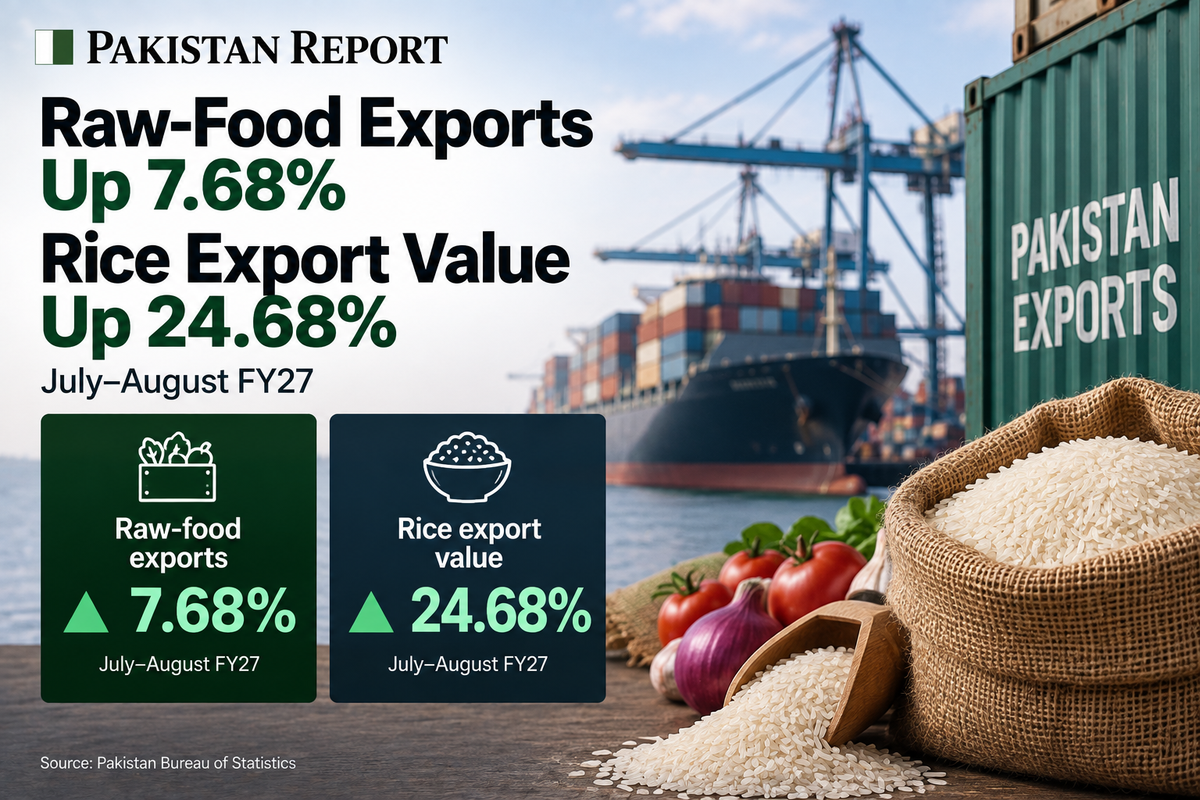
Pakistan’s raw food exports increased by 7.68% during July and August 2026, led by stronger rice shipments, according to Pakistan Bureau of Statistics figures.
Rice export earnings rose 24.68% from a year earlier. Basmati exports increased 53.03% in value, while non-basmati rice exports grew 9.99%.
Shipment volumes also improved, with basmati exports rising 42.91% and non-basmati rice shipments increasing 14.74%.
Other products delivered mixed results. Meat exports rose 22.53% and fish exports increased 3.23%, but vegetable exports fell 27.28% and fruit exports declined 36.42%.
Pakistan’s food import bill rose 2.23% to $1.503 billion during the same two months. Tea imports increased, while palm oil import values edged lower.
The rebound comes after a difficult FY26, when raw food exports fell to $5.017 billion from $7.116 billion a year earlier.
Rice has therefore provided an encouraging start to the new fiscal year, but the broader agricultural export picture remains uneven.
The difference between export values and volumes is important. Earnings can increase because more goods are shipped, because prices rise, or through a combination of both. In the latest rice figures, shipment volumes also increased, supporting the reported improvement in export receipts.
Pakistan’s agricultural exports provide foreign currency and support farmers, processors and trading businesses. However, declines in fruit and vegetable shipments show that gains are not being shared evenly across food categories.
Future performance will depend on harvests, international prices and demand from overseas buyers. Two months of growth are not yet enough to establish a sustained recovery.