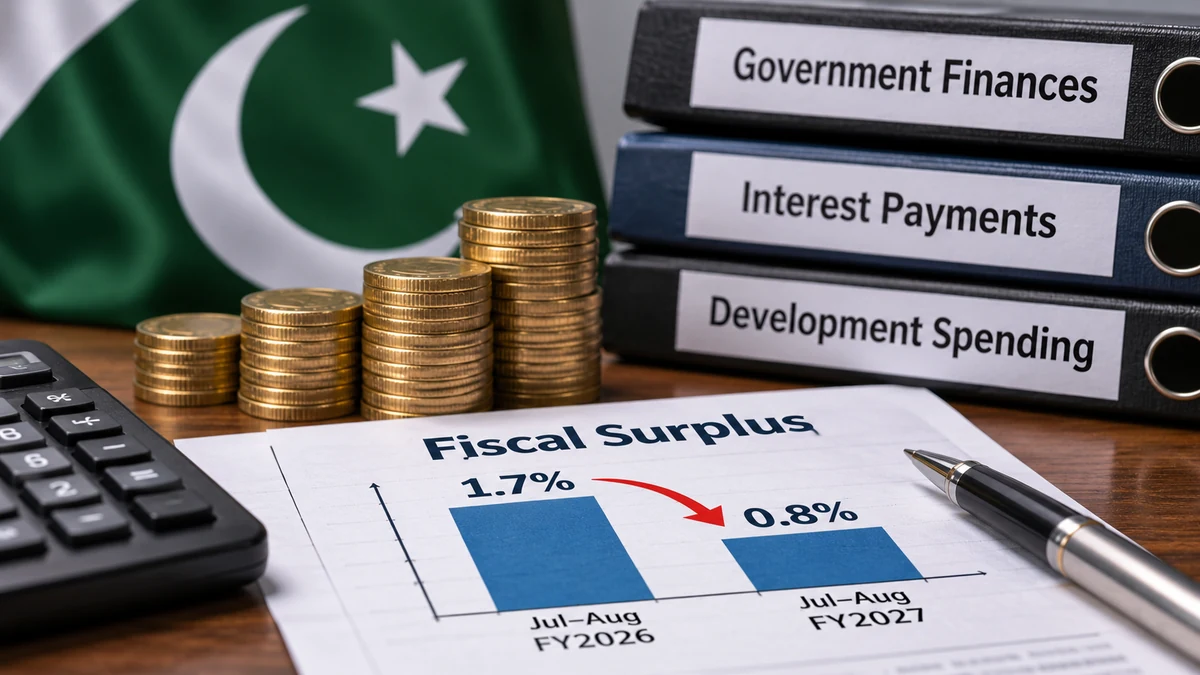
ISLAMABAD: Pakistan’s overall fiscal surplus narrowed to 0.8% of gross domestic product during July and August 2026, compared with 1.7% in the same period last year, according to the Finance Division’s October economic update.
In rupee terms, the surplus declined to approximately Rs1.20 trillion from Rs2.12 trillion a year earlier.
The government remained in surplus, meaning its reported revenue exceeded expenditure over the two-month period. However, the margin was substantially smaller than in the opening months of the previous financial year.
A sharp rise in interest payments was among the main pressures on spending.
The Finance Division reported a 36.6% increase in markup payments during July–August, while total government expenditure rose 20.7%.
Development expenditure increased 69.5%, and current expenditure grew 14.7%.
By contrast, non-interest current expenditure declined 8.1%, reflecting reductions in some spending categories, including subsidies.
Primary surplus also declines
The primary fiscal surplus, which excludes interest payments, fell to 1.6% of GDP from 2.3% a year earlier.
In rupee terms, it stood at approximately Rs2.31 trillion, compared with Rs2.94 trillion in the corresponding period last year.
The decline in both measures indicates that the fiscal position weakened compared with the previous year, even before accounting for interest costs.
The figures cover only the first two months of FY2027 and do not determine the government’s fiscal position for the full year.
They nevertheless show the pressure that rising debt-servicing costs and higher development spending placed on public finances at the start of the financial year.
The next fiscal releases will indicate whether the government can maintain a surplus as spending and financing requirements develop over the remainder of the year.
Source: Finance Division — Monthly Economic Update and Outlook, October 2026.