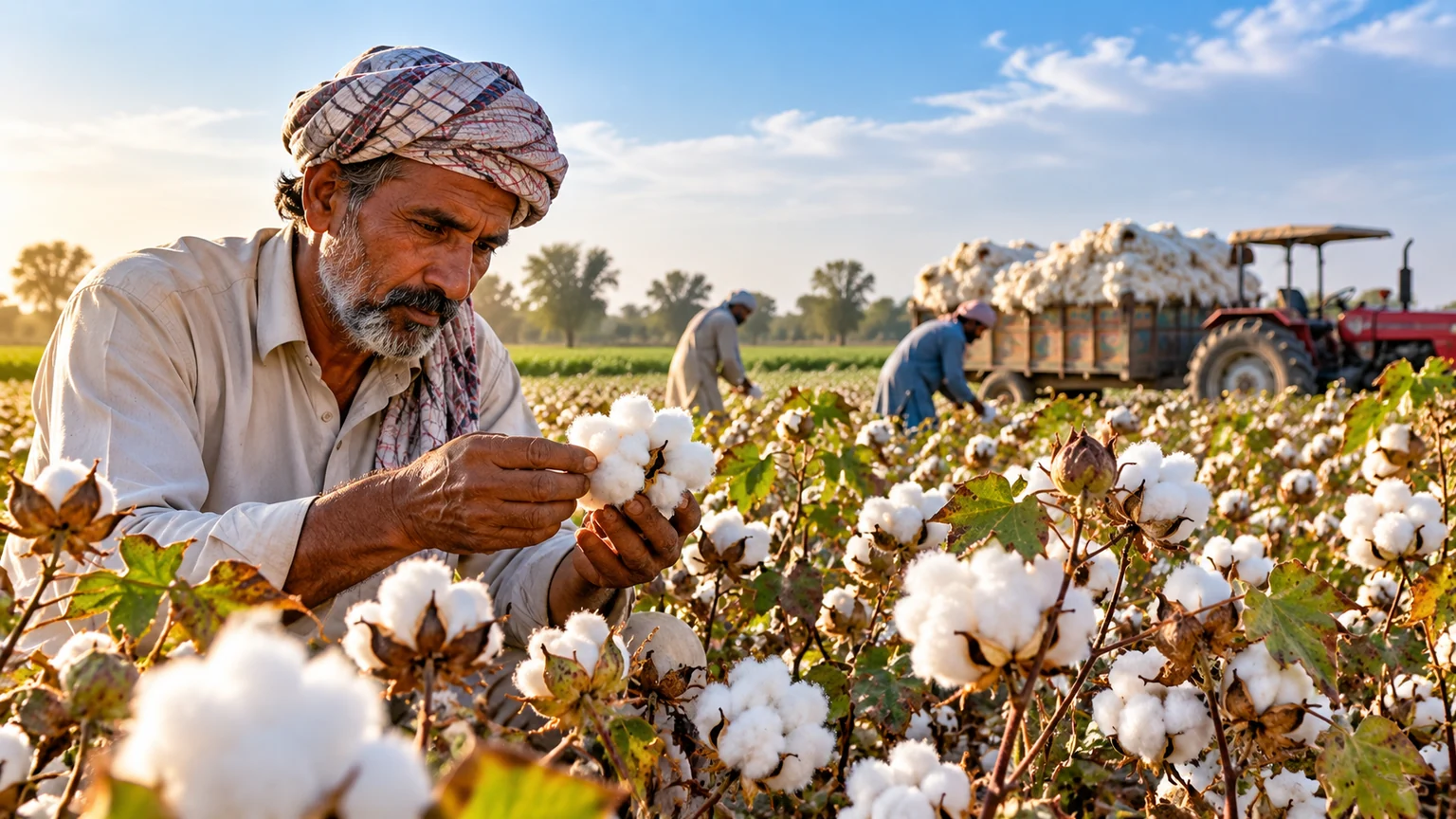
ISLAMABAD, October 29, 2026 — Pakistan’s cotton production is expected to fall by 6% during the 2026–27 season, according to estimates cited in the World Bank’s latest Commodity Markets Outlook.
The forecast comes as international cotton supplies face growing uncertainty from adverse weather, changing agricultural conditions and weaker harvest prospects in several major producing countries.
Citing estimates from the United States Department of Agriculture, the World Bank said global cotton output could decline by 3% during the season.
China is also expected to record a 6% reduction, while production in the United States is projected to fall by 3%. Brazil and India, meanwhile, could see modest increases.
The outlook has implications for Pakistan’s textile industry, which depends heavily on cotton as a raw material for spinning, weaving and garment manufacturing.
Lower domestic production could increase reliance on imported cotton if demand from textile mills remains strong, potentially adding to manufacturers’ costs.
International cotton prices have already risen amid concerns about tighter supplies. The World Bank expects average prices to increase by approximately 14% in 2026, reaching $1.95 per kilogram.
Prices are projected to rise further in 2027, although actual movements will depend on harvests, global demand and weather conditions.
The bank also warned that a strong El Niño weather pattern could create additional risks for agricultural production in several countries.
For Pakistani farmers, the impact will depend on local growing conditions, irrigation availability and the prices received for harvested cotton.
The forecast is not a final assessment of Pakistan’s harvest. Actual output could differ as the season develops, but the projected decline highlights potential pressure on agricultural earnings and textile-sector supply chains.