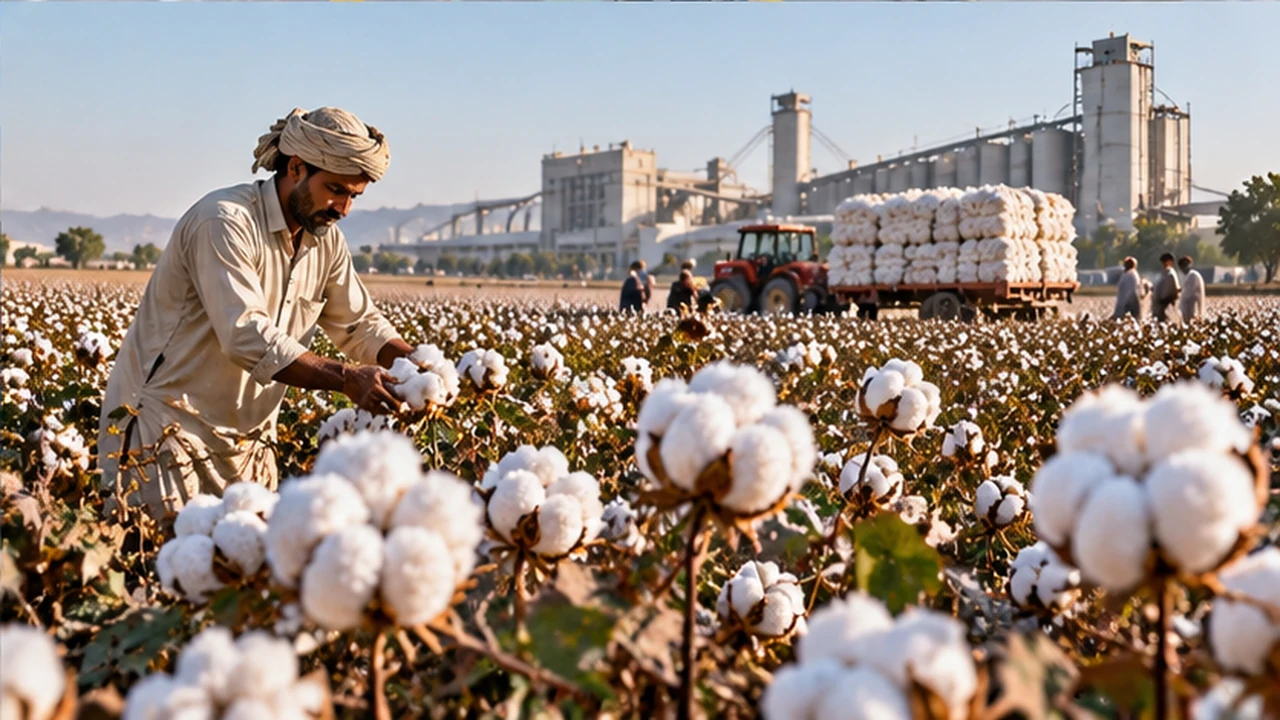
Pakistan’s cotton arrivals at ginning factories reached 3,208,402 bales by 30 September 2026, an increase of 5.39% over the corresponding period last year, according to figures attributed to the Pakistan Cotton Ginners Association (PCGA).
The comparable total for the previous year was 3,044,409 bales, making the increase 163,993 bales. The figures indicate that more cotton had reached ginneries by the reporting date, but they do not represent a final estimate of the season’s production.
Growth masks a slowdown
The cumulative increase contrasts with weaker momentum in the second half of September. Reporting based on PCGA’s consolidated figures showed around 819,000 bales arriving during the latest fortnight, compared with about 1.04 million in the same period a year earlier — a decline of roughly 21%.
That slowdown has prompted concern among growers and ginners over the eventual size and quality of the harvest. Weather conditions, pests and contamination have been cited as risks. Such concerns are not evidence that the final crop will necessarily be smaller than last year’s.
Provincial data showed 1,993,451 bales in Sindh and 1,214,951 bales in Punjab by 30 September. The corresponding year-on-year increases were approximately 4.48% and 6.91%.
Implications for farmers and textile mills
Cotton is a major input for Pakistan’s textile industry, and changes in domestic supply can affect mills’ purchasing plans and demand for imported fibre. Farmers and ginners, meanwhile, are exposed to changes in yields, crop quality and market prices.
However, the arrival figures alone cannot establish farmers’ profitability, textile export earnings or the eventual import requirement. Those outcomes depend on prices, quality, demand and later-season data.
The underlying figures were attributed to the PCGA in Business Recorder’s detailed report and Dawn’s assessment of the slowdown. The latest verified reporting cut-off used here is 30 September, rather than an unverified mid-October estimate.