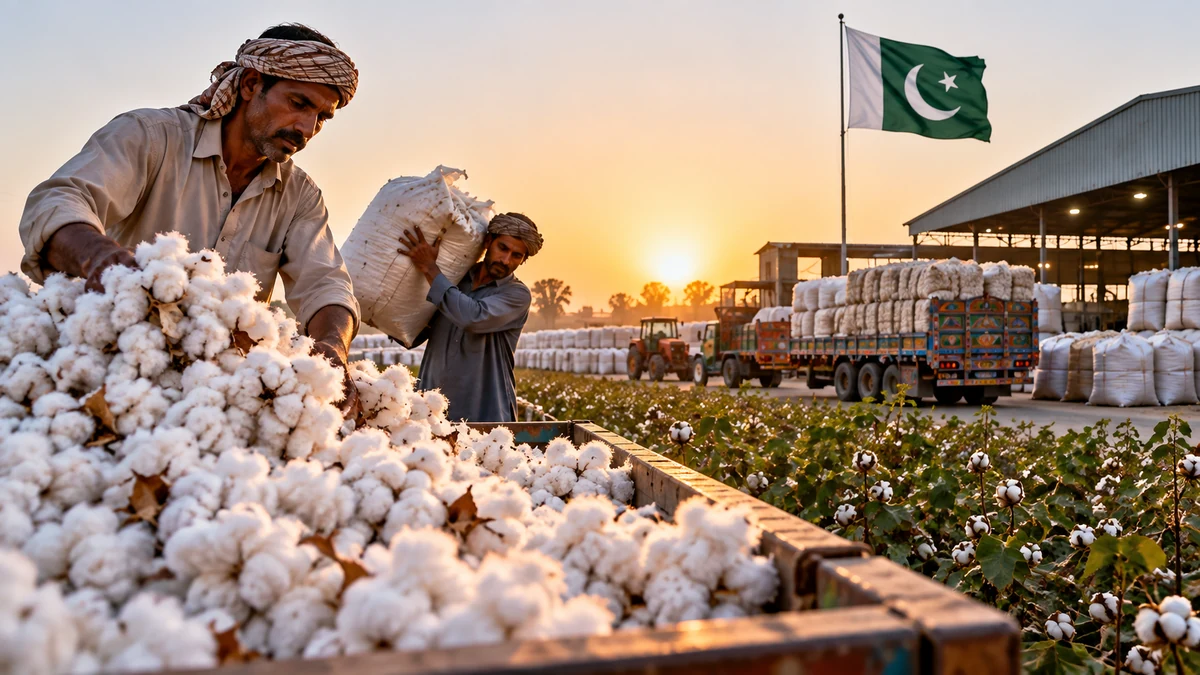
Pakistan’s cotton arrivals at ginning factories reached 3.208 million bales by September 30, up 5.39% from the same point a year earlier, according to data from the Pakistan Cotton Ginners Association.
The latest figure compares with 3.044 million bales reported by the corresponding date last year.
The increase is important for Pakistan’s textile supply chain, which depends heavily on domestic cotton, but the latest data also points to a moderation in the pace of arrivals after stronger growth earlier in the season.
Cotton arrivals measure the volume reaching ginning factories. They are not the same as final national cotton production, which can change as the season progresses.
Industry reporting around the latest PCGA data has highlighted risks from unusually high temperatures, pest pressure and contamination. Those factors could affect crop quality and the amount of cotton ultimately available to mills.
The cotton sector matters well beyond farms and ginning factories. Textiles are Pakistan’s largest merchandise export group, making the size and quality of the domestic crop important for manufacturers’ raw-material costs and their need for imported cotton.
A stronger local crop can reduce some import requirements, while a weaker crop can increase mills’ exposure to international cotton prices and foreign-exchange costs.
The 5.39% year-on-year increase therefore provides an encouraging comparison with last season, but it does not remove uncertainty over the final crop outcome.
The next rounds of PCGA arrival data will be closely watched for evidence of whether the current increase can be sustained as more of the crop reaches ginning factories.