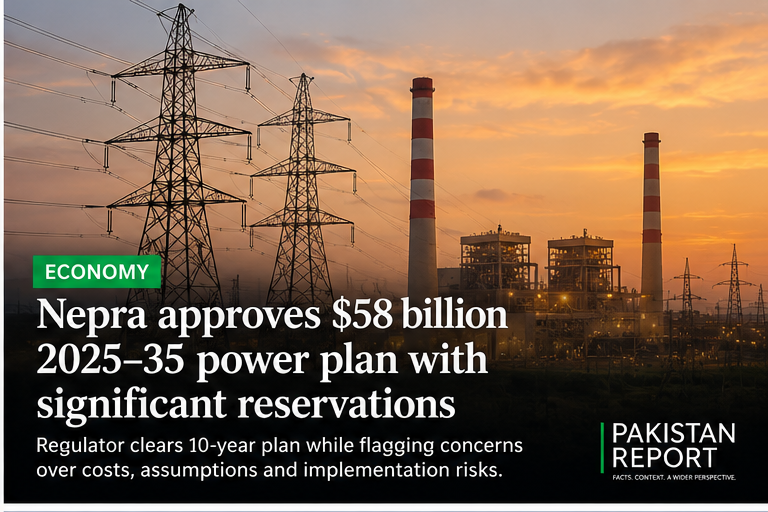
Pakistan’s power regulator has conditionally approved an 11-year electricity generation and transmission plan involving about $58 billion in investment, while its own members raised significant concerns over parts of the proposal.
The National Electric Power Regulatory Authority approved the Integrated System Plan 2025 covering the period through 2035. The plan brings together proposed additions to power-generation capacity and expansion of the transmission network.
The approval came with reservations from all three members of the authority, including its chairman, over issues including the treatment of major projects and the planning process.
What changed
The Integrated System Plan has moved from planning to regulatory approval, giving Pakistan a long-term framework for substantial investment in generation and transmission.
Nepra excluded a proposed $900 million battery energy-storage component pending a more comprehensive technical and economic assessment. It also sought clearer analysis of how the plan would ultimately affect electricity prices paid by consumers.
The planning framework includes major additions to the power system over the coming decade and transmission investment intended to move electricity across an expanding grid.
Why it matters
Pakistan’s electricity problem is not only about how much power the country can generate. The cost and composition of new generation, the ability of transmission infrastructure to carry electricity where it is needed, and the resulting consumer tariff are all central to the sector’s long-term sustainability.
A programme measured in tens of billions of dollars could shape Pakistan’s power mix and electricity costs well into the next decade.
The reservations accompanying the approval are therefore important. Regulatory approval does not mean every proposed component has been accepted without question.
What happens next
The relevant power-sector institutions will have to address Nepra’s observations as the plan moves toward implementation.
Particular attention will fall on project selection, transmission expansion, the justification for storage investments and the eventual impact on consumer tariffs. The gap between an approved planning document and projects that are actually financed and built will determine how much of the 2035 framework becomes reality.