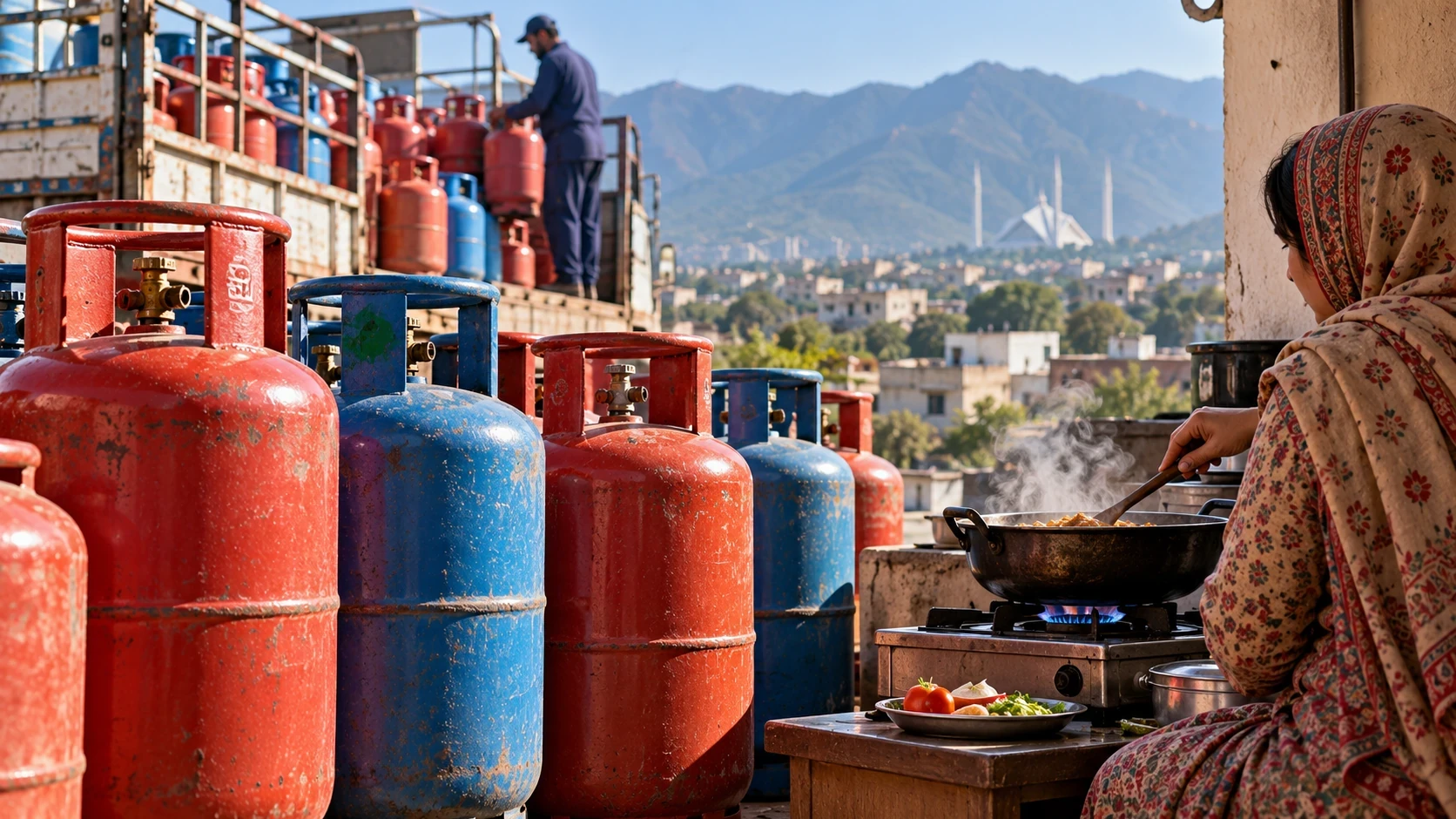
ISLAMABAD: Liquefied petroleum gas (LPG) prices have climbed to as much as Rs600 per kilogram in parts of Pakistan as disruptions to supplies from Iran create shortages and increase cooking and heating costs for households.
The sharp increase has pushed the price of a domestic LPG cylinder to approximately Rs7,200 in mountainous areas, more than double the official October price of Rs3,350 set by the Oil and Gas Regulatory Authority (Ogra).
In Punjab and Khyber Pakhtunkhwa, LPG is reportedly selling for around Rs500 per kilogram, with domestic cylinders costing approximately Rs6,000.
The increases come as Pakistan approaches winter, when demand for LPG traditionally rises because of greater heating requirements and interruptions in piped natural gas supplies.
Supply Disruptions From Iran
Pakistan relies heavily on imported LPG to supplement domestic production, with Iran serving as an important supply route.
Recent restrictions and closures affecting cross-border trade have interrupted deliveries, creating shortages in wholesale and retail markets.
Industry representatives say disruptions at border trading points have reduced the availability of imported LPG and increased pressure on domestic stocks.
Pakistan’s daily LPG consumption generally ranges between 4,000 and 4,500 tonnes, rising to approximately 6,000–7,000 tonnes during peak winter demand.
Domestic production provides an estimated 2,000–2,500 tonnes per day, making imported supplies important for maintaining market stability.
The interruption of established supply routes has consequently affected traders, distributors and consumers across several regions.
Large Gap Between Official and Market Prices
Ogra’s notified LPG price for October is approximately Rs279 per kilogram, substantially below the prices currently being charged in affected markets.
At Rs600 per kilogram, consumers in some areas are paying more than twice the regulated rate.
LPG Distributors Association Chairman Irfan Khokhar has criticised the disparity and called for stronger regulatory intervention to address excessive charges.
He has also urged authorities to facilitate additional imports and review the mechanism used to determine LPG prices.
Industry stakeholders argue that the existing monthly pricing system does not adequately respond to rapid changes in import costs, transportation expenses and supply availability.
Some have proposed more frequent price adjustments and a pricing arrangement that better reflects the combined costs of domestic and imported LPG.
Winter Demand Adds Pressure
The shortage is particularly significant for households in mountainous and remote areas, where LPG is widely used for cooking and heating.
Demand also increases in urban and semi-urban areas during winter when natural gas load-shedding forces households and businesses to rely on cylinders.
Restaurants, small food businesses and commercial kitchens that depend on LPG are also exposed to higher operating costs.
For a household purchasing one standard cylinder, the increase from Rs3,350 to Rs7,200 represents an additional expense of Rs3,850.
The scale of the price increase has intensified calls from distributors for urgent import arrangements, improved supply management and closer monitoring of retail markets.
With seasonal demand expected to increase in the coming weeks, restoring dependable LPG supplies has become an immediate concern for Pakistan’s household energy market.