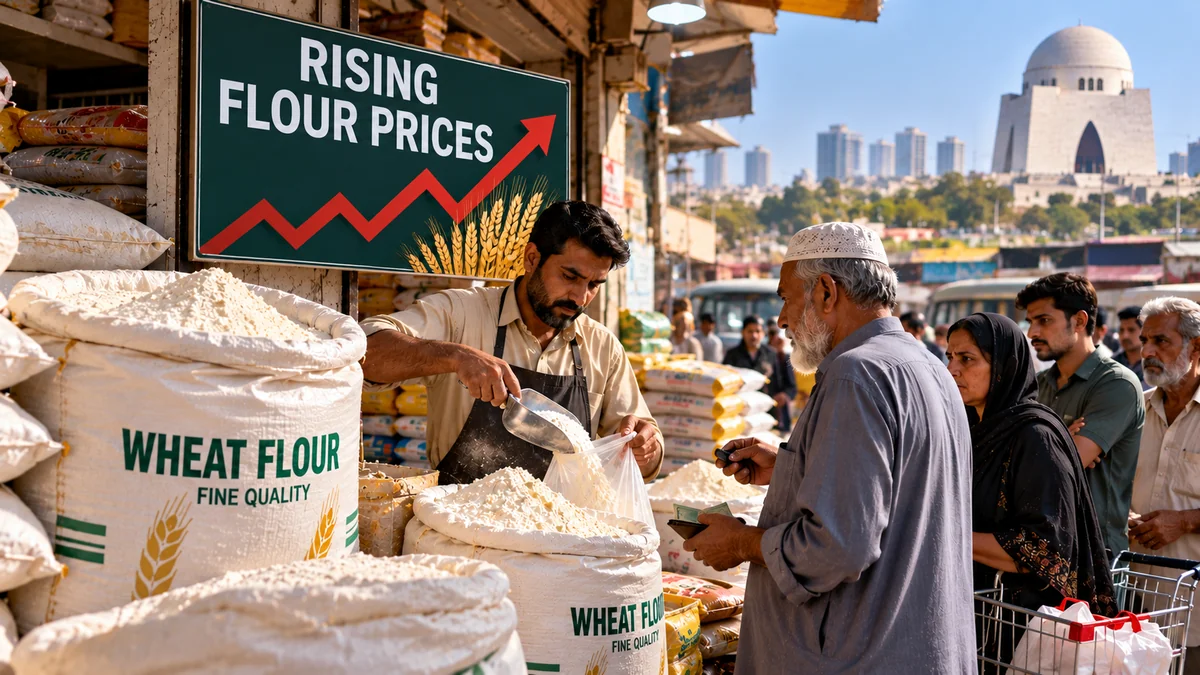
KARACHI: Flour millers have increased the prices of several flour varieties by an average of Rs14 per kilogram over the past three days, adding to household food costs as retailers report higher market rates and uneven supplies.
According to market reporting published by Dawn on Thursday, millers’ revised rates in Karachi are Rs155 per kilogram for flour No. 2.5, Rs167 for maida and Rs170 for fine flour. These are millers’ quoted rates and should not be confused with prices charged to consumers at retail outlets.
In retail markets, flour No. 2.5 was reported at Rs180 per kilogram and fine flour at Rs200, while chakki flour reached Rs210. The rates are market observations and can vary by location, product quality and seller.
The latest increase follows a reduction of about Rs3 per kilogram by millers in late September. Retailers did not pass that earlier decrease on to consumers, according to the report, limiting the benefit of the temporary wholesale decline.
Some retailers alleged that millers had interrupted supplies before the increase. That allegation was reported as a complaint from traders, not established as an official finding of deliberate market manipulation.
A miller cited in the report said open-market wheat prices had risen to around Rs138 per kilogram from a range of Rs125 to Rs130. The change in the cost of wheat provides one explanation offered by the industry, although it does not independently establish the causes of every retail price increase.
The price pressure extends beyond packaged flour. Bread and naan sellers are dealing with the combined cost of flour and other inputs, including liquefied petroleum gas. The report said naan prices had reached roughly Rs30 to Rs35 per piece in affected markets, while other bakery products had also become more expensive.
For consumers, the distinction between wholesale and retail prices is significant. A miller’s published rate does not guarantee that flour will be available to households at that price, especially when transport, handling and retail margins are added.
The report also noted expectations of wheat imports before the next domestic harvest. The new wheat crop from Sindh and Punjab is not expected until the March-to-May period, leaving several months in which market supply and policy decisions could affect prices.
No new government retail price-control measure was confirmed in the material reviewed for this article. Further reporting should track official wheat availability data and retail rates in more than one Karachi market to establish whether the increases persist.