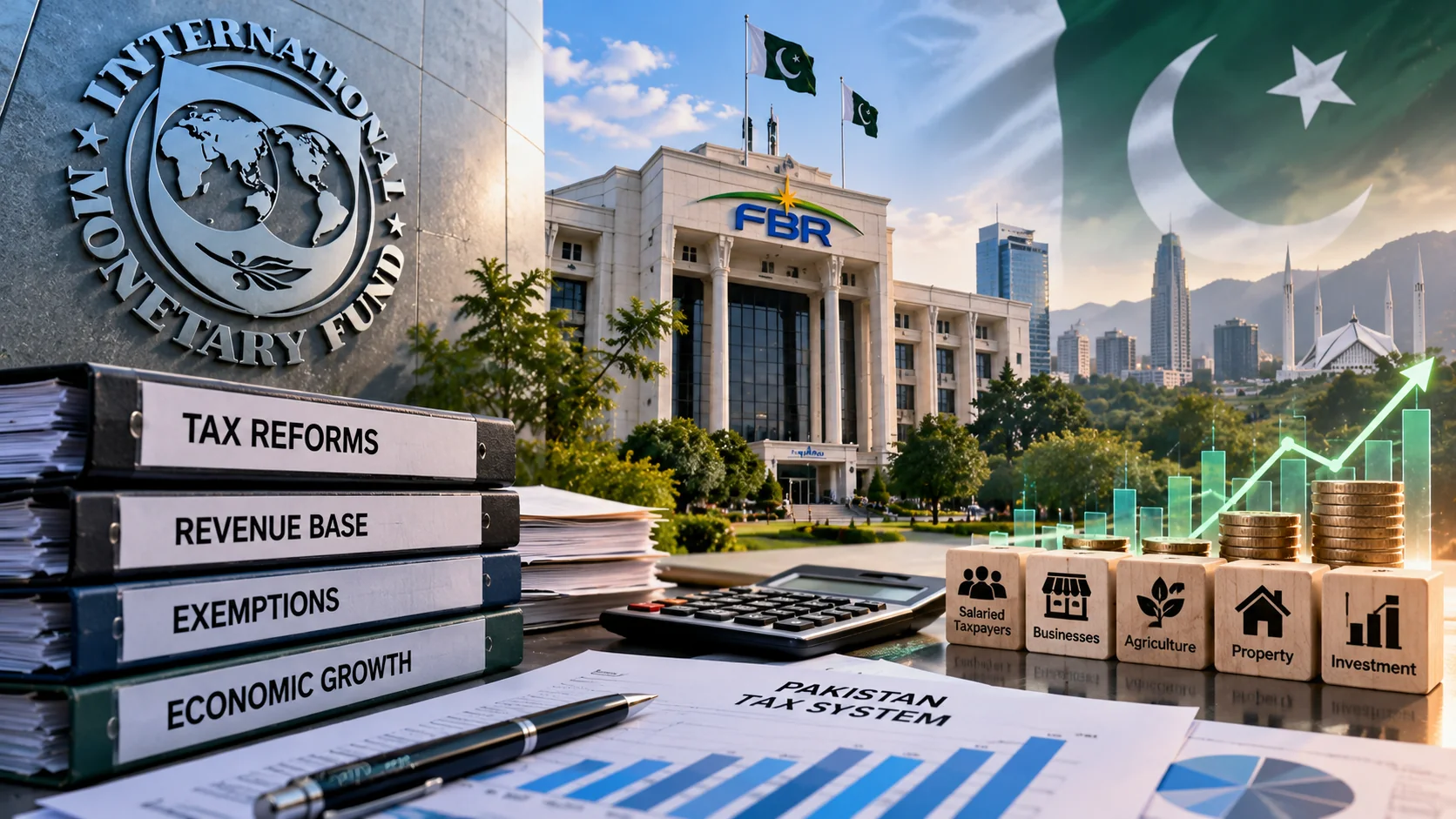
ISLAMABAD: The International Monetary Fund has called for a broader, fairer and more predictable tax system in Pakistan, arguing that reforming exemptions and bringing under-taxed economic activity into the revenue net would support investment, business expansion and sustainable public finances.
Jihad Azour, director of the IMF’s Middle East and Central Asia Department, made the recommendations at a two-day tax reform workshop organised by the Ministry of Finance and Revenue in Islamabad on Tuesday. His remarks placed the distribution of Pakistan’s tax burden alongside the government’s wider effort to move from economic stabilisation towards stronger growth.
The IMF official urged the authorities to rationalise tax concessions, improve revenue administration and coordinate reforms across federal and provincial governments. He also linked greater compliance to transparent rules and better public services, rather than relying solely on higher tax rates.
Why the tax burden matters
Pakistan’s tax debate has increasingly focused on the difference between income that is readily documented and activity that is harder to assess. Employers deduct income tax from salaried workers, while collecting comparable revenue from parts of retail, property and agriculture requires different enforcement systems and cooperation between authorities.
According to figures reported by The Express Tribune, salaried taxpayers contributed about Rs629 billion in the fiscal year ending June 2026, compared with Rs391 billion before the current IMF programme began. The newspaper also reported weak revenue performance in certain other sectors, including a decline in property-related income tax receipts during the first quarter of the current financial year.
These figures have intensified the policy discussion over how Pakistan can raise revenue without concentrating the burden on taxpayers whose incomes are already recorded.
A simpler system for businesses
Azour argued that a more neutral tax structure could encourage firms to formalise and expand. Businesses operating across different tax treatments, exemptions and documentation requirements face additional compliance costs and may have fewer incentives to invest in growth.
A medium-term tax strategy, he suggested, should set clear objectives, define responsibilities and sequence reforms so businesses and households can plan with greater confidence. More effective tax administration would also matter: widening the base requires identifying economic activity, processing information and applying rules consistently.
The IMF’s October staff-level agreement with Pakistan likewise identified a simpler and fairer tax system as part of a wider package intended to support productivity, employment, private investment and exports.
Federal and provincial coordination
Agricultural income taxation is principally a provincial responsibility, while the Federal Board of Revenue administers major federal taxes. That division makes coordination essential when policymakers seek to improve coverage across sectors.
The workshop’s agenda also included protecting priority public spending and improving service delivery. Greater revenue mobilisation can give the government more room to finance infrastructure, education and health without repeatedly increasing taxes on the same documented base.
The recommendations provide a policy framework for the next phase of Pakistan’s fiscal reforms, with the Ministry of Finance, FBR and provincial authorities central to their design and implementation.