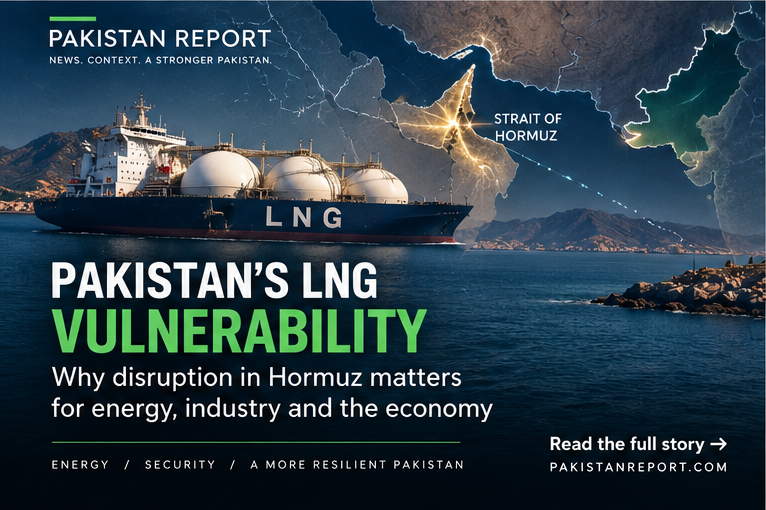
Disruption around the Strait of Hormuz has exposed Pakistan’s heavy dependence on Gulf suppliers for liquefied natural gas, raising renewed questions about energy security and supply diversification.
A Gastech Conferences report cited by Dawn on September 18 says Qatar and the United Arab Emirates together supply about 99% of Pakistan’s LNG. Imported LNG accounts for roughly 30% of the country’s total gas supply.
The fuel is used across power generation, fertiliser production and industry, meaning a sustained supply disruption can spread beyond the energy sector.
Concentrated supply
Pakistan’s exposure is not simply a question of how much LNG it imports. The concentration of those imports among Gulf suppliers means disruption to regional production or shipping routes can affect a large share of the country’s imported gas at once.
The Strait of Hormuz is a critical route for Gulf energy exports. The current disruption has therefore placed countries reliant on LNG moving through the region under particular pressure.
Gastech’s report said policymakers across Asia may reassess how to strengthen domestic energy and power systems in response to the disruption, including through changes in the energy mix and a greater focus on energy security.
For Pakistan, the figures illustrate the scale of the vulnerability: nearly all LNG comes from two Gulf states, while LNG itself supplies close to one-third of total gas availability.