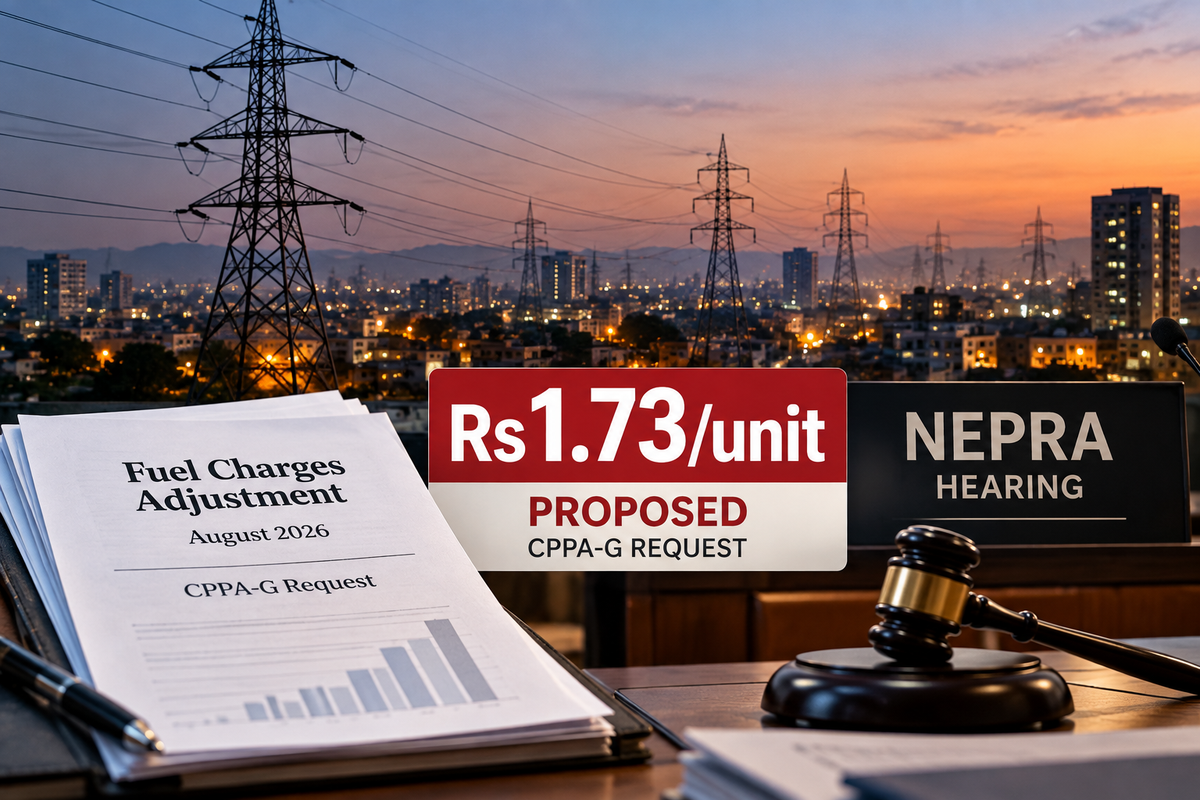
ISLAMABAD — The National Electric Power Regulatory Authority is taking up a request from the Central Power Purchasing Agency-Guarantee for an increase of about Rs1.73 per unit under the fuel charges adjustment for electricity generated in August 2026.
The amount is a CPPA-G request and not an approved tariff increase. NEPRA’s public hearing is the regulatory step at which the authority examines the calculations and supporting data before deciding whether an adjustment should be allowed and at what level.
CPPA-G has sought an FCA of Rs1.7267 per kilowatt-hour for ex-WAPDA distribution companies. The request is based on the fuel and power-purchase costs associated with electricity supplied during August.
What the Rs1.73 request means
Fuel charges adjustments are used to reconcile differences between the reference fuel cost built into the tariff and the actual cost of electricity generation and purchases for a particular month.
According to the request reported ahead of the hearing, electricity generation during August was about 14,943 gigawatt-hours. CPPA-G calculated the proposed adjustment against a reference fuel charge of Rs7.0998 per kWh.
NEPRA can scrutinise generation data, fuel costs, power purchases and other claimed expenses during the proceedings. The regulator can approve the requested amount, reduce it, reject parts of the claim or seek further information.
Consumers should therefore not treat Rs1.73 per unit as a final addition to bills until NEPRA issues its determination.
FCA is separate from the base tariff
A monthly FCA is different from Pakistan’s base electricity tariff and from quarterly tariff adjustments. It reflects changes in fuel and generation costs for a specific month and is normally recovered or returned through subsequent bills after regulatory approval.
The precise billing impact also depends on the categories of consumers covered by the eventual determination and the period in which the adjustment is applied.
Pakistan’s electricity costs remain sensitive to the generation mix, imported fuel prices, exchange-rate movements and the availability of lower-cost sources such as hydropower and nuclear generation.
For households and businesses, the September 29 hearing is therefore an intermediate regulatory event rather than confirmation of a new electricity rate.
The key figure to watch after the hearing will be NEPRA’s final determination, including the approved per-unit amount, the consumers to whom it applies and the billing month in which any adjustment is recovered.