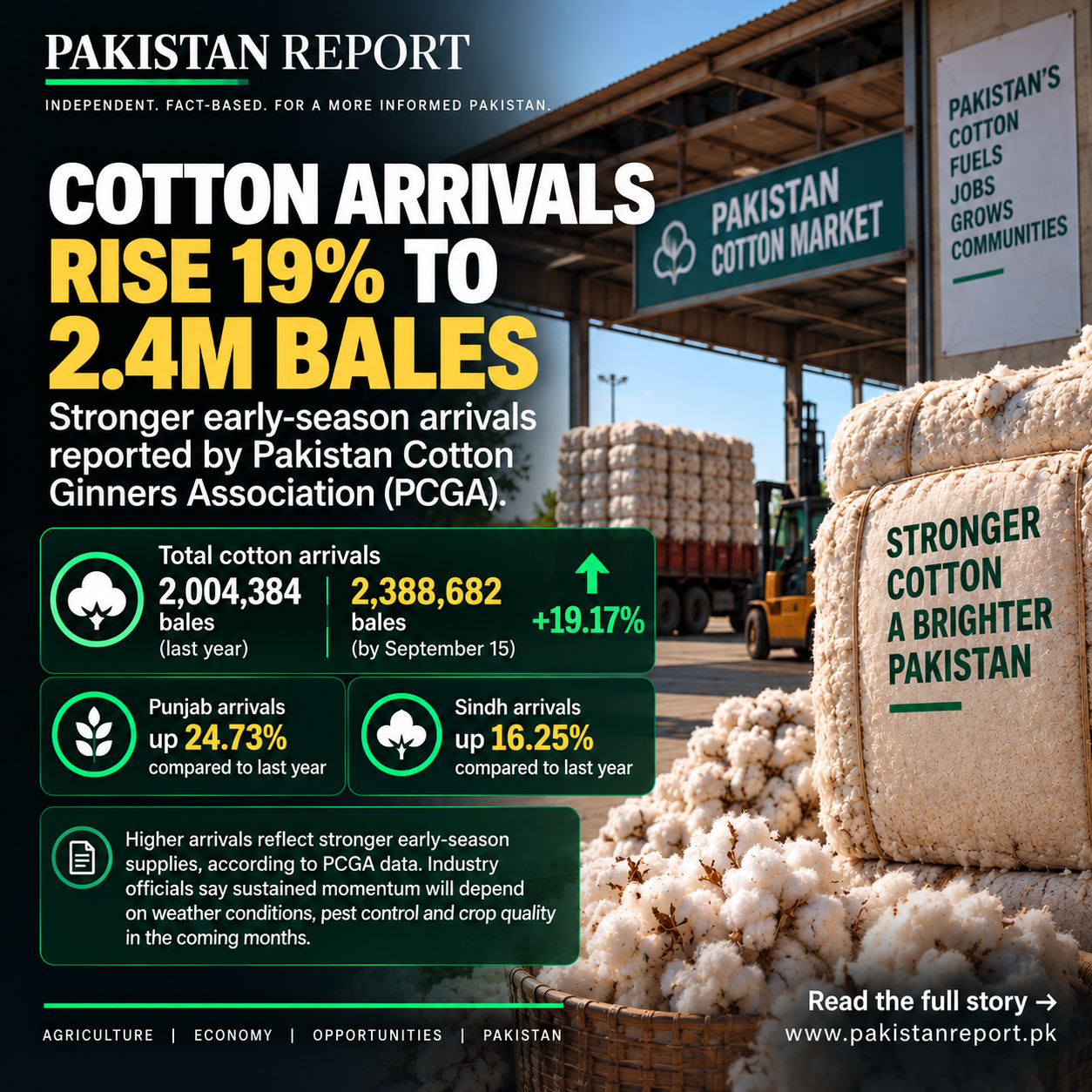
Pakistan’s cotton arrivals reached 2,388,682 bales by September 15, up 19.17% from 2,004,384 bales at the same stage last year, according to the Pakistan Cotton Ginners Association.
The figures indicate a stronger start to the season, although arrivals at ginning factories are not the same as a final estimate of national cotton production.
Punjab and Sindh both improve
Punjab recorded 860,942 bales, an increase of 24.73% from a year earlier.
Sindh reported 1,527,740 bales, up 16.25%, and accounted for the larger share of the national total.
Sanghar district alone contributed 888,607 bales by September 15, more than the total received by ginning factories across Punjab.
The distribution of arrivals shows how strongly individual growing regions can influence the national picture.
What the industry expects
Dawn reported that Cotton Ginners Forum Chairman Ihsanul Haq viewed the increase as encouraging and said national production could exceed six million bales if conditions remained favourable.
That is a conditional industry expectation, not a confirmed harvest total.
The final outcome will depend on weather, pest control, crop quality and the pace at which farmers harvest and deliver cotton.
Pink bollworm and untimely rainfall remain potential risks.
Business Recorder reported that 412 ginning factories were operating nationwide, with unsold stocks of 260,789 bales.
Why cotton matters
Cotton is a key input for Pakistan’s textile industry, which supports manufacturing jobs and export earnings.
A stronger domestic crop can improve supplies for spinning mills and other manufacturers, although quality and prices also influence purchasing decisions.
The next arrival reports will help show whether the early improvement continues as the season progresses.
For now, the data point to a better start than last year, without guaranteeing the final crop size.
Sources: Dawn; Business Recorder.