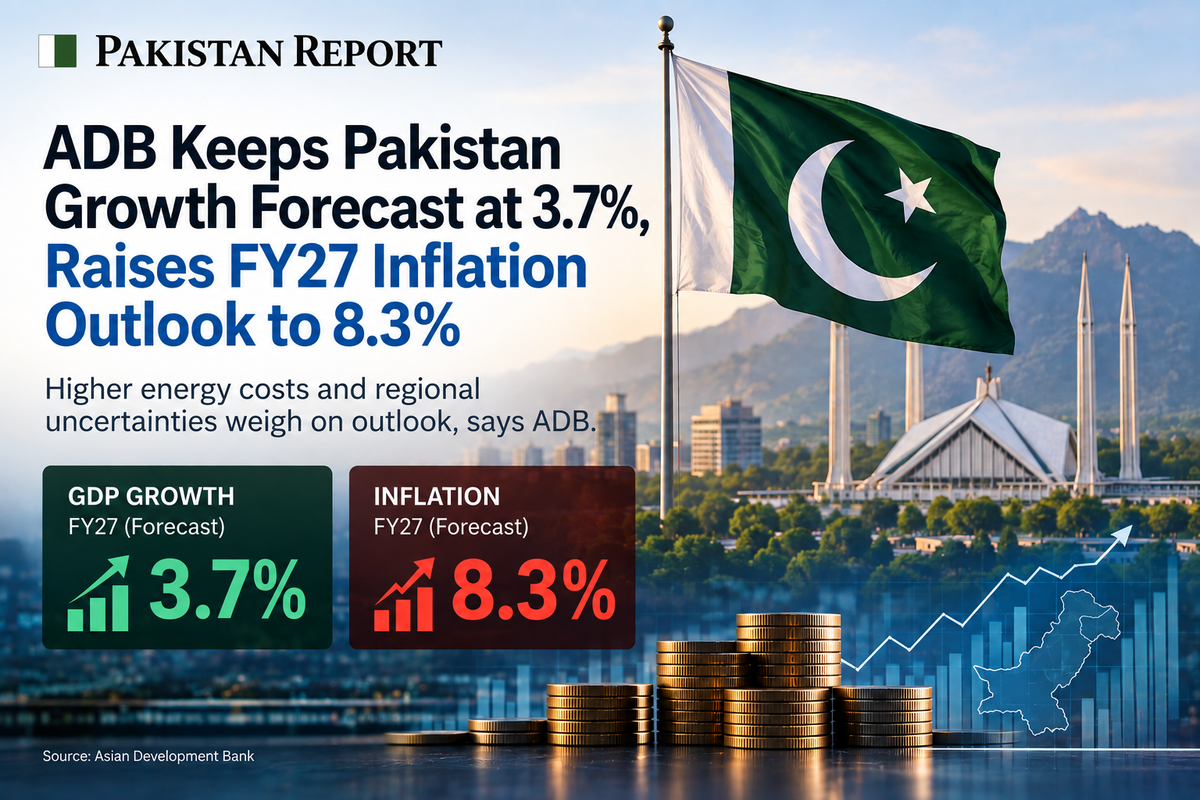
ISLAMABAD — The Asian Development Bank expects Pakistan’s economy to grow by 3.7% during the 2026–27 fiscal year, while average inflation is projected to reach 8.3%.
The lender maintained its growth estimate from July, but the outlook remains below the government’s 4% growth target.
ADB estimates that Pakistan’s economy expanded by 3.7% in FY26, supported by industry and services, with more modest growth in agriculture.
The latest forecast suggests the recovery could continue, although higher energy costs and regional uncertainty may limit the pace of expansion.
Inflation remains a concern
ADB’s 8.3% inflation forecast is higher than the government’s budget assumption of 7% and the State Bank’s medium-term target range of 5% to 7%.
Energy prices are a major risk because Pakistan imports much of the fuel used in transport, electricity generation and industry.
When international fuel prices rise, the effects can spread through freight charges, factory costs and the prices consumers pay for everyday goods.
The bank also identified pressure on remittance flows and disruption to international shipping as risks associated with regional tensions.
What the forecasts mean
Economic growth and inflation measure different things. An expanding economy can create jobs and business opportunities, but higher prices may still reduce the purchasing power of household incomes.
The ADB forecast is not a confirmed outcome. Actual performance will depend on agricultural production, industrial activity, global commodity markets and domestic economic policies.
Pakistan is also engaged in programme discussions with the International Monetary Fund, making inflation control and public finances important considerations for policymakers.
The outlook points to continued growth, but not an easy recovery. For households and businesses, the balance between economic expansion and the cost of living will remain crucial throughout FY27.