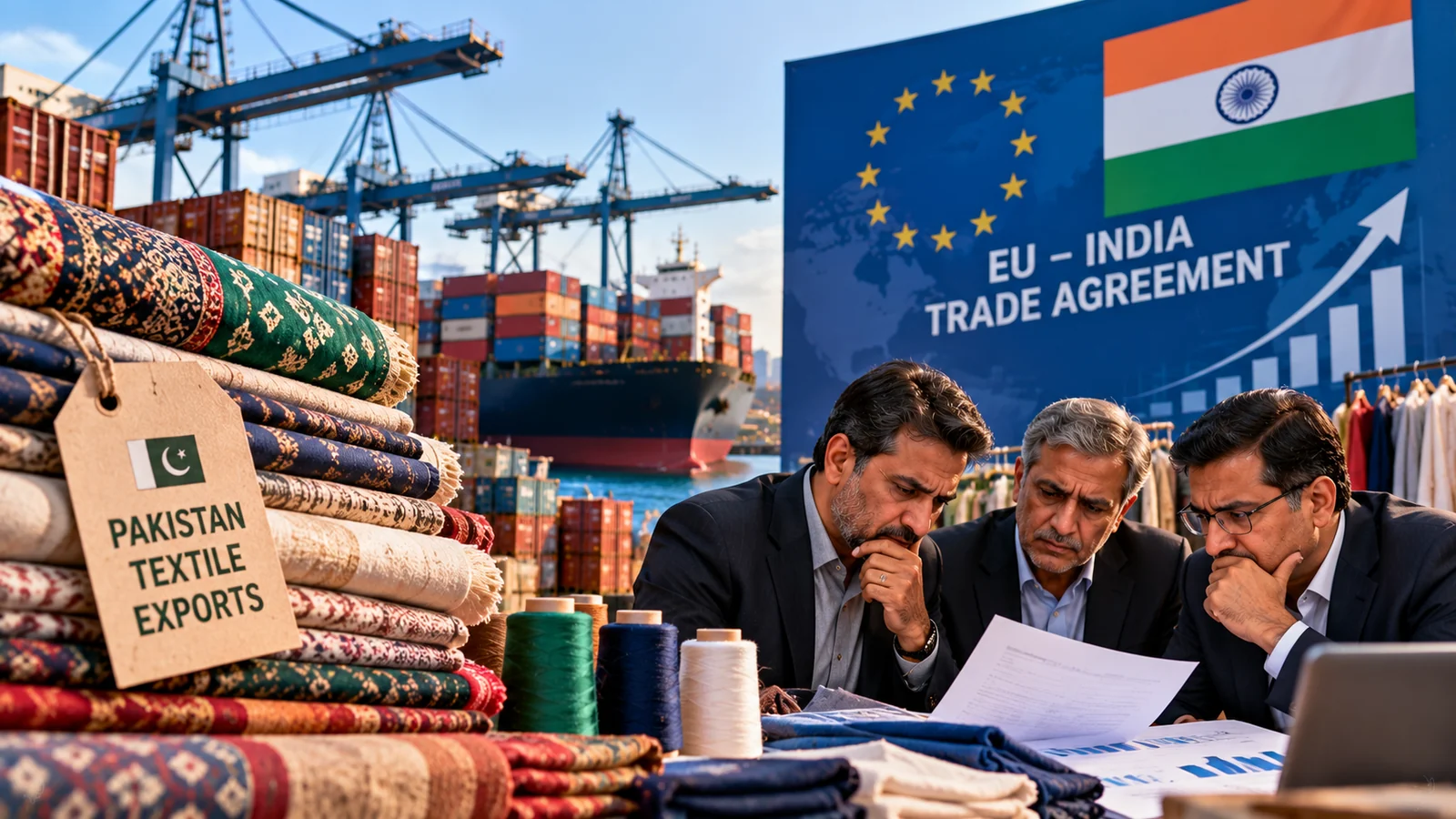
KARACHI, October 25, 2026: Pakistan’s textile exporters have warned that a trade agreement between the European Union and India could erode the competitive advantage Pakistani products enjoy in the European market.
SITE Association of Industry President Abdul Hadi raised concerns that preferential access under the EU’s Generalised Scheme of Preferences Plus (GSP+) may become less valuable if competing Indian textile products receive improved market access.
The warning comes as Pakistan’s textile sector faces pressure from high energy costs, expensive inputs and difficulties in securing competitively priced cotton.
Textile exports were reported at approximately $5.03 billion in the first quarter of the 2026–27 fiscal year, an increase of about 5.26 percent compared with the same period a year earlier.
Despite that growth, industry representatives say exporters must remain competitive on pricing, delivery times and product quality to retain international buyers.
Europe is an important destination for Pakistani textiles, and the GSP+ arrangement provides tariff preferences for eligible goods subject to the scheme’s conditions.
A change in the relative tariff treatment of Indian goods could increase competition for Pakistani producers, particularly in product categories where suppliers compete closely on price.
The industry’s comments concern a potential future competitive impact. They do not establish that Pakistani exporters have already lost orders because of an implemented EU–India agreement.
Exporters are calling for policies that reduce production costs and improve the industry’s ability to compete in overseas markets.