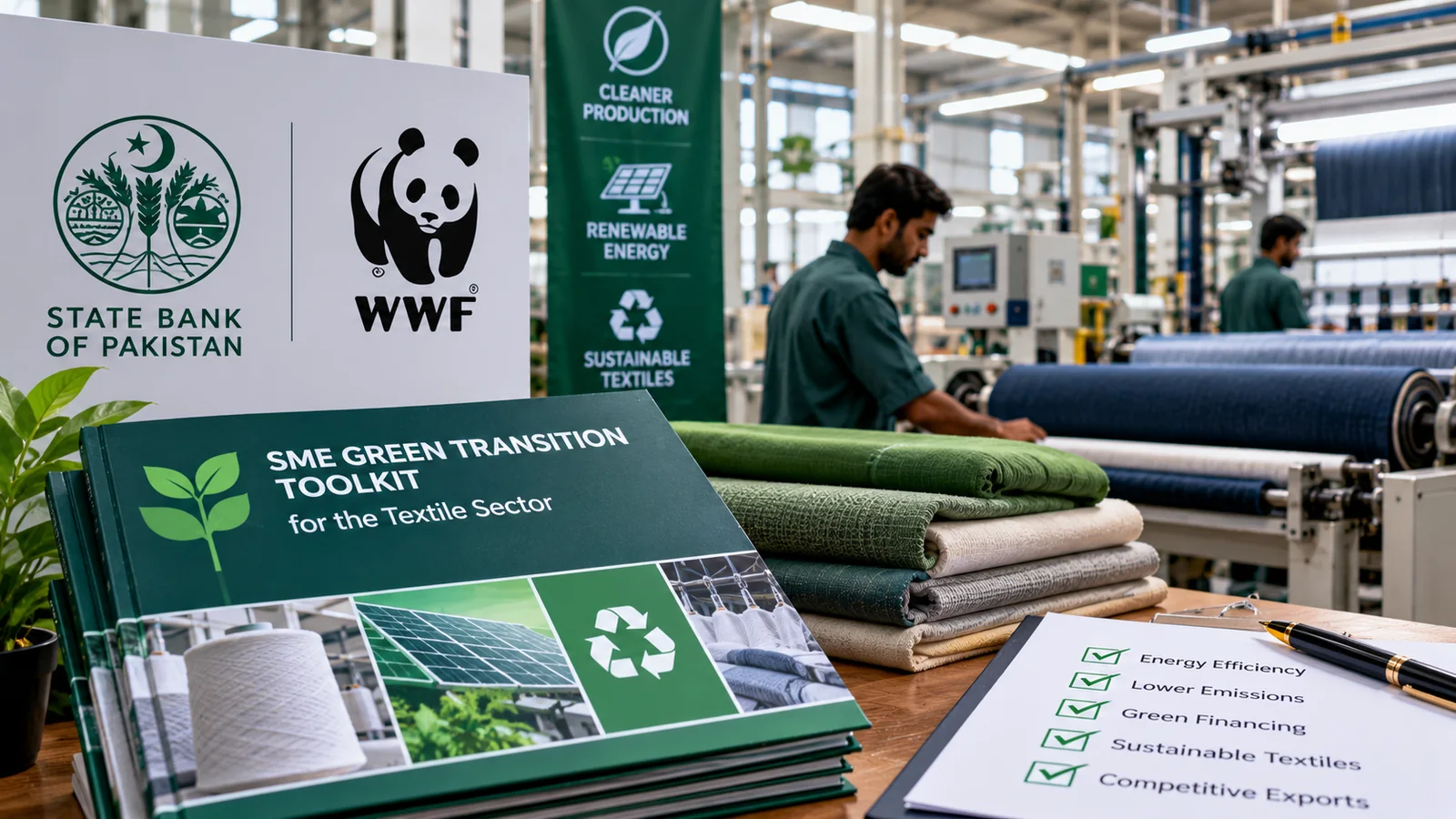
KARACHI: The State Bank of Pakistan and WWF-Pakistan have introduced an SME Green Transition Toolkit for the Textile Sector to help lenders evaluate and finance environmental improvements by small and medium-sized textile businesses.
The initiative seeks to turn sustainable-finance principles into practical assessments of factory operations and investment proposals.
How the toolkit works
Developed by the central bank’s SME, Housing and Sustainable Finance Department with WWF-Pakistan, the toolkit draws on the Pakistan Green Taxonomy. It helps financial institutions assess clients’ environmental performance and identify improvements that may be suitable for green financing.
The framework includes measures such as Weighted Average Carbon Intensity and Specific Energy Consumption, enabling a more structured examination of emissions and energy use. Potential investments include solar energy, waste-heat recovery and cleaner fuels. An accompanying spreadsheet-based assessment tool is intended to support lenders’ evaluations.
Why textile SMEs need support
Environmental upgrades often require significant upfront capital. Smaller manufacturers may lack technical teams capable of preparing detailed investment proposals or quantifying projected energy savings. A standardised assessment process could help banks and clients discuss the financial and environmental merits of potential projects.
Textiles are central to Pakistan’s export economy. Buyers in international markets increasingly seek information about supply-chain emissions, resource consumption and compliance with environmental standards. Manufacturers that can document genuine improvements may be better positioned to respond.
Pilot implementation
Banks are expected to pilot the toolkit with textile clients, supported by additional training and guidance. Its effectiveness will be measured by whether suitable projects secure financing and deliver verifiable improvements in energy efficiency and environmental performance.
Source: https://www.brecorder.com/news/40445184