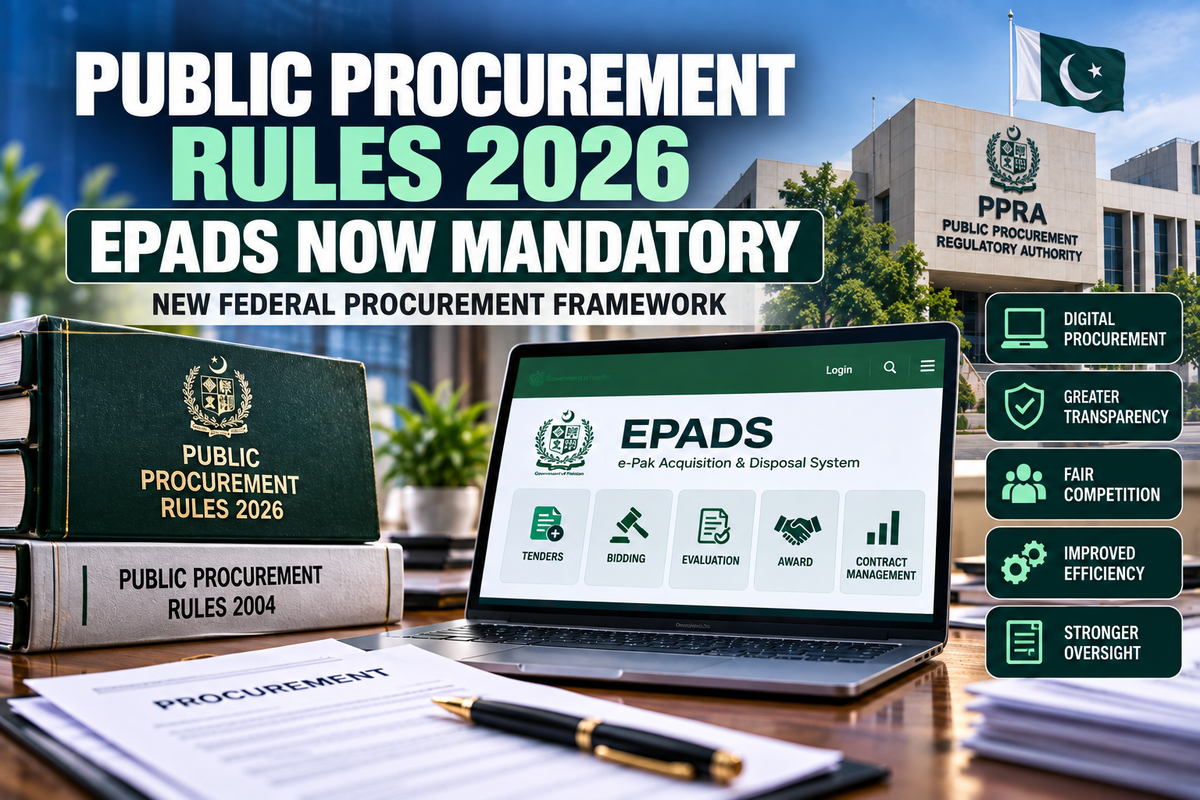
ISLAMABAD — Pakistan’s new Public Procurement Rules, 2026 have taken immediate effect, replacing the 2004 framework for new federal procurement processes and making use of the e-Pak Acquisition and Disposal System, or EPADS, mandatory for procurement and disposal by federal procuring agencies.
The rules were made under Section 26 of the Public Procurement Regulatory Authority Ordinance, 2002. Procurement cases initiated before the new rules commenced will continue under the 2004 framework, while new processes will be governed by the 2026 rules.
That transition provision is important for agencies and suppliers because it means the new framework does not automatically restart or reclassify procurement exercises already under way.
EPADS becomes mandatory
A central change is the formal requirement to use EPADS, the federal electronic procurement platform. The new rules treat deliberate procurement outside the prescribed electronic system as a form of mis-procurement, strengthening the regulatory basis for moving federal purchasing and disposal processes online.
The framework also provides for dedicated procurement cells and introduces additional mechanisms intended to manage conflicts of interest and strengthen scrutiny. These include third-party validation, evaluation and pre-shipment inspection for large procurements where prescribed.
The Public Procurement Regulatory Authority has been expanding EPADS as the government’s electronic platform for procurement planning, tendering and related processes. Making the system mandatory under the new rules moves that digital process from administrative practice into the formal procurement framework.
Enforcement and grievance mechanisms
The 2026 rules also strengthen enforcement provisions. According to the official announcement, the framework includes blacklisting and cross-debarment provisions, independent grievance redressal committees and an appellate mechanism at PPRA.
The rules identify a range of conduct that can amount to material deviation or mis-procurement. Examples include failure to constitute prescribed committees, tailor-made specifications, violations of advertisement or response-time requirements and failure to follow the stated evaluation criteria.
The changes are designed to make procurement procedures more consistent and to give suppliers clearer routes for challenging decisions. Their practical effect will depend on implementation by procuring agencies and the way PPRA applies the new enforcement and appellate mechanisms.
What changes for federal procurement
For businesses supplying goods, works or services to federal agencies, the immediate distinction is between procurement already initiated and new procurement launched after the rules took effect. Existing cases remain under the previous framework, while new cases must follow the 2026 rules.
The mandatory EPADS requirement also makes electronic participation increasingly central to federal procurement. Suppliers will need to follow the platform requirements attached to relevant tenders rather than treating electronic procurement as an optional parallel channel.
The notification represents a broad update to Pakistan’s federal procurement framework rather than a change to a single tendering procedure. The next test will be how consistently federal agencies implement the new requirements and how the revised grievance, debarment and compliance mechanisms operate in practice.