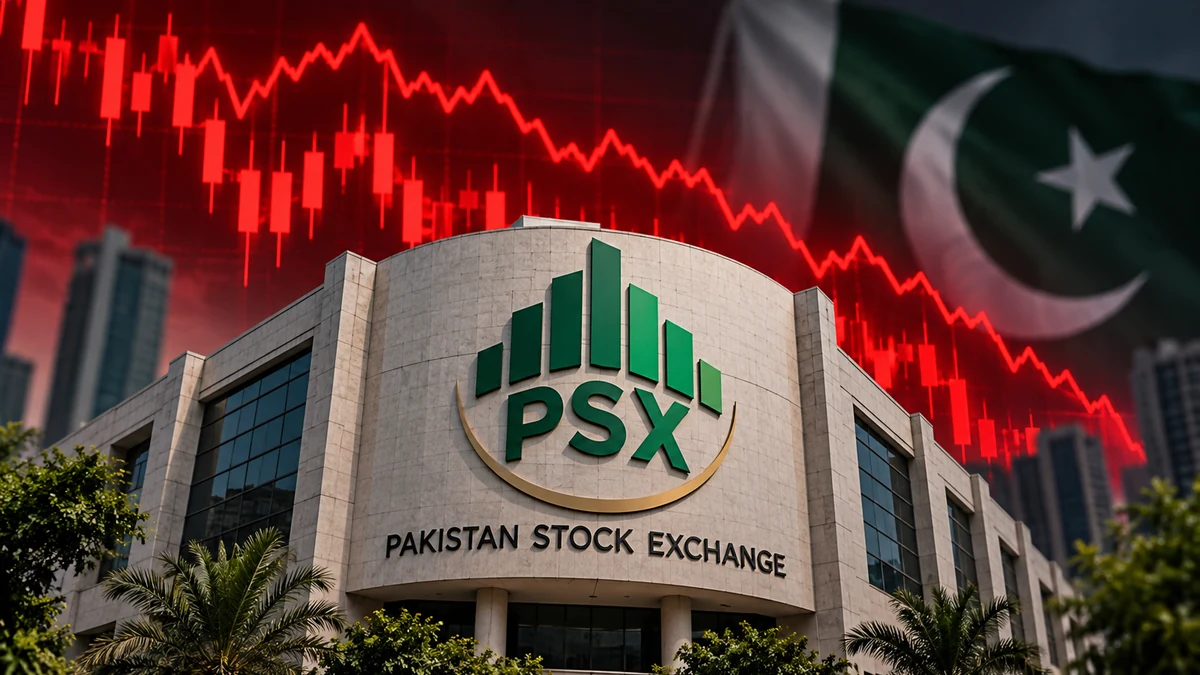
The Pakistan Stock Exchange ended Friday lower, with the benchmark KSE-100 Index losing 481.36 points as investors remained cautious amid Middle East tensions and selling pressure across several major sectors.
The KSE-100 closed at 168,155.49 on October 2, down 0.29% from the previous session. The index traded as high as 168,854.46 and as low as 167,685.42 during the day.
The final decline was smaller than the pressure seen earlier in the session. By midday, the benchmark had fallen more than 700 points as investors reacted to reports of additional US military deployments to the Middle East and remained cautious ahead of important international economic data.
Selling was seen across several heavyweight sectors, including commercial banks, cement, automobile assemblers, oil and gas exploration companies, oil marketing companies and power generation.
The session followed a much sharper decline on Thursday, when the KSE-100 had lost 1,332.47 points to close at 168,636.85. That earlier fall was driven by broad-based profit-taking, elevated crude oil prices and geopolitical uncertainty.
Friday’s close means the market remained under pressure for a second consecutive session, although the size of the decline eased compared with Thursday.
The KSE-100’s intraday movement also showed continued volatility. After moving above 168,800 points, the index fell below 167,700 before recovering part of its losses by the close.
Middle East developments have become an important factor for regional markets because escalating tensions can affect crude oil prices, global risk appetite and foreign investor sentiment.
For Pakistan, movements in international oil prices are particularly important because the country remains a major energy importer. Higher oil prices can increase pressure on the import bill, inflation expectations and the rupee, while falling prices can ease some of those concerns.
The latest PSX session therefore reflected a mix of local selling pressure and caution over external risks rather than a single domestic trigger.
Investors will continue to watch geopolitical developments, global oil prices and international market sentiment for signs of whether the recent volatility will persist.