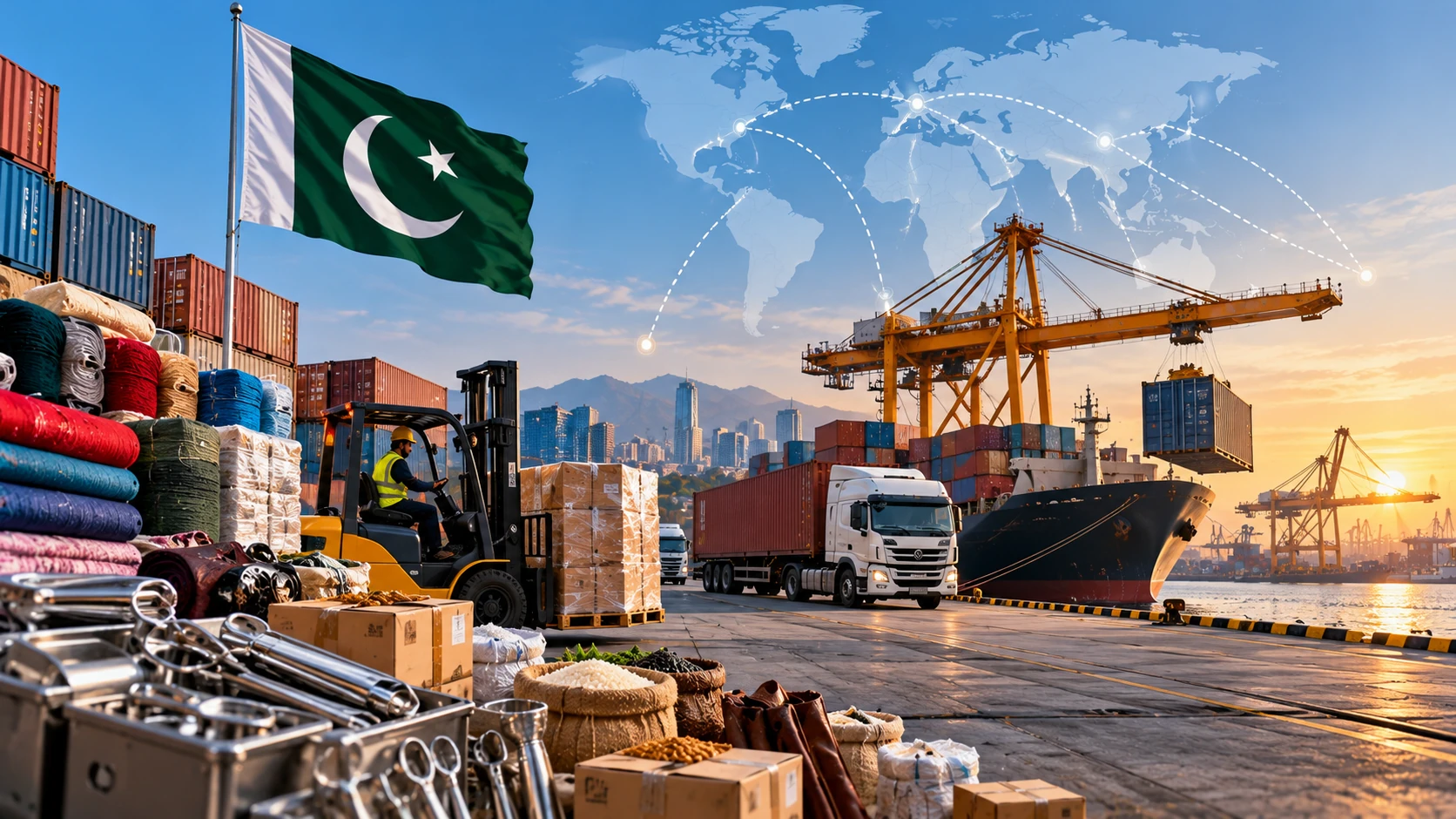
ISLAMABAD: Pakistan’s leading exporters have urged the federal government to pursue improved bilateral trade arrangements and address rising business costs to strengthen the country’s competitiveness against regional exporters, particularly India and Bangladesh.
The recommendations emerged during a high-level consultation chaired by Federal Minister for Commerce Jam Kamal Khan, bringing together representatives of export industries, federal ministries and economic institutions.
Business leaders called for greater access to overseas markets, faster tax refunds, improved port operations and more flexible banking regulations as international shipping disruptions complicate export transactions.
The meeting brought together officials responsible for commerce, maritime affairs, finance, taxation and industrial development, reflecting the range of issues affecting Pakistan’s export performance.
Trade Agreements and Market Access
Exporters recommended examining international markets where India and Bangladesh benefit from preferential trade arrangements and identifying opportunities for Pakistan to negotiate more competitive access.
Preferential trade arrangements can reduce customs duties and improve the ability of exporters to compete on price in overseas markets.
For Pakistani manufacturers, differences in tariff treatment can influence purchasing decisions by international buyers, particularly in sectors where suppliers from several countries compete for the same orders.
Industry representatives therefore called for a more targeted approach to trade negotiations, focusing on markets where improved tariff treatment could create meaningful export opportunities.
The proposals come as Pakistan seeks to diversify its export destinations and expand sales beyond its established international markets.
Shipping Delays and Banking Restrictions
Exporters also raised concerns about disruptions to international shipping routes, port facilitation and the time allowed to receive payments from overseas buyers.
Global logistics disruptions can extend delivery schedules and complicate the settlement of export transactions.
Business representatives proposed greater flexibility in payment settlement periods to accommodate longer shipping times and changing commercial conditions.
They also highlighted difficulties involving outstanding tax refunds, business visas and compliance requirements in international markets.
Representatives welcomed the Export-Import Bank’s financing support for exporters, describing it as a useful mechanism for businesses seeking to expand overseas.
Federal Board of Revenue officials briefed participants on measures to improve refund processing and digital invoicing.
Energy Costs and Sector-Specific Challenges
Rising production expenses featured prominently in the discussions, with exporters highlighting energy costs, the captive power gas levy and provincial infrastructure levies.
Such expenses affect the final price of Pakistani products in international markets, particularly in manufacturing industries where energy represents a significant component of production costs.
The meeting also examined obstacles facing individual export sectors.
Representatives of the meat and livestock industry highlighted foot-and-mouth disease, sanitary certification requirements, border restrictions and access to Gulf markets.
The government informed participants about livestock development priorities, including disease control, improved breeding, investment and value-added exports.
Plans for a dedicated private-sector-led livestock board were also discussed.
Mineral exporters raised issues involving restrictions on mining explosives and withholding taxes.
Representatives of the surgical instruments industry emphasised the importance of modern production technology, skilled workers and industrial investment to improve the sector’s international competitiveness.
Commerce Ministry to Prepare Recommendations
Commerce Minister Jam Kamal Khan said his ministry would consolidate the concerns raised by exporters and seek responses from the relevant government departments.
The resulting recommendations will be prepared for the prime minister’s consideration.
The consultation places trade diplomacy, export financing, logistics and production costs within a common policy discussion, giving the government a basis for developing measures tailored to Pakistan’s major export industries.