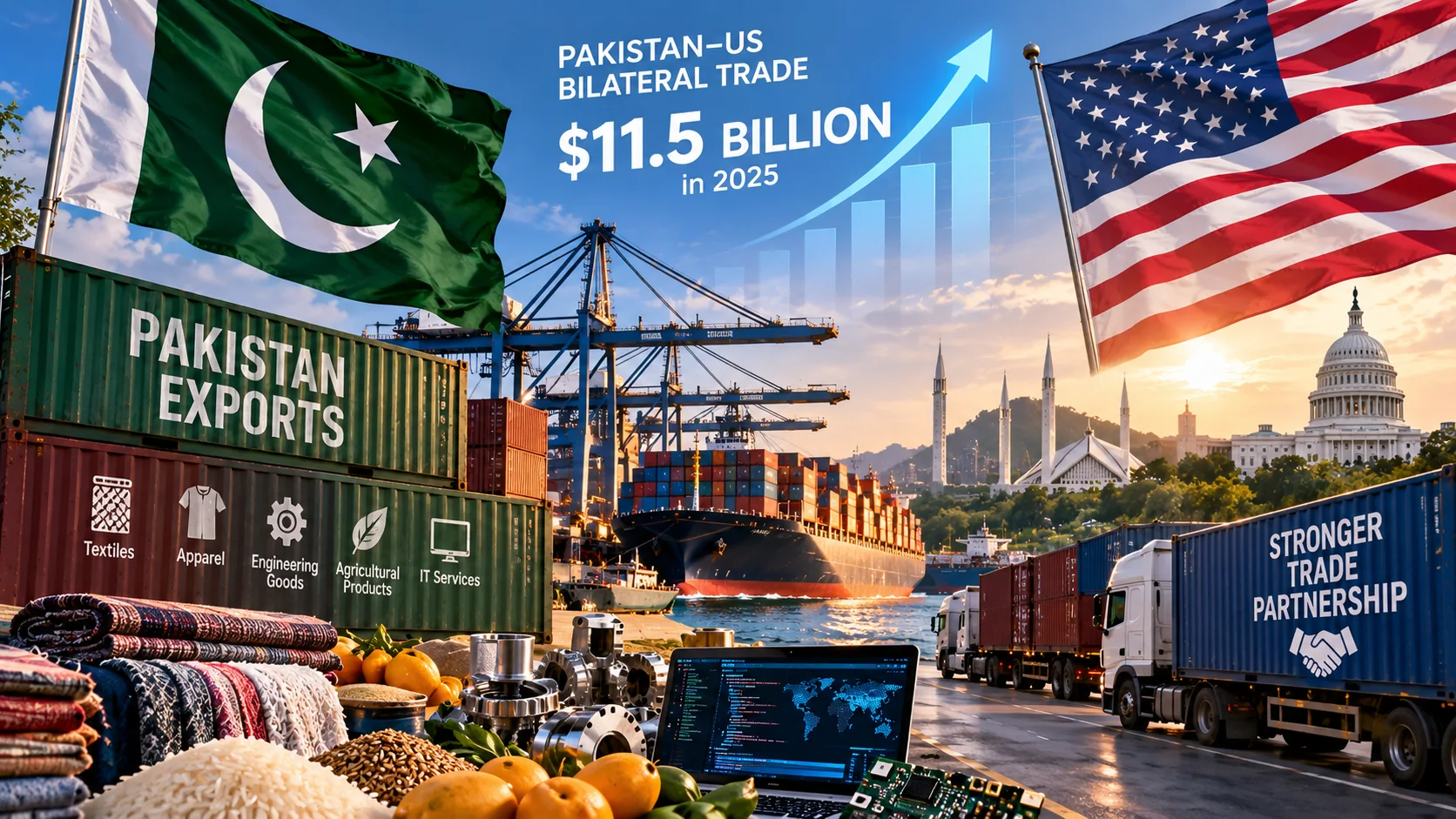
ISLAMABAD: Pakistan and the United States are pursuing a revised bilateral trade arrangement aimed at expanding market access and investment, with two-way trade in goods and services estimated at $11.5 billion in 2025.
The figure represents a reported 14% increase from the preceding year and underscores the importance of commercial relations between the two countries. Discussions have included rounds of negotiations in Washington led on Pakistan’s side by Finance Minister Muhammad Aurangzeb, alongside subsequent virtual engagements, according to reporting by Business Recorder.
The negotiations were also discussed during a meeting involving Commerce Minister Jam Kamal Khan and a US delegation led by Chargé d’Affaires Natalie A. Baker in Islamabad.
Market access at the centre of talks
For Pakistan, improved access to the American market is especially important for exporters seeking stable orders and greater international reach. Trade arrangements can influence the duties and regulatory conditions faced by products entering a market, directly affecting their competitiveness against goods supplied by other countries.
Pakistan’s established export industries, particularly textiles and apparel, depend on international buyers and predictable shipping and payment arrangements. A more favourable trade framework could also create opportunities for firms selling value-added manufactured goods and services.
The reported talks cover commercial ties more broadly, including investment prospects. US businesses considering operations in Pakistan typically weigh market size, regulatory certainty, supply chains and the ability to move goods and payments efficiently.
Negotiations and business priorities
The discussions have proceeded through several rounds, but the revised arrangement is still being negotiated. The exact provisions will determine which products and sectors benefit and what commitments each government undertakes.
Pakistan’s exporters have separately been urging the government to pursue trade arrangements that improve their position against regional competitors. Their concerns include customs treatment, logistics costs, access to financing and the administrative demands of international trade.
These domestic competitiveness issues are relevant to the US negotiations. Better tariff treatment can help exporters, while production costs, quality standards and delivery reliability continue to shape the prices and service they can offer overseas buyers.
Investment and wider economic ties
The bilateral relationship extends beyond merchandise exports. Technology services, business partnerships and investment links offer additional channels for economic cooperation, particularly as Pakistani companies seek clients and collaborators in the United States.
Pakistan’s diplomatic and commercial outreach has also included technology-sector events in several American cities this month, reflecting an effort to connect local enterprises with US businesses and investors.
The revised trade discussions give both governments an opportunity to address barriers faced by companies operating between the two markets. Further negotiations will determine the eventual scope of the agreement and the practical opportunities available to exporters and investors.