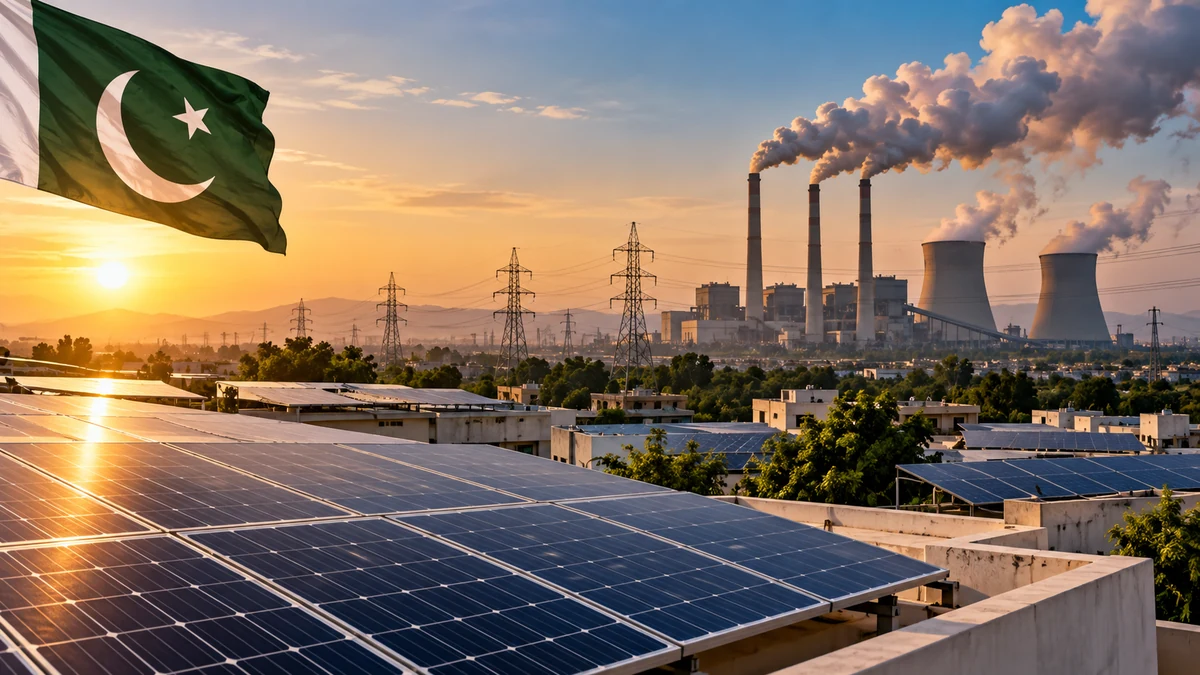
KARACHI: Pakistan’s rapid shift towards solar power is reducing demand for grid electricity and adding pressure to the economics of Chinese-backed coal-fired generation, according to a new report examining the country’s changing power market.
The report, published by Bloomberg and carried by Pakistani media on Thursday, describes a growing collision between two phases of China-linked energy investment in Pakistan: large coal power projects developed over the past decade and a more recent surge in imports of inexpensive Chinese solar equipment.
Solar accounted for about 20 per cent of Pakistan’s electricity generation in 2025, compared with roughly 3 per cent at the start of the decade, according to Ember figures cited in the report. The estimate reflects the scale of a solar expansion that has spread across homes, farms and industrial facilities.
At Port Qasim near Karachi, solar panels have become increasingly common across an industrial zone operating alongside a major coal-fired power station. Businesses cited in the report said rooftop generation allows them to reduce exposure to high grid tariffs, creating a strong financial incentive to install more panels where space permits.
The shift benefits consumers able to generate their own electricity, but it creates a difficult problem for the conventional power system. When higher-paying households and businesses reduce purchases from the grid, distribution companies have fewer units of electricity over which to recover fixed network and capacity costs.
Electricity consumption across Pakistan’s distribution companies was almost 12 per cent lower in the 12 months to July 2025 than during the comparable period three years earlier, according to regulator data cited by the report. The decline has coincided with persistent circular-debt pressures and payment arrears across the power sector.
The implications extend to Chinese-backed generation projects. The report said overdue payments to Chinese electricity plants had risen above $1.5 billion by August, citing an official familiar with the figures. It separately cited outstanding project debt linked to China-financed coal assets of $3.1 billion last year.
Those figures illustrate the financial strain surrounding the transition, but they do not mean solar adoption alone caused the arrears. Pakistan’s power sector has faced longstanding problems including transmission and distribution losses, weak recoveries, capacity payments, tariff adjustments and circular debt.
Energy Minister Awais Leghari told Bloomberg that Pakistan is seeking longer repayment periods for power-sector debt rather than reductions in the amounts owed. The discussions form part of a broader effort to manage obligations while electricity demand patterns change.
Pakistan’s solar expansion has also been accompanied by rising battery imports, which can allow households and businesses to rely less on grid electricity outside daylight hours. That trend could further alter demand for centrally generated power.
The central policy challenge is how to capture the benefits of cheaper distributed energy without shifting an unsustainable share of legacy system costs onto consumers who remain connected to the grid.
Coal plants and solar installations serve different operational roles, and Pakistan still requires reliable power when solar generation is unavailable. But the speed of adoption is forcing policymakers, utilities and investors to reassess assumptions about future grid demand, plant utilisation and the financing of existing generation capacity.