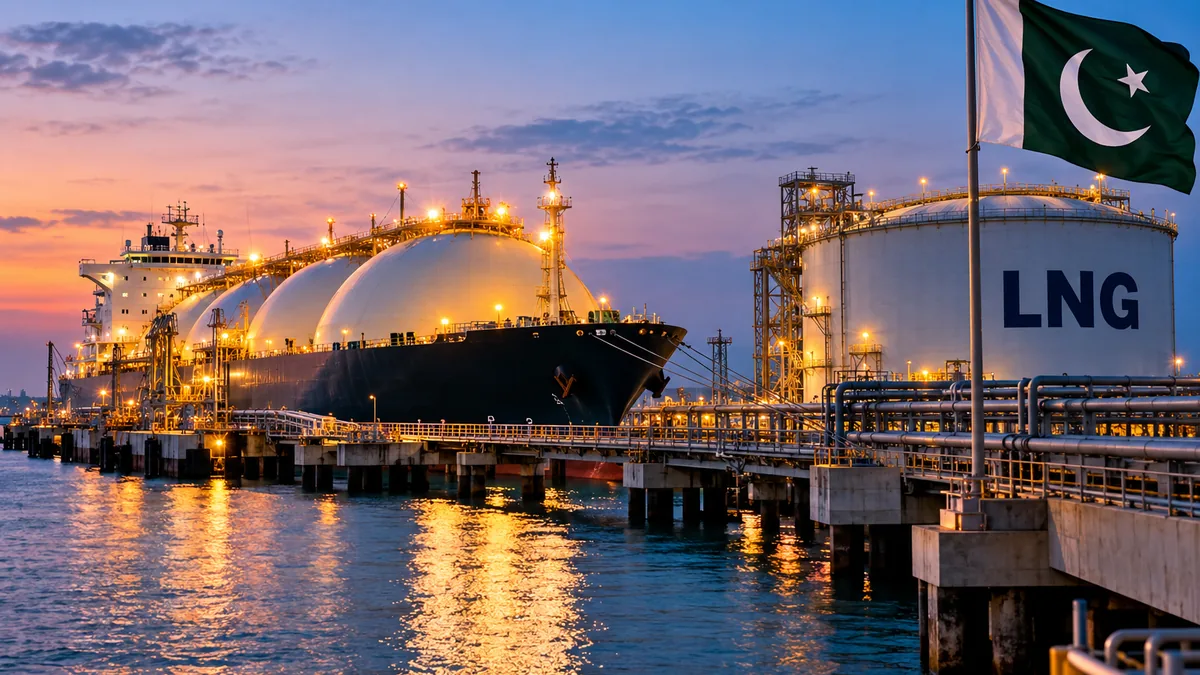
Pakistan is considering allowing power plants and other private companies to import liquefied natural gas directly, as the government looks for ways to make greater use of import-terminal capacity and reduce pressure on the state-led LNG supply system.
The Petroleum Division has submitted a proposal to substantially expand auctions of unused capacity at Pakistan’s LNG terminals and permit private companies to procure cargoes directly, Bloomberg reported, citing a person familiar with the matter. The proposal has not yet been presented as an approved policy.
The potential change comes as Pakistan’s LNG supply arrangements have been strained by disruption to Qatari deliveries and high prices in the spot market.
Proposal targets unused LNG terminal capacity
Under the existing market structure, state-owned Pakistan LNG Limited plays a central role in procuring spot LNG cargoes. The reported proposal would widen the scope for private buyers, including power plants, to arrange imports themselves if they can secure terminal capacity and meet the applicable regulatory requirements.
Two of Pakistan’s LNG import terminals have been mostly idle since March following interruptions to flows from Qatar linked to the conflict in the Middle East, according to the report.
That has increased the importance of how Pakistan allocates terminal capacity and obtains replacement supplies. Spot LNG can provide flexibility when long-term deliveries are disrupted, but it can also be substantially more expensive depending on international market conditions.
The proposal therefore concerns both access to import infrastructure and who bears the commercial risk of purchasing LNG.
Pakistan faces a difficult LNG supply environment
Pakistan has historically relied heavily on long-term LNG supply agreements with Qatar because contracted cargoes can provide greater predictability than repeated purchases on the spot market.
That system has faced pressure this year. Renewed hostilities affecting the Strait of Hormuz disrupted regional energy trade, while QatarEnergy’s force-majeure measures affected deliveries to several Asian customers, including Pakistan.
Pakistan has consequently sought alternative cargoes and other measures to protect domestic fuel and power supplies.
Allowing more private-sector procurement could give large gas users another route to secure fuel when state supplies are constrained. It would not, however, guarantee cheaper LNG. Importers would still be exposed to global LNG prices, shipping costs, terminal charges and the availability of cargoes.
Any change would also depend on the final regulatory framework and the terms under which unused terminal capacity is auctioned.
For now, the key development is that the Petroleum Division has put forward a proposal to broaden private participation in LNG imports. Until the government approves and implements such a framework, the existing arrangements remain in place.