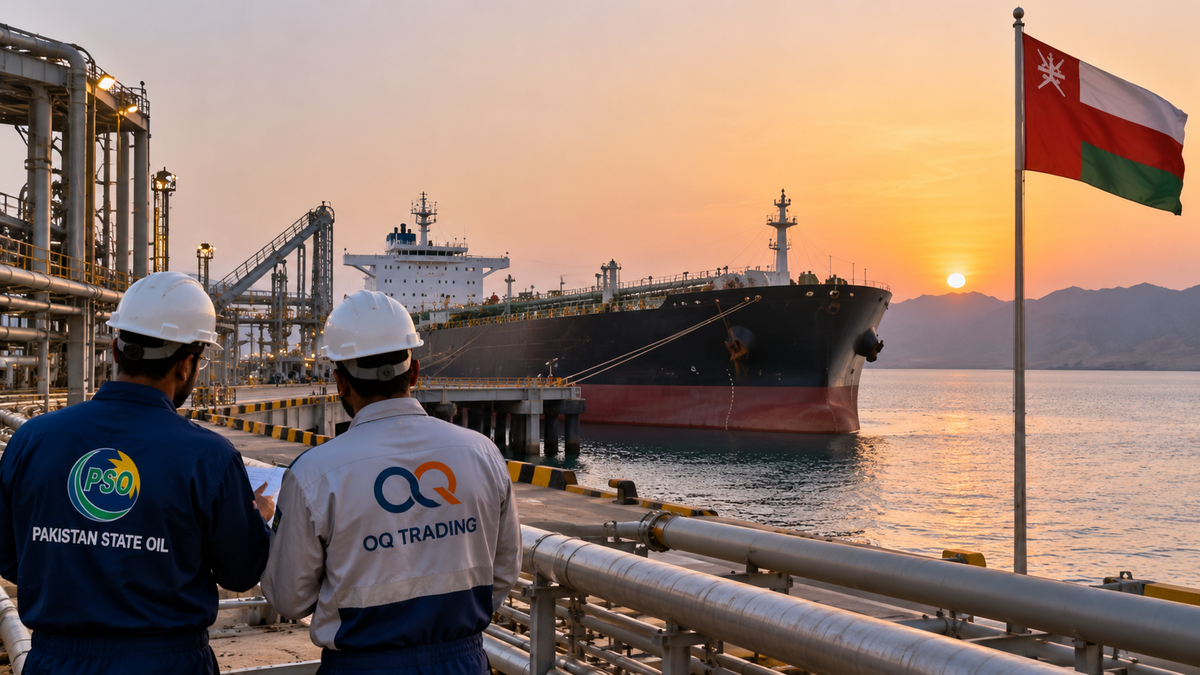
Pakistan has moved ahead with a proposed oil-supply arrangement with Oman as the government looks for additional ways to protect fuel availability during a period of severe disruption in Middle Eastern energy markets.
The Economic Coordination Committee approved a proposed sale and purchase agreement between Pakistan State Oil and Oman’s OQ Trading, according to the government’s account of the decision. The agreement is being pursued under an earlier government-to-government framework between Pakistan and Oman.
The approval is an important procedural step, but it does not mean that oil deliveries under the arrangement have already begun. The commercial agreement still has to operate through the relevant companies and supply terms.
The timing gives the deal added significance. Shipping and oil flows across the Gulf have been disrupted by the Iran war, while traffic through the Strait of Hormuz — one of the world’s most important energy corridors — has fallen sharply. Pakistan imports much of the petroleum it consumes, leaving domestic fuel supply and prices exposed to changes in international markets and regional shipping conditions.
PSO is Pakistan’s largest state-owned fuel marketer and plays a central role in supplying petroleum products to the domestic market. OQ Trading is the trading arm associated with Oman’s state energy group, giving the proposed arrangement a direct link to a major Gulf producer.
For Pakistan, supply diversification can matter even when there is no immediate physical shortage. A wider group of suppliers and contractual routes can reduce dependence on a narrower set of commercial channels at a time when freight costs, insurance, shipping availability and delivery schedules are under pressure.
The government has already been dealing with the domestic consequences of higher international energy costs. Petrol and diesel prices have risen sharply since early March, and the September 16 review lifted petrol to Rs384.34 a litre and high-speed diesel to Rs415.83.
That makes energy security a question not only of whether fuel reaches Pakistan, but also at what cost.
The proposed Oman arrangement should therefore be judged by the final commercial terms, the volumes available and the reliability of deliveries rather than by the approval alone. Those details will determine how much practical protection the deal can provide if regional oil-market disruptions continue.