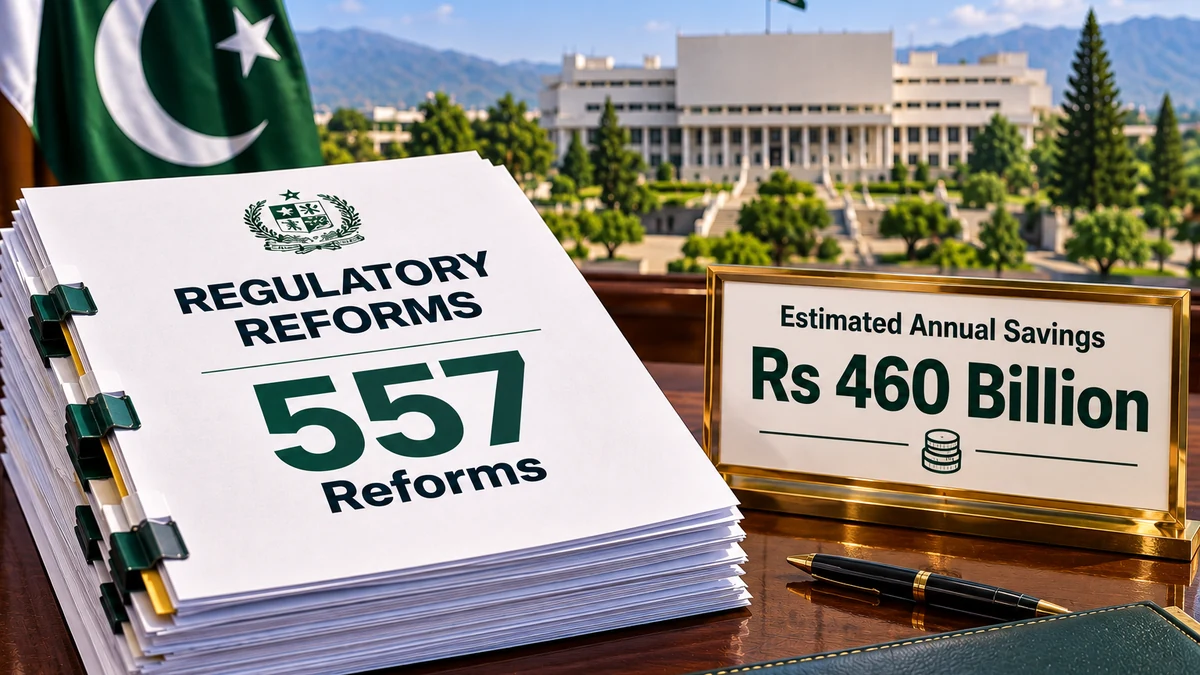
Pakistan’s Cabinet Regulatory Reforms Committee has approved 557 regulatory reforms across seven multi-sector areas as the government pushes to reduce compliance costs and make it easier to do business.
The government estimates that the approved reforms could generate annual savings of about Rs460 billion.
That figure is an estimate of potential savings from the reform programme, not money that has already been saved.
Prime Minister Shehbaz Sharif reviewed the regulatory reform programme at a meeting focused on ease of doing business and investment promotion. He directed officials to ensure that regulatory changes produce practical benefits for businesses.
The meeting was told that the Cabinet’s Regulatory Reforms Committee had approved the 557 reforms in seven multi-sector areas. Officials estimated that the changes could reduce annual costs by Rs460 billion.
The government is also working to create a national regulatory registry and expand implementation of the Easy Business framework across the country. The broader aim is to simplify rules, reduce duplication and make regulatory requirements easier for businesses to navigate.
The prime minister directed the Special Investment Facilitation Council and the Punjab chief secretary to complete integration of eBiz Punjab and the Islamabad Business Facilitation Centre by March next year.
Officials also said work is under way to simplify the Export Policy Order and Import Policy Order. The SIFC is coordinating with the provinces, as well as Azad Jammu and Kashmir and Gilgit-Baltistan, on regulatory reforms.
The meeting was informed that 8,717 applications had been received through Business Facilitation Centres and that 71% had been completed. The Islamabad Business Facilitation Centre had provided services to 4,612 new businesses.
The reform programme matters because regulatory delays, overlapping approvals and compliance requirements can add costs for companies before they begin or expand operations. Reducing those frictions can lower administrative expenses, although the actual savings will depend on how fully the approved reforms are implemented and used.
The Rs460 billion figure should therefore be read as the government’s estimate of the annual benefit if the reform programme delivers as intended. The next test will be implementation across federal and provincial systems and whether businesses experience measurable reductions in time and compliance costs.