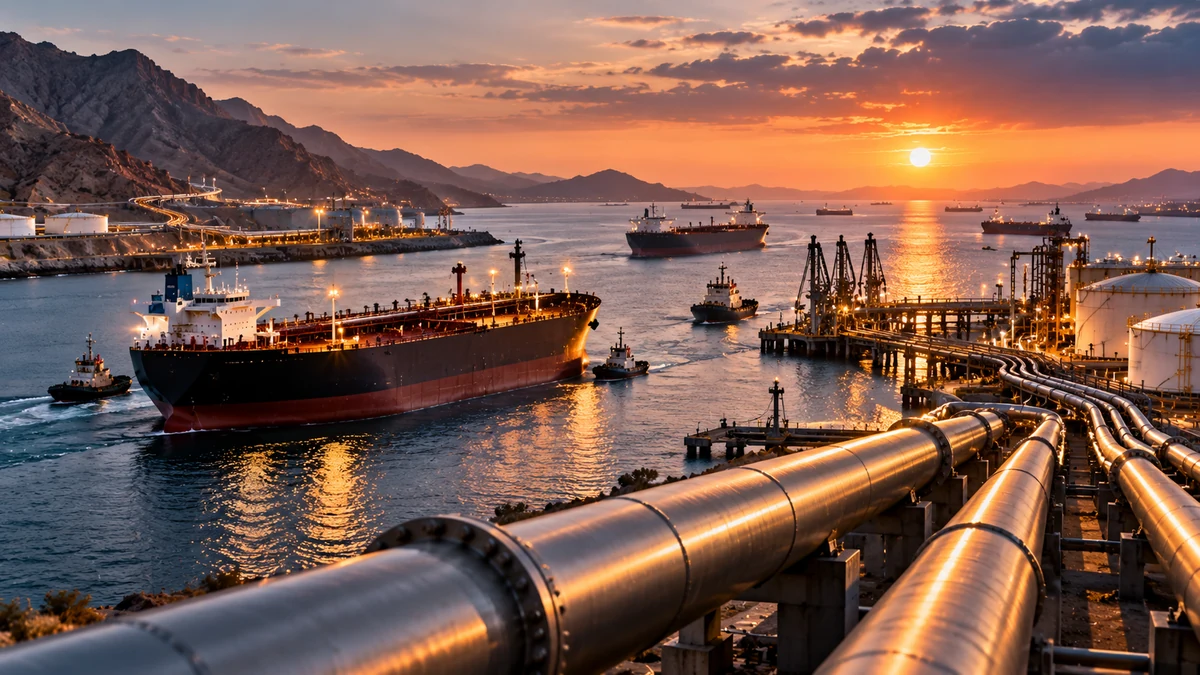
Global oil executives are pushing for more export routes and pipeline capacity after disruptions around the Strait of Hormuz and Bab el-Mandeb exposed the vulnerability of energy flows concentrated through a small number of maritime corridors.
The discussion reflects a shift from highly efficient “just-in-time” supply systems toward greater contingency capacity, with producers and traders examining alternative routes that could keep oil moving when major shipping lanes are disrupted.
TotalEnergies chief executive Patrick Pouyanné said the industry needs to think more in terms of backup options. Among the routes under consideration are a possible Iraq-to-Syria pipeline and an expansion of the system carrying oil to Fujairah in the United Arab Emirates.
BP chief executive Meg O’Neill pointed to work involving the Kirkuk area alongside ConocoPhillips and Türkiye’s TPAO and to the potential value of northern export routes. She also cautioned that major pipelines require large capital commitments, meaning the economics of new infrastructure remain important.
Chevron has signed an initial agreement in Iraq that includes the possibility of routes toward Ceyhan in Türkiye and Baniyas in Syria. Chief executive Mike Wirth has said a consortium approach would probably be needed for projects of that scale.
Kuwait Petroleum Corporation chief executive Sheikh Nawaf Al-Sabah has argued that importing countries should also participate in financing additional export infrastructure because they benefit directly from greater security of supply.
The urgency comes from the disruption of two strategic waterways. Hormuz is central to Gulf energy exports, while Bab el-Mandeb links the Red Sea with the Gulf of Aden and the wider Indian Ocean shipping system.
Even after the recent disruption, Gulf oil flows excluding Iran had recovered to more than 81% of pre-war levels in September, while refined-product flows were around 60%. The partial recovery has not removed concern over how quickly trade can be interrupted when chokepoints become unsafe.
The industry’s debate does not mean all the proposed pipelines will be built. Large cross-border energy projects require financing, political agreements, security arrangements and years of construction.
The immediate change is strategic: oil companies and producing states are giving greater weight to redundant routes that may be more expensive but could reduce dependence on Hormuz and Bab el-Mandeb during future crises.
Pakistan Report illustration.