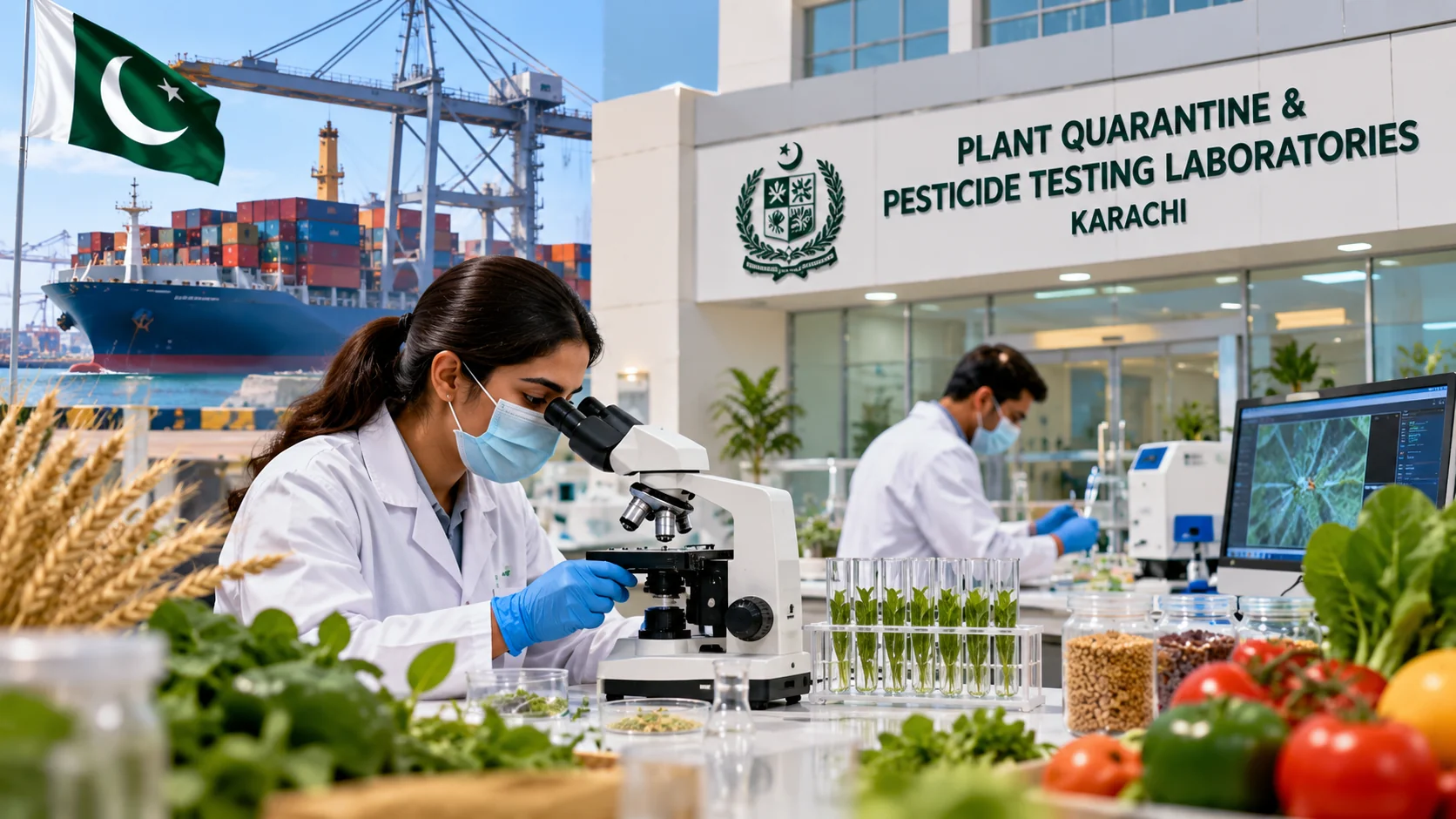
KARACHI: Federal Minister for National Food Security and Research Rana Tanveer Hussain inaugurated upgraded plant quarantine and pesticide testing laboratories in Karachi on October 23, marking a step towards improving agricultural biosecurity and export quality assurance.
The upgraded facilities comprise the Central Plant Quarantine Laboratory and the Federal Pesticides Testing and Reference Laboratory.
The inauguration was attended by representatives of the University of Karachi, the H.E.J. Research Institute of Chemistry, the International Center for Chemical and Biological Sciences, the Department of Plant Protection, and scientific and technical experts.
Strengthening plant quarantine testing
The upgraded Central Plant Quarantine Laboratory will enhance Pakistan’s ability to identify harmful pests and plant diseases associated with imported agricultural commodities.
Improved diagnostic capabilities will support efforts to prevent invasive pests from entering the country and protect domestic agricultural production.
The facility will also help strengthen compliance with international phytosanitary requirements, which are important for the movement of agricultural products across borders.
Improving pesticide quality assurance
The Federal Pesticides Testing and Reference Laboratory will support scientific testing of pesticide formulations and verification of their active ingredients.
Its upgraded capabilities will also help identify substandard agricultural chemicals and strengthen pesticide residue testing.
These functions are important for maintaining agricultural input standards, protecting food safety and supporting the quality requirements of international markets.
Supporting agricultural exports
Addressing the inauguration ceremony, Rana Tanveer Hussain emphasised the importance of protecting crops from pests and diseases while improving agricultural productivity.
He said modern scientific infrastructure was necessary to strengthen the competitiveness of Pakistani agricultural products and meet international standards.
The minister also highlighted the need for reliable laboratory results, trained scientific personnel, standardised testing procedures and recognised quality management practices.
The upgraded laboratories are expected to support agricultural regulation, crop protection and the country’s efforts to expand access to international markets.