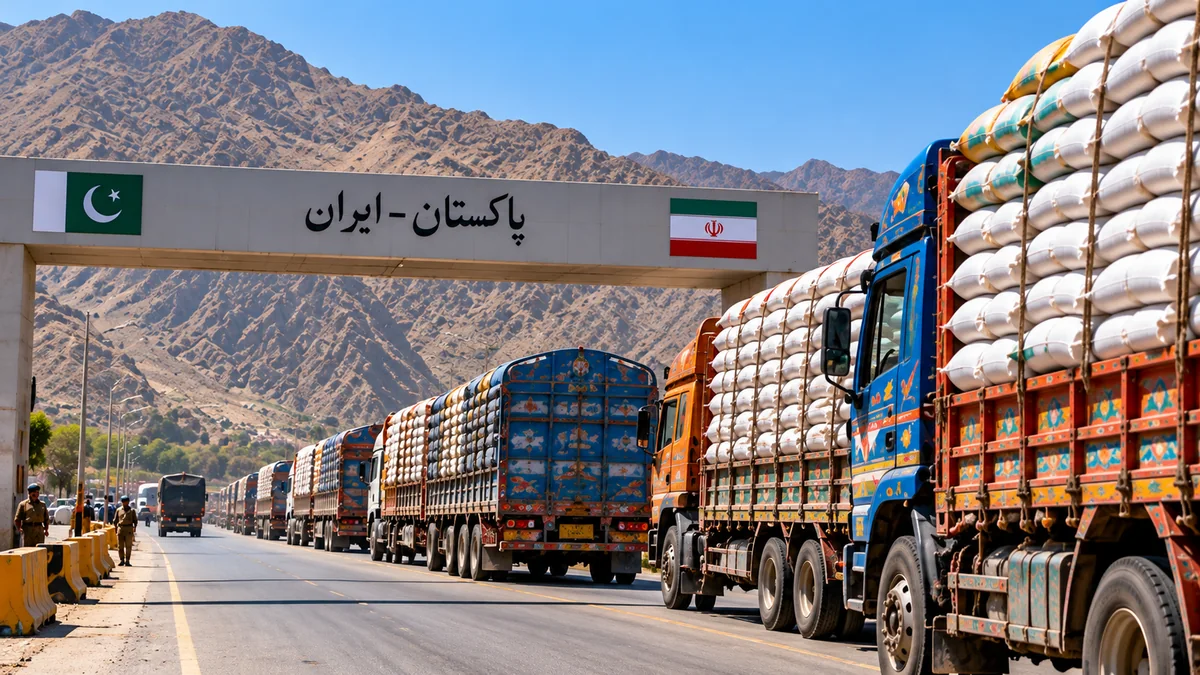
Pakistan’s suspension of commercial trade at two crossings with Iran is creating problems for exporters and importers, with rice traders warning that alternative shipping routes could be more expensive.
Commercial cargo movements through Taftan and Gabd-Rimdan were suspended from Saturday, October 17. Officials have described the measure as temporary, but no firm reopening date had been announced in the reporting reviewed for this draft.
Rice exporters face higher transport costs
A Pakistani rice exporters’ association warned that switching shipments from land routes to sea transport could raise freight costs, according to Arab News.
The disruption comes as traders report trucks and containers stranded at the crossings. Exporters face uncertainty over delivery schedules, while importers are waiting for clarification on when commercial traffic can resume.
Higher shipping costs could affect the competitiveness of Pakistani rice in the Iranian market, although the eventual impact will depend on the length of the suspension and available alternative routes.
LPG traders also watching the closure
The Gabd-Rimdan crossing is an important route for liquefied petroleum gas (LPG) imports. Traders have warned that a prolonged halt could tighten supplies and put upward pressure on prices.
Those concerns are warnings about possible consequences, not confirmation of a nationwide shortage or an established price increase. Verified retail price data and supply figures would be needed to assess the effect on consumers.
Talks over reopening
The Quetta Chamber of Commerce and Industry has urged traders to remain calm and said it had received assurances that the shutdown was temporary, according to The Express Tribune.
Officials have cited security and border-management concerns in connection with the suspension. The immediate priority for businesses is a clear timetable and practical arrangements for clearing stranded cargo.