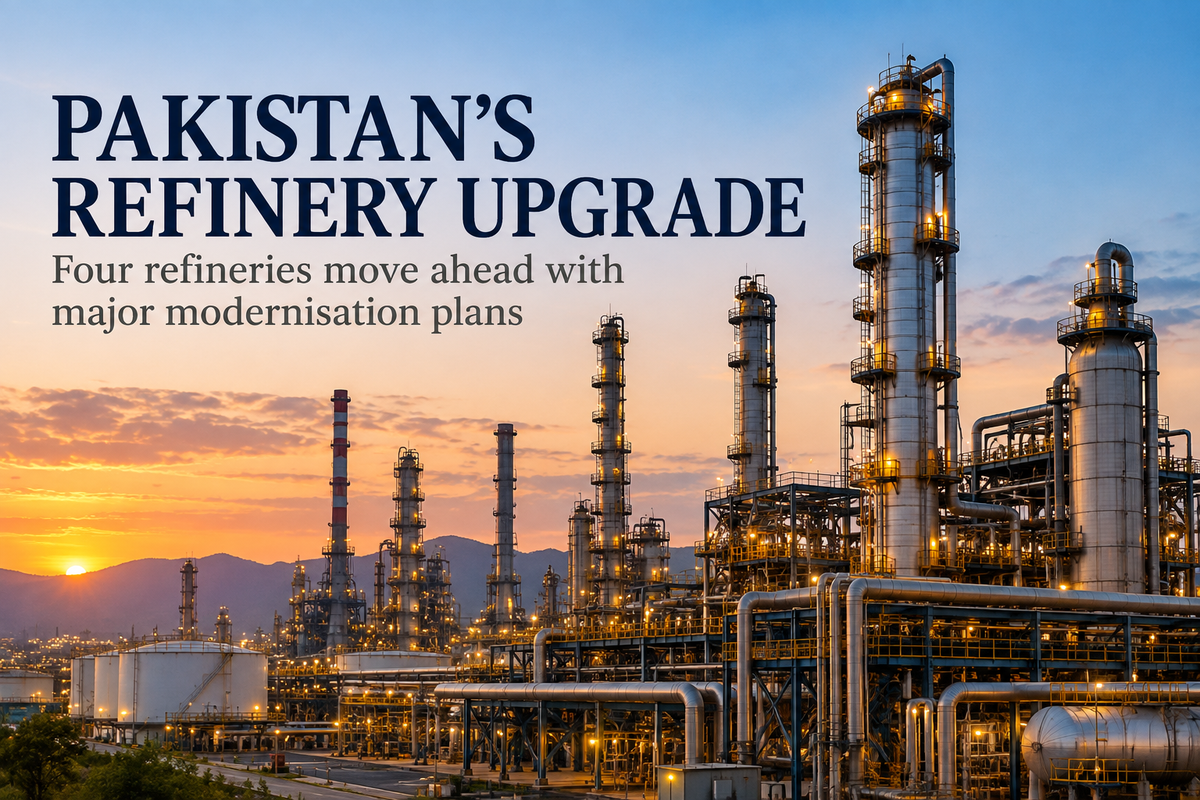
Four Pakistani oil refineries have signed formal upgrade agreements with the government, setting in motion investment estimated at about $5 billion over five years to modernise plants, improve fuel quality and increase production.
Attock Refinery Limited, National Refinery Limited, Pakistan Refinery Limited and Cnergyico Petroleum signed the agreements under the government’s brownfield refinery upgrade framework. Inter State Gas Systems, a Petroleum Division subsidiary designated to execute the agreements and monitor implementation, also signed them.
The programme is intended to enable participating refineries to produce petrol and high-speed diesel meeting Euro-V specifications, while reducing the share of furnace oil in their output.
The agreements follow years of negotiations over the terms needed to support large-scale investment in Pakistan’s ageing refining system. The government amended the brownfield refinery policy in 2026 after earlier changes to the framework.
Four refineries move ahead
The approximately $5 billion figure relates to the four refineries that have now signed agreements. It should be distinguished from an earlier Petroleum Division estimate of about $6 billion for a broader upgrade programme involving all five of Pakistan’s major refineries.
Pak-Arab Refinery Limited, or PARCO, was included in that earlier five-refinery estimate but was not among the four companies in the latest signing.
Under the upgrade framework, refineries are expected to undertake substantial plant modifications and add processing capacity needed to produce cleaner fuels. The projects are also intended to raise domestic production of petrol and diesel and reduce the proportion of lower-value furnace oil produced by local plants.
The policy provides incentives linked to eligible upgrade expenditure, while placing implementation and monitoring requirements on participating refineries. The latest agreements also require refineries to maintain minimum crude-oil inventories as part of efforts to strengthen supply resilience.
Investment now moves to implementation
Signing the agreements does not mean the full investment has already been made. Individual projects will still have to move through financing, engineering, procurement, construction and commissioning stages over the implementation period.
The eventual effect on Pakistan’s fuel-import bill will depend on how much additional petrol and diesel the upgraded refineries produce, future domestic demand and international product prices.
For the refining industry, however, the agreements mark the transition from prolonged policy negotiations to the execution stage of a modernisation programme that has been under discussion for years.