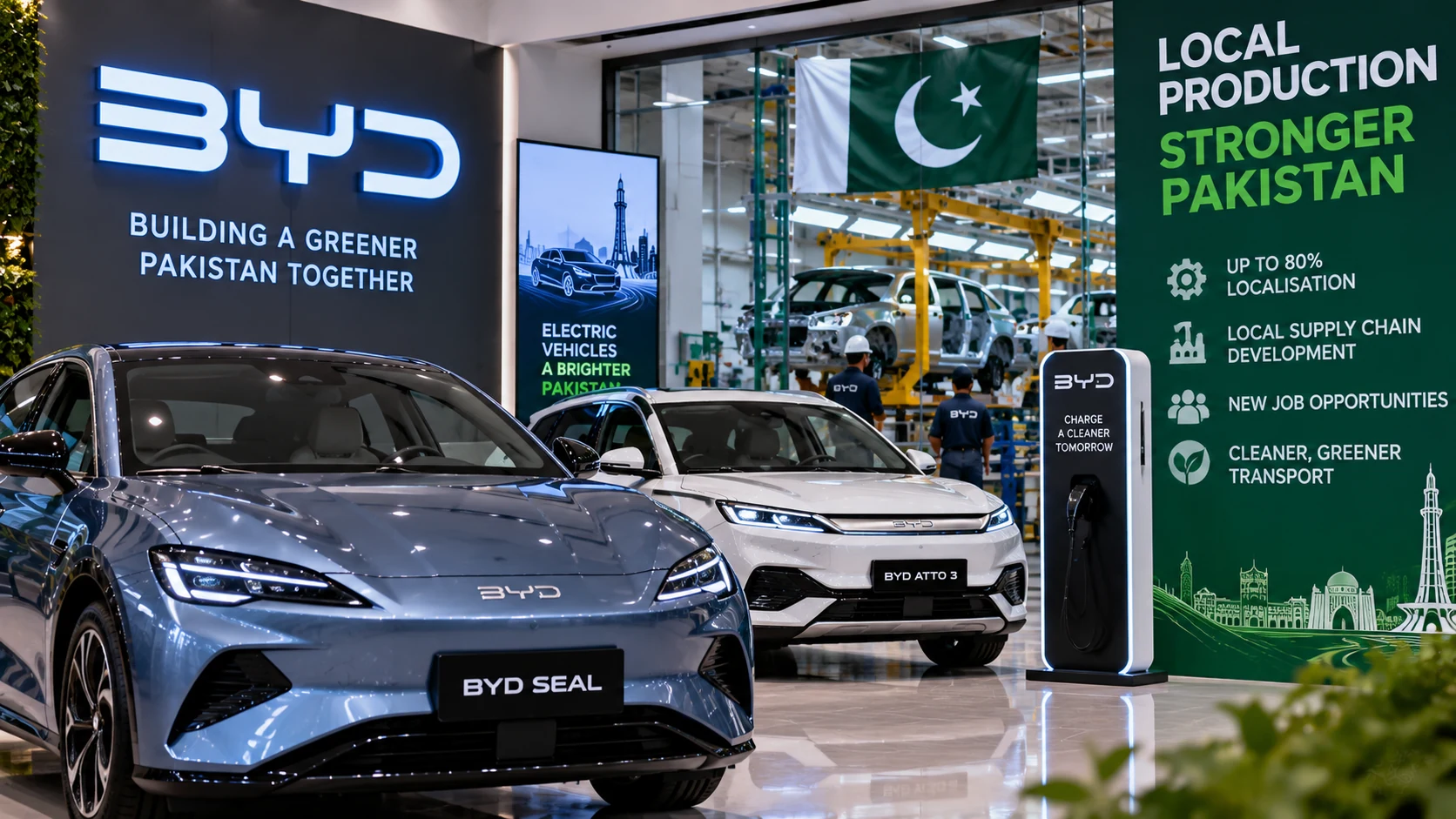
Pakistan’s electric-vehicle industry is approaching an important test as Hub Power Company outlines a phased production strategy for BYD vehicles: begin with imported parts and materials, build sales volumes, and gradually increase the share of components sourced or produced locally.
At a corporate briefing on October 20, Hubco management said the long-term ambition was to localise up to 80% of a vehicle. The initial production stage, however, would depend entirely on imported raw materials and components, according to a report of the briefing published on October 21.
Production and sales targets
Topline Securities, which reported details of the corporate briefing, said the BYD plant was expected to begin operating within roughly four to five weeks, with mid-December identified as the anticipated start period. Management was reported to be targeting sales of approximately 1,000 to 1,500 vehicles a month as operations ramp up.
BYD is also expected to introduce additional models in stages, concentrating on vehicle categories capable of generating meaningful demand. That approach could allow the company to expand its range without committing to large volumes across every segment at once.
Why localisation is the bigger challenge
Moving from imported kits and components to locally produced parts requires suppliers that can meet quality, cost and delivery standards. For electric vehicles, the challenge extends beyond conventional body and interior parts to high-voltage systems, electronics, battery-related components and specialist maintenance capabilities.
An 80% localisation ambition could support domestic manufacturers and reduce exposure to imported inputs if achieved. But the company has not publicly set out, in the briefing details reported so far, a product-by-product timetable for reaching that level.
Local production also does not guarantee an immediate fall in showroom prices. Import duties, exchange rates, factory utilisation, financing costs, battery economics and competition all influence the final price paid by buyers.
A more competitive EV market
The timing places BYD in a market where several Chinese-origin electric vehicles already compete for attention. Analysts have also highlighted plans by other Pakistani industrial groups to expand local EV manufacturing, adding pressure on brands to offer credible pricing and after-sales support.
For consumers, the next milestones are the confirmed plant start date, locally assembled models, official prices, warranty arrangements and the availability of charging and servicing infrastructure.
Hubco’s strategy signals a long-term manufacturing ambition, but the first phase will primarily test whether the business can establish steady production and demand before deeper localisation begins.
Source: Dawn report on Hubco corporate briefing and Topline Securities assessment (21 October 2026): https://www.dawn.com/news/2038641/byd-to-rely-on-imports-initially-hubco-says