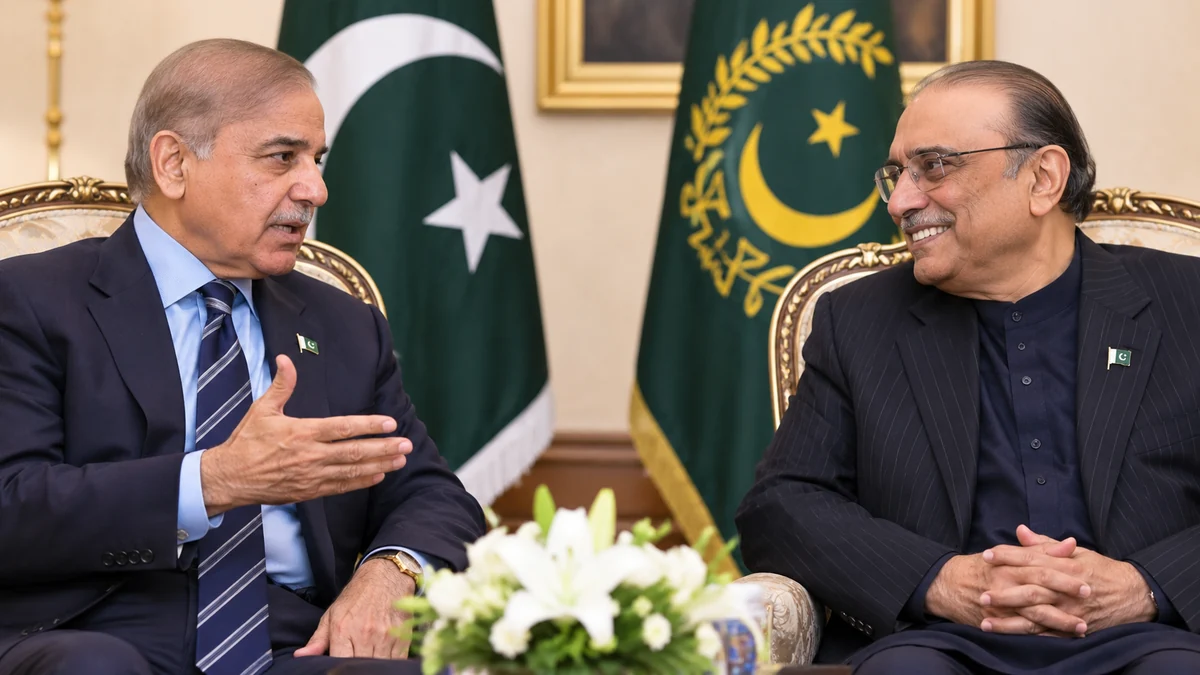
LAHORE, November 14, 2026 — President Asif Ali Zardari and Prime Minister Shehbaz Sharif met in Lahore on Saturday to discuss Pakistan’s political, economic and security situation, with both leaders emphasising cooperation among governing coalition partners.
The meeting took place at the prime minister’s Model Town residence and brought together senior figures from the Pakistan Muslim League-Nawaz (PML-N) and Pakistan Peoples Party (PPP).
According to the Prime Minister’s Office, discussions covered national priorities, economic stability, public welfare initiatives and the importance of continued consultation between coalition partners.
Shehbaz also briefed the president on his recent visit to Türkiye and participation in the COP31 climate conference.
The meeting was attended by National Assembly Speaker Ayaz Sadiq, former prime minister Raja Pervaiz Ashraf, Senator Saleem Mandviwalla, Law Minister Azam Nazeer Tarar, adviser Rana Sanaullah and MNA Hamza Shehbaz.
The talks came amid renewed political debate over proposals to create additional provinces, an issue that has highlighted differing positions within Pakistan’s political leadership.
Interior Minister Mohsin Naqvi’s suggestion of a public referendum on the matter has prompted discussion about constitutional requirements and the future administrative structure of the country.
The PPP has traditionally opposed proposals that could divide Sindh, while other political figures have argued that smaller provinces could improve governance and the delivery of public services.
Zardari’s earlier meeting with Naqvi also attracted speculation about possible constitutional changes. However, the President’s House denied reports that the creation of new provinces had been discussed during that meeting.
No official statement indicated that Zardari and Shehbaz discussed a referendum, agreed on changes to provincial boundaries or reached any decision concerning a proposed constitutional amendment.
The latest meeting nevertheless underlined the importance of coordination between the PML-N and PPP as the government navigates economic pressures, security concerns and competing political demands.
Both parties remain central to the governing arrangement, making continued dialogue significant for political stability and the implementation of national priorities.