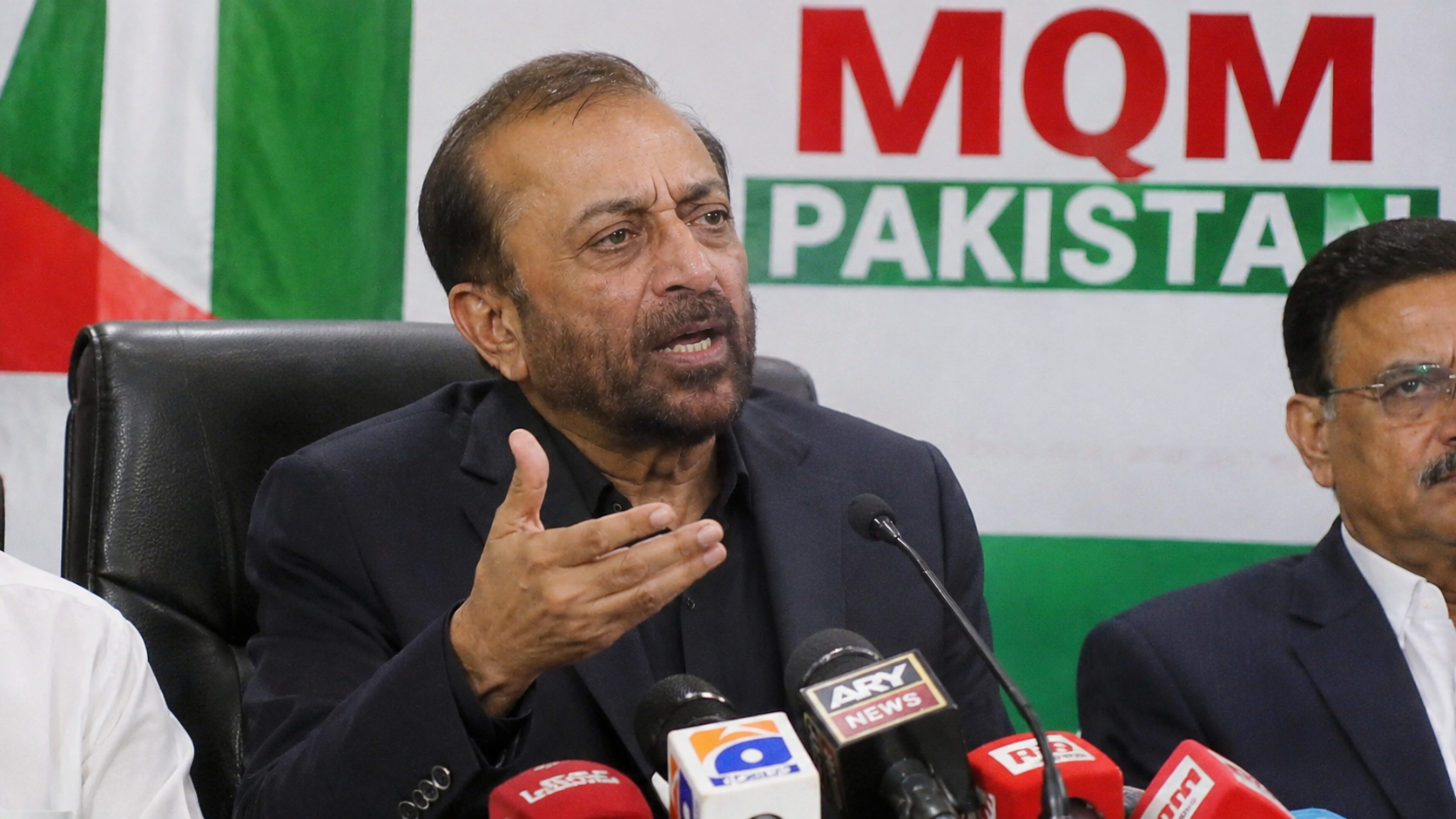
KARACHI, 18 November 2026 — The debate over creating new provinces in Pakistan has intensified after the Muttahida Qaumi Movement-Pakistan (MQM-P) called for a nationwide referendum in December, while the Pakistan Muslim League-Nawaz (PML-N) and Pakistan Peoples Party (PPP) expressed sharply different positions on the proposal.
Speaking at a press conference in Karachi on Tuesday, senior MQM-P leader Farooq Sattar urged the government to seek public opinion on establishing additional provinces and administrative units before the end of 2026.
Sattar proposed holding the referendum under Article 48(6) of the Constitution, arguing that decisions about the country’s administrative structure should reflect the wishes of its citizens.
He also called for stronger constitutional protection of local-government powers through the proposed 28th Constitutional Amendment, with particular emphasis on implementing Article 140-A, which concerns the devolution of authority to elected local governments.
PML-N and PPP differ over referendum
The proposal has exposed differences between the PML-N-led federal government and its coalition partner, the PPP.
Federal Information Minister Attaullah Tarar defended the idea of a referendum, describing public consultation as a constitutional means of determining whether people support additional provinces.
Responding to PPP Chairman Bilawal Bhutto-Zardari’s criticism, Tarar argued that the debate should remain open and that political parties should not prevent citizens from expressing their views.
He also urged coalition partners to resolve their differences through dialogue.
Bilawal, however, warned against attempts to divide Sindh without following the Constitution and obtaining the consent of its people.
Speaking at the Karachi Press Club on Tuesday, the PPP chairman cautioned that any forced division of Sindh could provoke serious unrest.
He rejected the suggestion that a referendum could replace the constitutional process for changing provincial boundaries, while maintaining that the PPP was not opposed to creating new provinces elsewhere through lawful procedures.
MQM-P challenges Bilawal’s position
MQM-P subsequently criticised Bilawal’s warning, questioning why the creation of additional provinces should be associated with violence in Karachi or other urban areas of Sindh.
The party maintained that the question of administrative restructuring should be decided through public consultation rather than political opposition to the idea itself.
Separately, Sattar advocated greater administrative authority and resources for local governments, linking the demand for new administrative arrangements to longstanding concerns about governance and the distribution of powers.
Constitutional approval remains necessary
Although a referendum has become central to the political debate, changing provincial boundaries would require more than a public vote.
Under Article 239 of the Constitution, an amendment altering the limits of an existing province requires approval by a two-thirds majority in both houses of Parliament and by a two-thirds majority of the affected provincial assembly.
The Sindh Assembly unanimously adopted a resolution in September rejecting proposals to divide the province or change its territorial boundaries.
The disagreement therefore presents a significant political obstacle to any proposal affecting Sindh, where the PPP remains firmly opposed to territorial division.