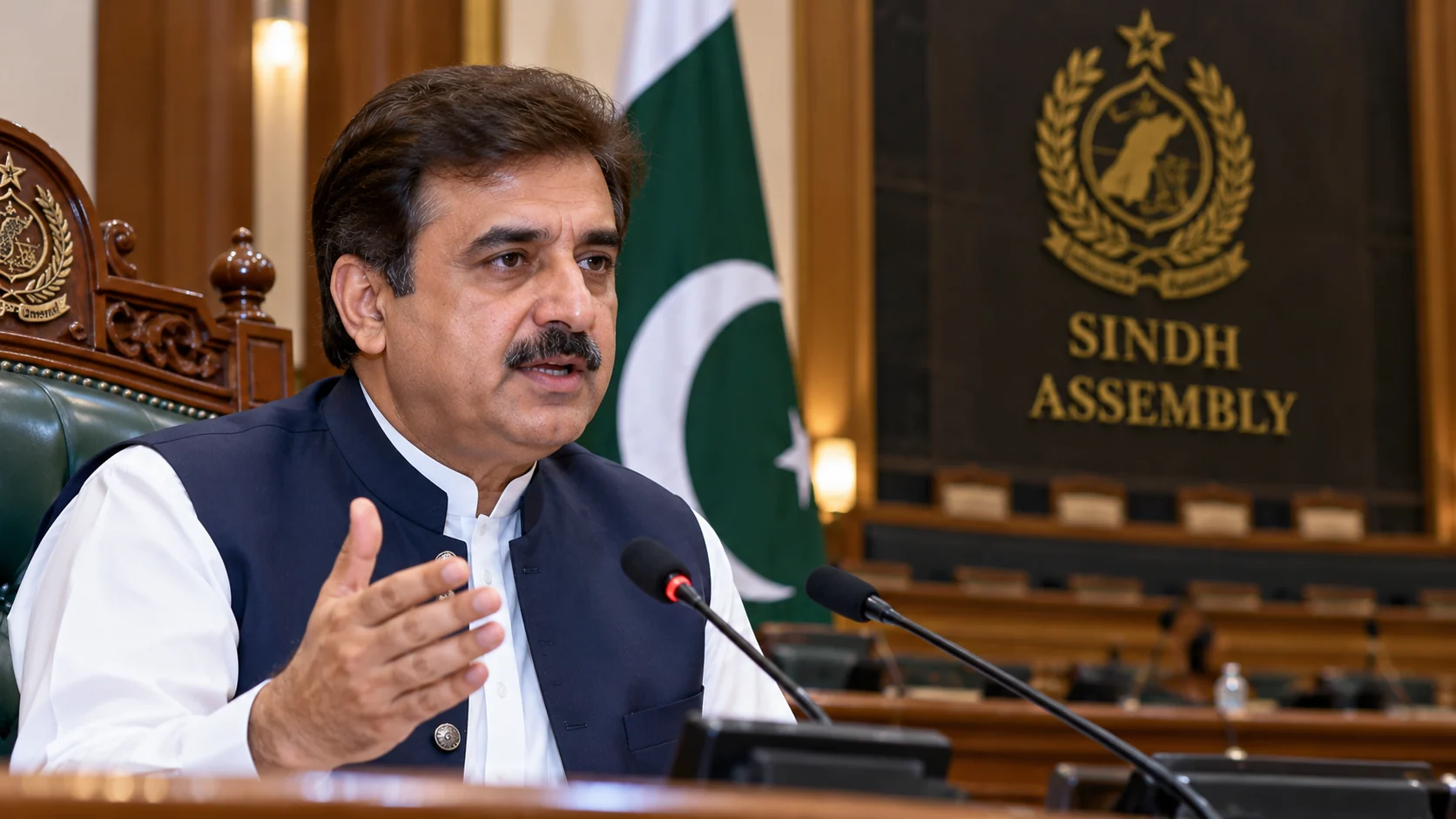
Sindh Assembly Speaker Syed Owais Qadir Shah has rejected proposals concerning the division of Sindh or the imposition of governor’s rule, saying neither would be acceptable to the province’s political leadership.
Speaking to reporters in Saleh Pat, Sukkur, Shah responded to proposals attributed to Interior Minister Mohsin Naqvi and said Sindh’s territorial integrity could not be compromised.
His comments come as the debate over provincial administration has gained attention following the federal government’s decision to impose emergency measures in Khyber Pakhtunkhwa.
Shah said the situation in Sindh should not be compared with that of Khyber Pakhtunkhwa, arguing that the two provinces faced different circumstances.
Opposition to dividing Sindh
The speaker said the Pakistan Peoples Party (PPP) leadership remained firmly opposed to any move to divide the province.
He also referred to an earlier resolution passed by the Sindh Assembly rejecting the idea of dividing Sindh.
The question of creating new provinces or administrative units has long generated political disagreement in Pakistan.
Supporters of administrative restructuring argue that smaller units could improve public services and bring government closer to communities.
Opponents of dividing Sindh, including the PPP leadership, maintain that such proposals threaten the province’s territorial and political identity.
Shah’s latest remarks reinforce that position at a time when wider discussions about the country’s administrative structure have returned to the political agenda.
Governor’s rule also rejected
The speaker also opposed suggestions that governor’s rule could be introduced in Sindh.
He argued that the province’s law-and-order situation was better than that of other parts of the country and said the circumstances in Khyber Pakhtunkhwa should not be used to justify similar measures elsewhere.
The federal government’s recent intervention in KP has renewed debate about the circumstances under which provincial administrations can be placed under extraordinary constitutional arrangements.
However, Shah’s comments did not indicate that any formal decision had been taken to impose such measures in Sindh.
Any proposal to alter provincial boundaries would also face significant constitutional requirements, including approval by the affected provincial assembly.
For now, the speaker’s statement makes clear that the Sindh Assembly leadership intends to resist proposals affecting the province’s existing boundaries.
The wider debate over administrative reform is likely to continue, but no formal plan to divide Sindh has been approved.