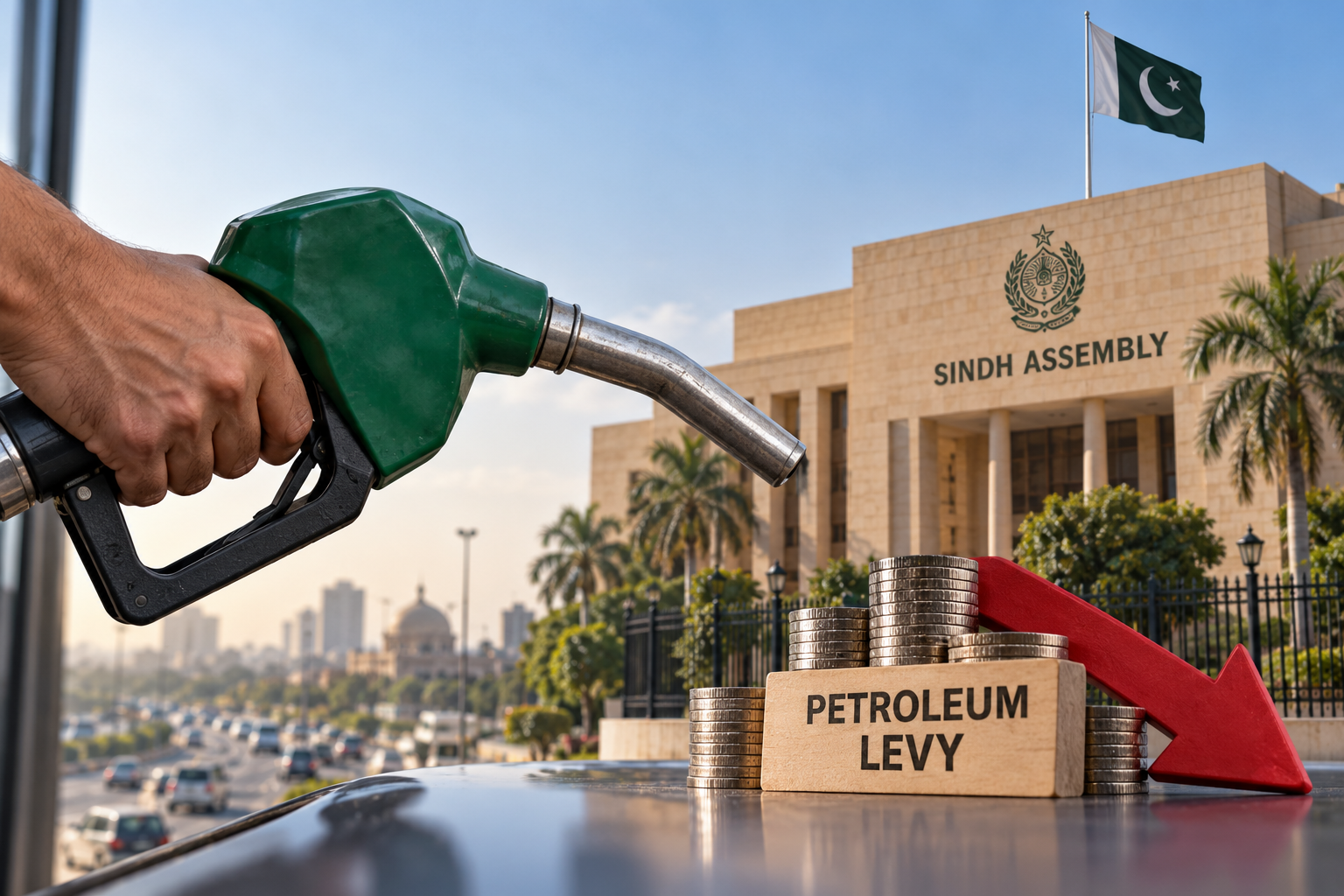
The Sindh Assembly has unanimously adopted a resolution calling on the federal government to abolish the petroleum levy amid concerns over the impact of high fuel prices on households and businesses.
The resolution was moved by Jamaat-i-Islami lawmaker Muhammad Farooq and received support from the house.
It comes as Pakistan’s latest fuel-price revision has pushed petrol to Rs364.35 per litre and high-speed diesel to Rs385.95 per litre for September 9.
What the Sindh Assembly decided
The resolution calls on the federal government to abolish the petroleum levy, arguing that high fuel costs are placing additional pressure on consumers.
Farooq raised the effect of petroleum prices on transport costs and household expenses while presenting the resolution.
Sindh Law and Parliamentary Affairs Minister Ziaul Hasan Lanjar said the provincial government supported the resolution but stressed that the petroleum levy is a federal matter.
That distinction is important.
The Sindh Assembly’s vote does not itself remove or reduce the levy. Any change to the federal petroleum levy would require action by the federal government.
Why the petroleum levy matters
The levy is one of the charges incorporated into Pakistan’s domestic petroleum pricing structure and provides revenue to the federal government.
Because it is charged on fuel, changes to the levy can affect the final price consumers pay even when international oil prices remain unchanged.
But international prices are currently another source of pressure.
Brent crude crossed $100 a barrel during trading on September 9 as escalating conflict in the Middle East increased concerns about global oil supplies.
That means Pakistan could face pressure from both international energy markets and its domestic fuel-pricing structure.
Fuel prices are becoming a political issue
The Sindh resolution also demonstrates how rising petroleum prices are increasingly feeding into domestic politics.
Jamaat-i-Islami has been protesting against higher petroleum prices, while lawmakers from other parties supported the resolution in the provincial assembly.
For consumers, fuel prices have consequences beyond the cost of filling a vehicle.
Higher diesel and petrol prices can increase transport and distribution costs, potentially affecting businesses and the prices of goods transported across the country.
What happens next
The resolution now puts political pressure on the federal government, but it does not create a legal requirement for the petroleum levy to be abolished.
The next development to watch is whether the federal government responds with any change to the levy or other components of petroleum pricing.
International oil prices will also remain important because Pakistan’s fuel costs are exposed to movements in global energy markets.
For now, petrol remains at Rs364.35 per litre and high-speed diesel at Rs385.95 per litre under the September 9 revision.