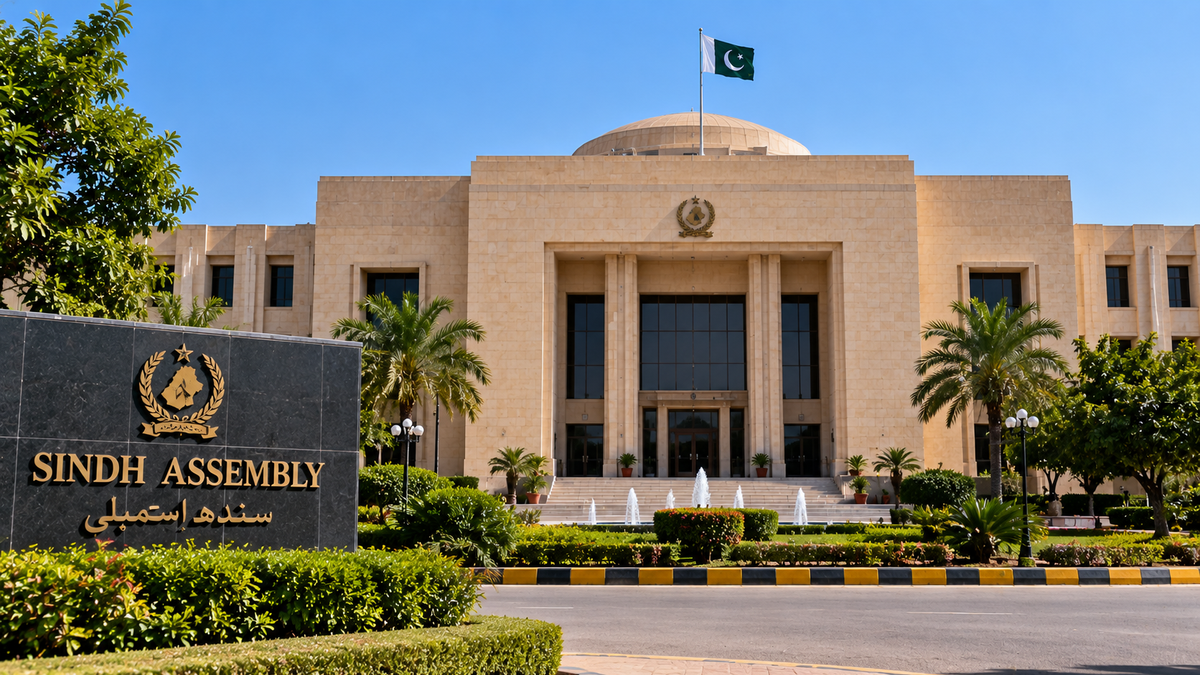
The Sindh Assembly has passed the Sindh Local Government (Amendment) Bill 2026, approving changes to how local councils operate and how they are managed between the end of an elected term and the installation of new local-government leadership.
The bill was approved by majority vote on Monday after a special parliamentary committee examined the legislation. Opposition lawmakers protested during the proceedings, while the government moved ahead with the committee report and passage of the bill.
One of the most consequential changes concerns the transition after a local council’s term expires. Under the legislation, an outgoing mayor or chairman can continue to perform the functions of the council as administrator until the newly elected local-government head takes office.
The framework is intended to address the administrative gap that can arise when a council completes its term before its successor is in place.
The amendments also make the deputy mayor or vice chairman the convener of the council and authorize that office-holder to preside over council meetings.
The passed legislation provides for a local reconciliation mechanism that is to be constituted within 90 days. It also requires union council chairmen to identify illegal construction and report it to the Sindh Building Control Authority.
The changes are politically significant because control of local government in Sindh — particularly in Karachi — has long been contested between provincial and municipal political forces. Rules governing what happens after elected terms expire can determine who exercises administrative authority during the period before new office-holders take charge.
The bill had been introduced in the assembly on September 9 and referred to a special committee for examination. Sindh Assembly records confirm that Government Bill No. 32 of 2026 was formally taken up and that a committee was constituted to review it.
Passage moves the changes beyond the proposal stage. Attention will now turn to implementation of the new transition and council-management provisions, particularly how the administrator arrangement operates when elected terms end before successors assume office.