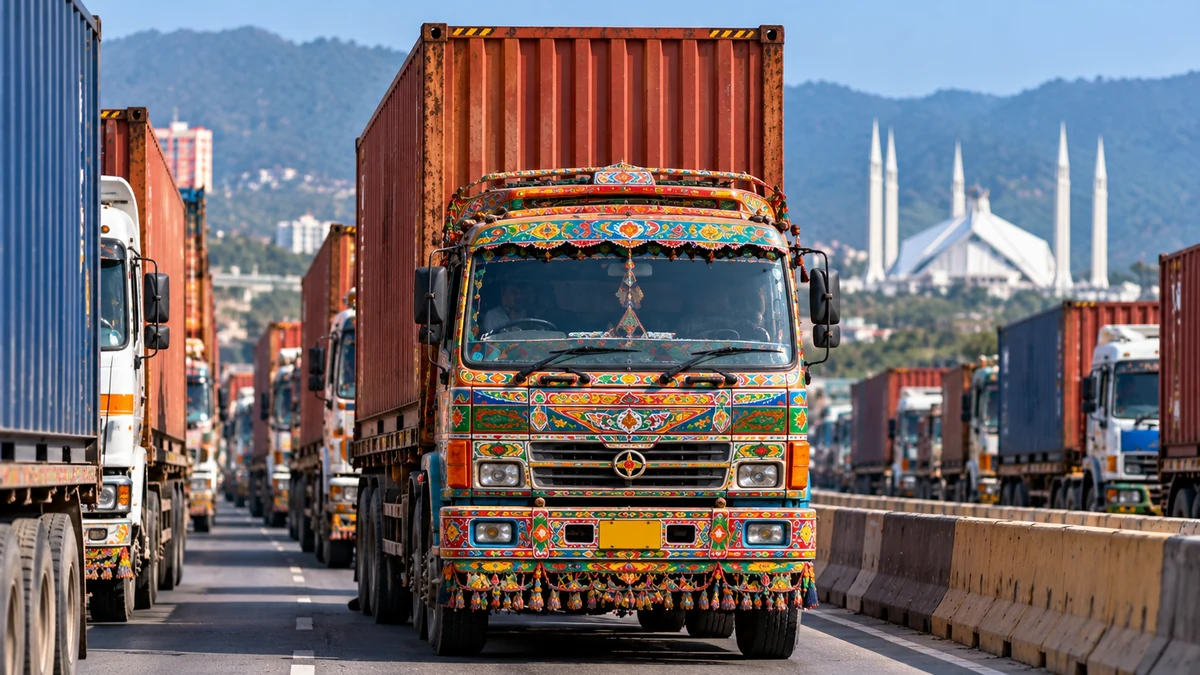
Freight movement from Karachi has been disrupted as authorities requisition shipping containers and vehicles for security preparations ahead of Pakistan Tehreek-e-Insaf’s planned October 4 march to Islamabad.
Reuters reported on October 2 that truckers were avoiding northbound journeys because of concerns that their vehicles and cargo could be taken for use in road barricades. The disruption has contributed to a buildup of cargo at Karachi, Pakistan’s main port city.
Transport representatives cited by Reuters said more than 2,000 vehicles were requisitioned during September, including vehicles carrying cargo. The disruption has affected supply routes and left transporters facing delayed deliveries and additional costs.
The measures are linked to preparations to restrict access to Islamabad ahead of PTI’s planned march. The party had initially announced a protest for September 27 before postponing it to October 4.
The freight disruption is separate from the political negotiations taking place between government and PTI representatives. Those talks do not, by themselves, mean the October 4 march has been cancelled.
For businesses, the immediate concern is the interruption of normal cargo movement. When trucks avoid routes because of the risk of requisition and containers remain tied up for security use, deliveries can be delayed and transport-related charges can accumulate.
Reuters reported that containers were lining roads into the capital as preparations continued. Transport operators also warned about the financial strain created by missed deliveries and demurrage costs.
The scale and duration of the economic impact will depend on how long the restrictions and requisitioning continue and whether the planned march proceeds. Any change to PTI’s protest plan or to the authorities’ security arrangements could alter freight conditions quickly.
For now, the confirmed development is that preparations ahead of the October 4 march have already spilled beyond Islamabad’s political confrontation into Pakistan’s freight and logistics network.