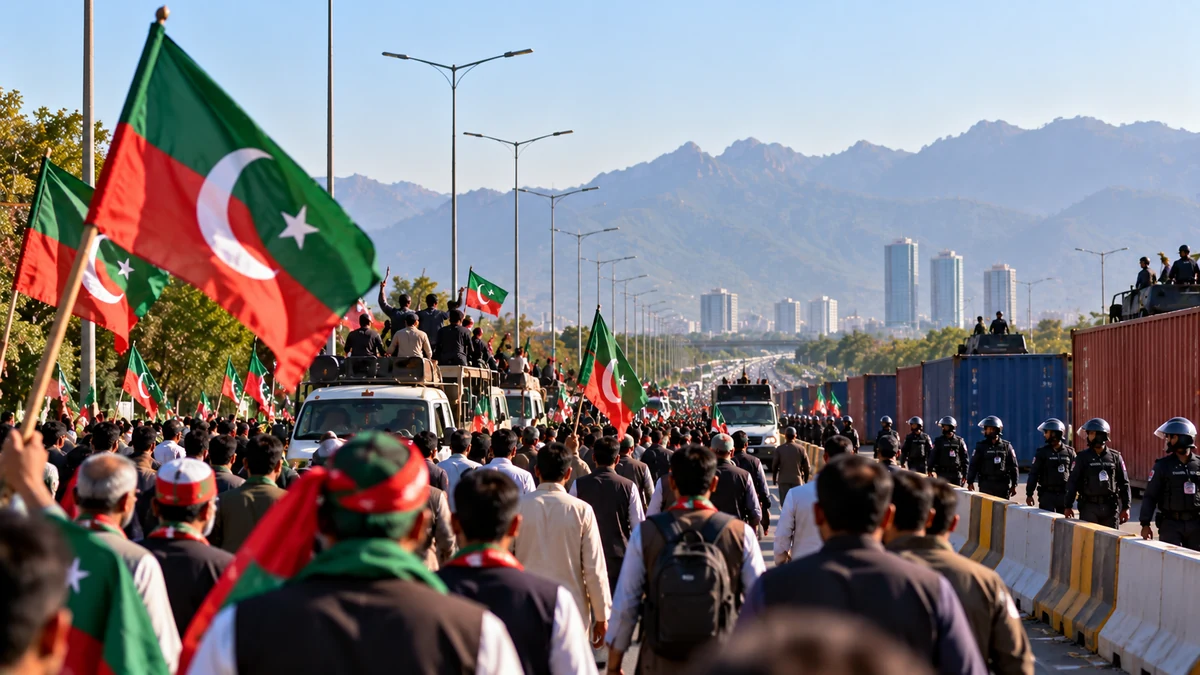
A Pakistan Tehreek-e-Insaf-led march moved toward Islamabad after two rounds of talks between the opposition party and the government ended without an agreement.
The procession was led by Khyber Pakhtunkhwa Chief Minister Sohail Afridi. Associated Press reported that more than 5,000 supporters began moving toward the capital.
The figure is a reported estimate and may not represent the number of participants at every stage of the march.
The march followed negotiations aimed at resolving the standoff before the planned mobilisation. The talks did not produce a breakthrough, and government and PTI representatives subsequently blamed each other for the failure to reach an agreement. In an October 4 statement reported by Radio Pakistan, Interior Minister Mohsin Naqvi accused the KP chief minister of disrupting negotiations. This is the government’s account, not an independently established explanation for the breakdown.
Because the explanations are politically disputed, neither side’s account establishes on its own why the negotiations failed.
PTI had maintained plans for the Islamabad march while discussions were underway, while the government had sought to prevent a confrontation and pressed for the mobilisation to be called off.
Authorities also made security preparations around routes leading toward the capital, including the use of barriers and containers in some areas.
The latest development marks a clear progression from the opening of government-PTI talks earlier in the week: negotiations have now ended without an agreement and the PTI-led mobilisation has begun.
The situation remains fluid. The march’s route, security arrangements and any further negotiations could change as the day progresses.
Pakistan Report will treat claims from the government, PTI and security authorities as attributed statements where they are disputed, rather than independently resolving competing political accounts.