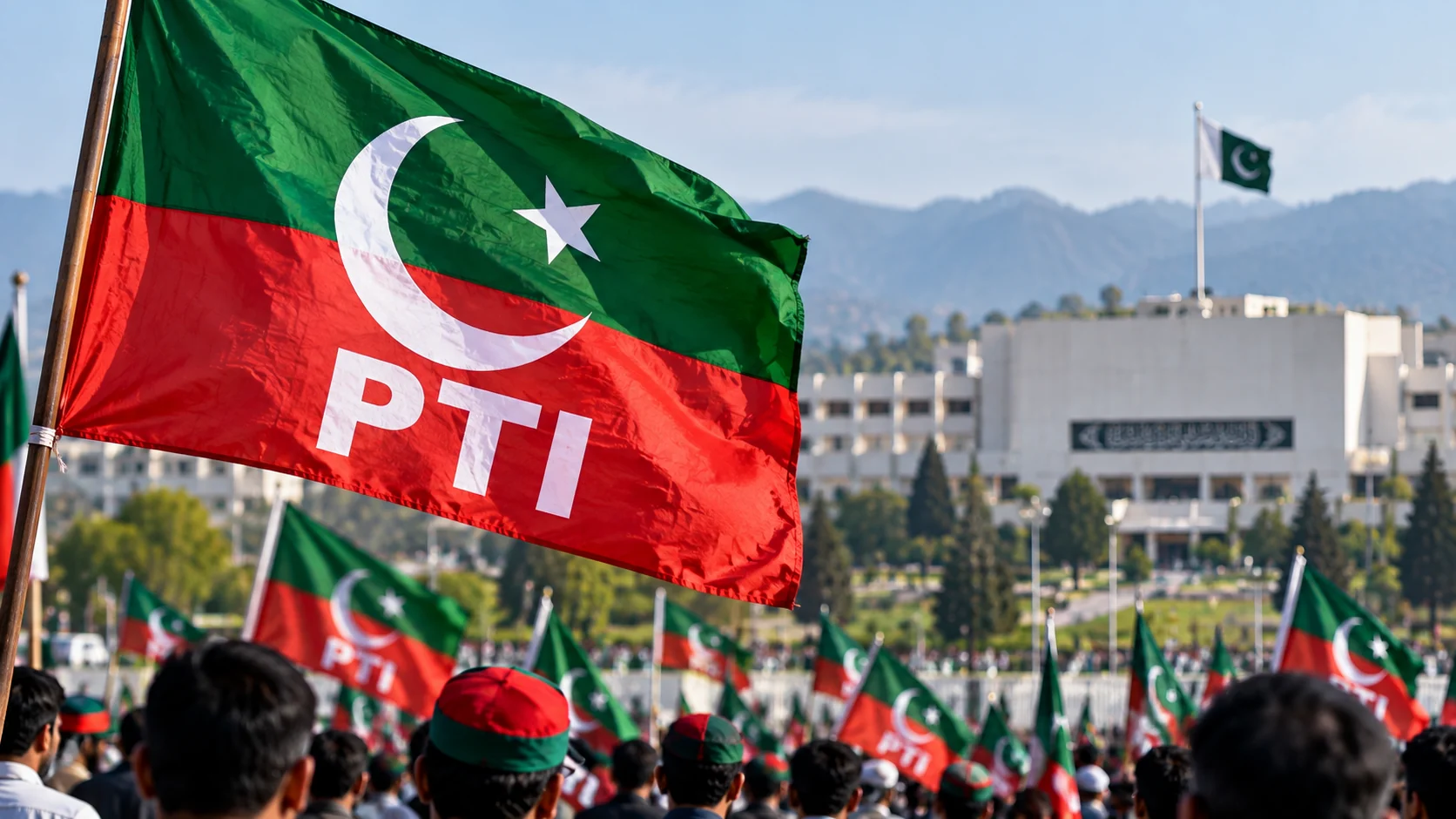
Pakistan Tehreek-e-Insaf (PTI) is facing questions over the failure of its planned protest march, with senior party members reportedly raising concerns about poor coordination and the handling of preparations.
The matter has been discussed within the party’s core committee, where some members questioned whether provincial and central leaders had been given sufficient information about the proposed mobilisation.
According to reports citing party insiders, disagreements emerged over when the march was announced, how it was organised and who was responsible for communicating the arrangements.
The discussions come after a period of heightened tensions between PTI and the federal government, including unsuccessful negotiations and the imposition of emergency measures in Khyber Pakhtunkhwa.
Questions over preparations
Some party members reportedly complained that they had not been informed of a clear protest plan, despite preparations being discussed at senior levels.
The concerns included uncertainty over the movement of party workers, arrangements for participants and the coordination needed to sustain a large political demonstration.
Party insiders also questioned why the march did not proceed as expected after the detention of Khyber Pakhtunkhwa Chief Minister Sohail Afridi.
However, the accounts of the committee’s discussions have largely come from unnamed participants, and the party has not publicly confirmed all the claims.
PTI Secretary General Salman Akram Raja has sought to play down reports of serious disagreements.
In a statement on social media, Raja defended Afridi and rejected suggestions that criticism raised during the meeting reflected a broader rupture in the party’s leadership.
His remarks suggest that PTI is seeking to address concerns about the protest while maintaining a united public position.
Political pressure on PTI
The controversy comes at a difficult moment for PTI, whose founder Imran Khan remains in prison and whose political activities have been shaped by a prolonged confrontation with the federal government.
The party has continued to demand Khan’s release while challenging government decisions affecting its political position and its former administration in Khyber Pakhtunkhwa.
The failed march has raised practical questions about PTI’s ability to organise large protests under the current restrictions.
It has also brought attention to how decisions are made between the party’s central leadership and its provincial organisation.
For now, PTI leaders have not announced a replacement march or a detailed timetable for further mobilisation.
The immediate question is whether the party can resolve concerns about coordination before deciding on its next political course.