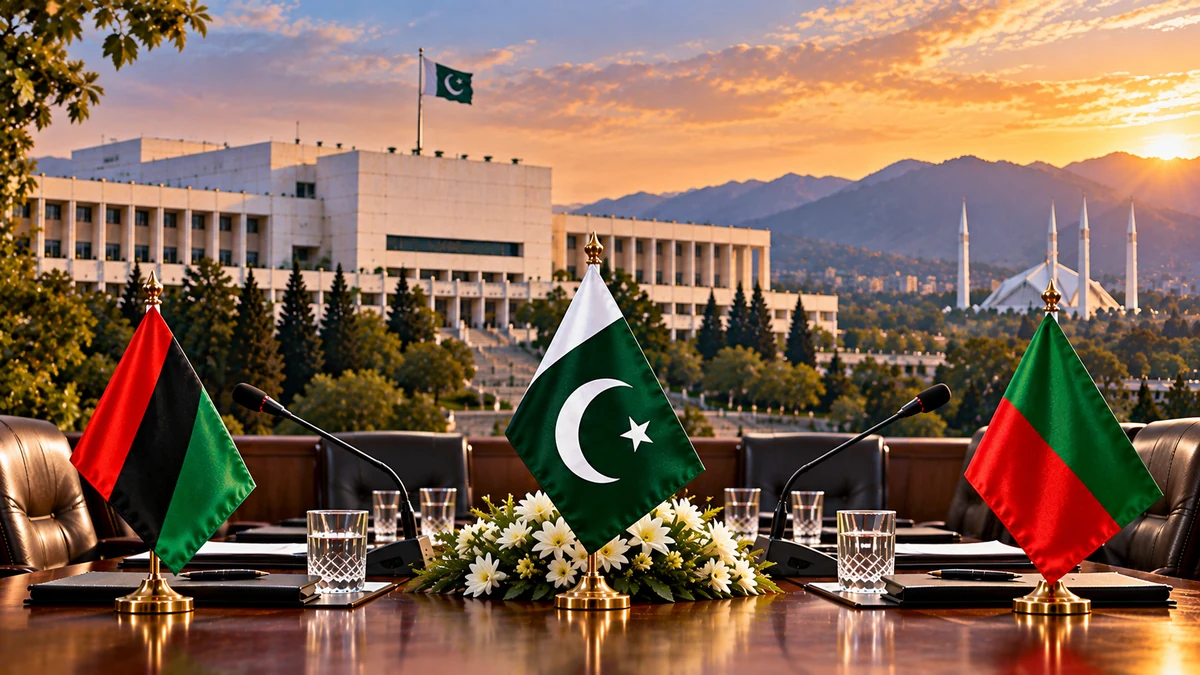
Pakistan Peoples Party Secretary General Muhammad Humayun Khan has called for renewed dialogue between the government and Pakistan Tehreek-e-Insaf, arguing that continued confrontation would deepen political uncertainty.
The appeal comes after government-opposition negotiations ended without an agreement and PTI proceeded with its planned protest mobilisation.
Humayun Khan said political forces should keep the doors of dialogue open and pursue reconciliation rather than confrontation, according to a statement reported on Sunday.
He said Pakistan needed peace, political stability and national consensus, and argued that prolonged protest politics, road blockades and uncertainty would affect ordinary citizens, traders and businesses in Khyber Pakhtunkhwa.
The PPP leader also called for improved coordination and a more effective working relationship between the federal and provincial governments.
He linked that coordination to the security situation, saying stronger cooperation could support joint efforts against terrorism as well as political and administrative stability.
His remarks add a separate political voice to the confrontation between the federal government and PTI, but they do not amount to the announcement of a formal PPP mediation initiative.
There has been no confirmed new negotiating framework or timetable attached to the statement.
That distinction matters because PPP has participated in the wider ruling coalition’s political discussions, while the latest appeal is a public call to keep negotiations open rather than a disclosed agreement between the government and PTI to restart talks.
The government and opposition held two rounds of negotiations before the process ended without a breakthrough. The subsequent dispute has centred on issues including access to PTI founder Imran Khan, counterterrorism policy in Khyber Pakhtunkhwa and responsibility for the failure of the talks.
Both sides have offered competing accounts of the breakdown.
Against that backdrop, Humayun Khan’s statement focuses on the costs of prolonged political confrontation and the need for federal-provincial cooperation.
Khyber Pakhtunkhwa faces both political and security pressures, making the relationship between the provincial administration and the federal government consequential beyond party politics. Counterterrorism, law and order, public services and economic activity all require varying degrees of institutional coordination.
The PPP leader also urged political parties to prioritise issues including employment, education and basic services rather than allowing the political standoff to dominate the agenda.
For now, the statement is best understood as a call for de-escalation and renewed engagement.
Whether it develops into a concrete political initiative will depend on whether PPP leaders, the federal government and PTI agree on a mechanism to resume negotiations.
Until then, the central development is that a senior PPP official is publicly pressing both sides to return to dialogue while political tensions and the PTI protest continue.