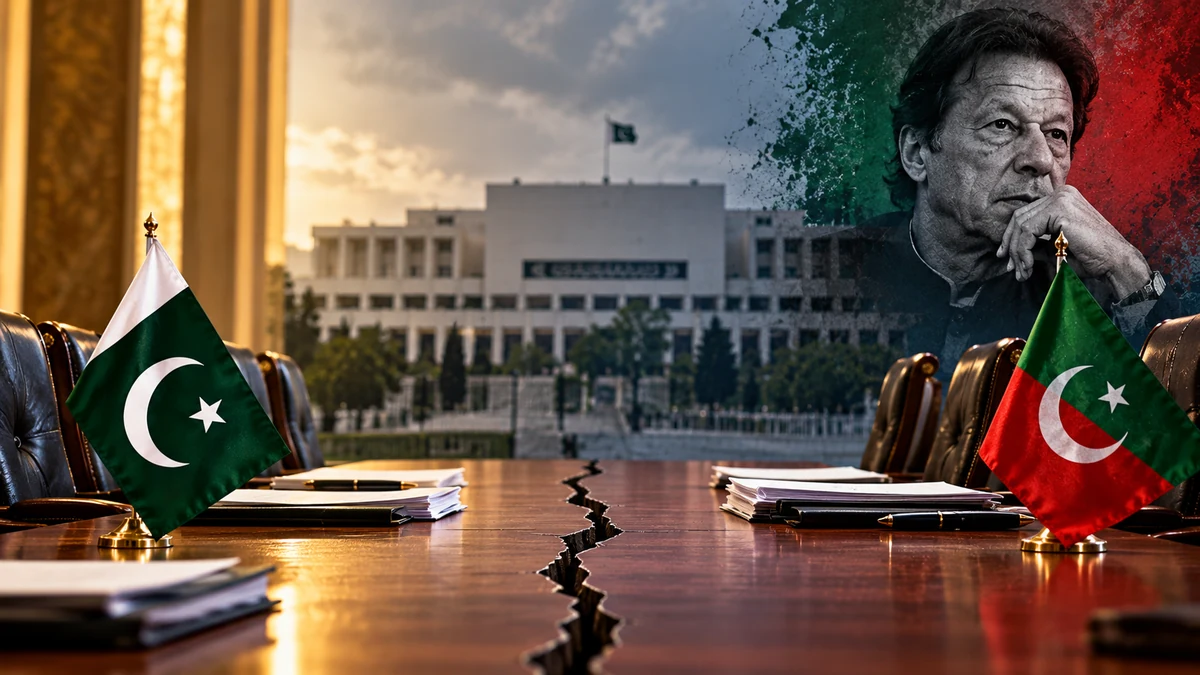
Access to jailed PTI founder Imran Khan and disagreements over counterterrorism policy emerged as two major sticking points after negotiations between the federal government and the opposition ended without an agreement.
The two sides held two rounds of talks on Friday and Saturday, but the discussions concluded without a breakthrough. Both the government and Pakistan Tehreek-e-Insaf subsequently blamed the other side for the collapse.
PTI said the government’s refusal to incorporate arrangements for access to Imran Khan into a proposed agreement was a principal cause of the deadlock.
The party also objected to what it described as a unilateral approach to counterterrorism in Khyber Pakhtunkhwa. PTI called for authorised federal and provincial representatives to develop a mutually agreed security strategy and for political parties, elected representatives, tribal elders and other stakeholders to be consulted.
PTI further linked access to Khan with the negotiations, arguing that KP Chief Minister Sohail Afridi should have been able to consult the party founder directly on security and counterterrorism policy.
The federal government presented a different account.
Interior Minister Mohsin Naqvi accused Afridi of undermining the negotiations and said the opposition team had otherwise been reasonable. He also claimed that understandings had been reached on political matters and that the dispute centred on security commitments.
Naqvi separately said the KP government had initially agreed to a written counterterrorism framework and an implementation plan before backing away during the final phase of the talks.
Those assertions are disputed by PTI and should not be treated as independently established explanations for why the negotiations failed.
The breakdown is significant because the talks had offered a possible political route out of the confrontation surrounding PTI’s planned mobilisation toward Islamabad. With no agreement reached, the party proceeded with its protest march.
The latest accounts provide more detail than the initial announcement that negotiations had failed. They show that the disagreement was not limited to the protest itself, but extended to the treatment and access of Imran Khan and to the division of authority over counterterrorism policy in Khyber Pakhtunkhwa.
Security policy in KP has become a particularly sensitive issue amid militant violence in the province and disagreements over how federal and provincial authorities should respond.
At the same time, access to Imran Khan remains a central political demand for PTI and has repeatedly featured in the party’s negotiations with the government.
The competing versions leave responsibility for the collapse contested. What is established is that the talks ended without an agreement, access to Khan and counterterrorism policy were major points of disagreement, and the political confrontation continued afterward.
Any renewed negotiations would have to address those unresolved issues if the two sides are to move beyond the current deadlock.