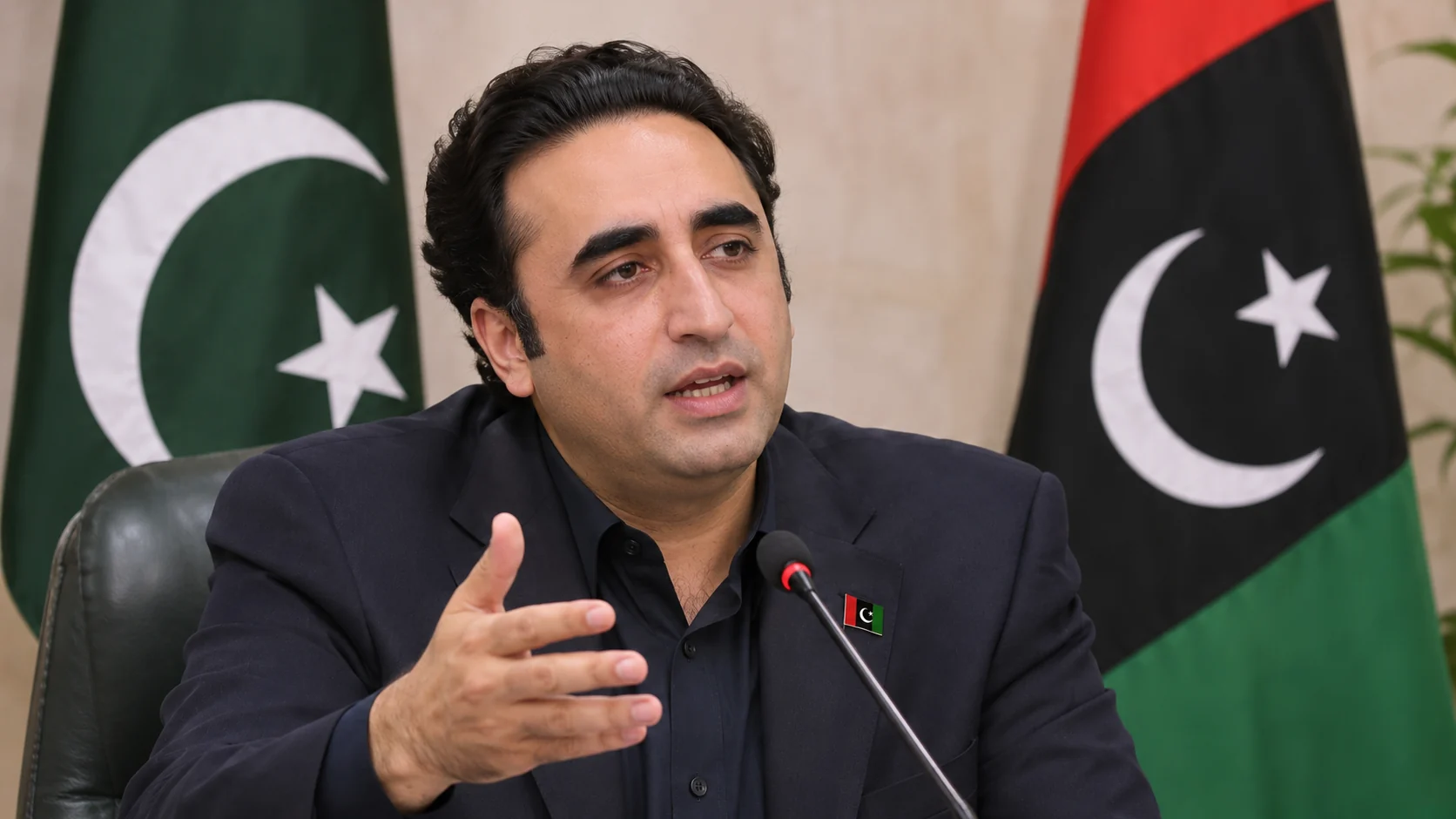
Pakistan Peoples Party (PPP) Chairman Bilawal Bhutto-Zardari has said governor’s rule and emergency measures in Khyber Pakhtunkhwa could be withdrawn if the opposition agrees to cooperate with the federal government on a common strategy against terrorism.
Speaking to reporters in Karachi on Sunday, Bilawal indicated that a political understanding on security policy could provide a way to end the extraordinary arrangements introduced in the province.
His remarks come amid continuing tensions between the federal government and Pakistan Tehreek-e-Insaf (PTI), which previously governed Khyber Pakhtunkhwa.
The federal government imposed governor’s rule and emergency measures in the province earlier this month, citing concerns over security cooperation and the provincial administration’s approach to counterterrorism.
PTI and opposition figures have challenged the government’s handling of the crisis.
A proposal for political agreement
Bilawal said the emergency measures could come to an end if the opposition was prepared to work with the government on an agreed plan to address terrorism.
His comments placed cooperation on security matters at the centre of a possible political settlement.
The PPP chairman was speaking during a visit to the Karsaz memorial in Karachi, where he paid tribute to those killed in the 2007 bombing of a procession welcoming former prime minister Benazir Bhutto.
Bilawal also called for opposition participation in discussions on electoral reforms, suggesting that dialogue should extend beyond the immediate dispute in Khyber Pakhtunkhwa.
The remarks signal the PPP’s support for negotiations, although no agreement between the federal government and PTI has been announced.
Dispute over provincial authority
The emergency in Khyber Pakhtunkhwa has intensified a wider debate over provincial autonomy, security responsibilities and the limits of federal intervention.
The federal government’s position is that coordinated action is necessary to confront militant violence and that disagreements over counterterrorism policy have affected the province’s response.
PTI, meanwhile, has opposed the measures and questioned their political and constitutional justification.
These competing positions have complicated efforts to restore normal political arrangements in the province.
Bilawal’s proposal offers one possible basis for renewed talks, but its success would depend on agreement over both security policy and the future of provincial administration.
For now, the emergency remains in place, and neither side has announced a timetable for its withdrawal.