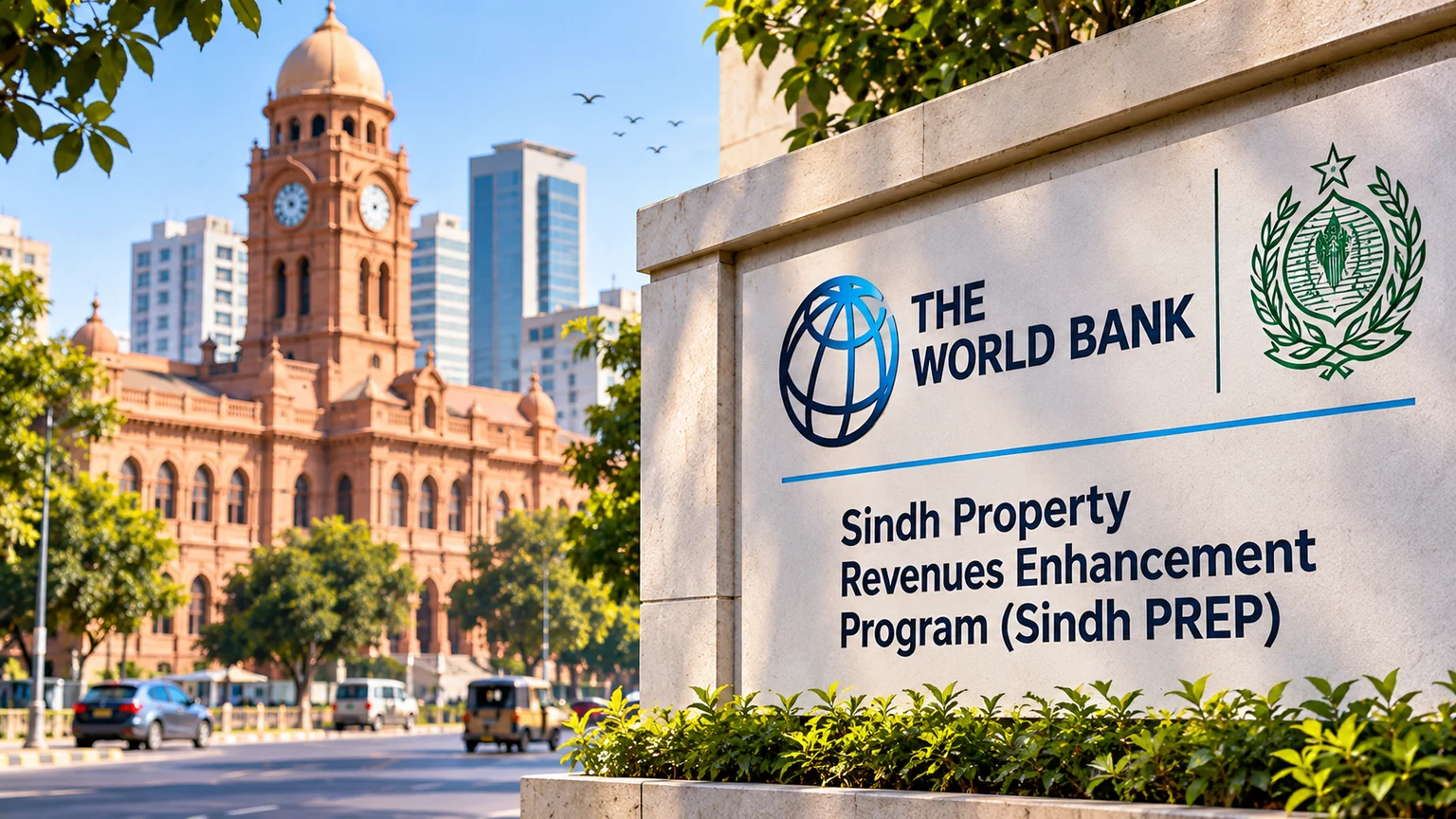
KARACHI, November 2, 2026 — The World Bank has approved $150 million in financing to improve property tax collection and municipal services in Sindh, with a target of increasing Karachi’s annual property tax revenue tenfold.
The financing, approved on October 30, will support the Sindh Property Revenues Enhancement Program, known as Sindh PREP.
According to the World Bank, Karachi currently collects approximately $8.5 million annually in property tax despite having one of the world’s largest urban populations.
The programme aims to increase annual collections to $85 million by improving tax administration, expanding compliance and introducing digital systems.
It also seeks to raise property tax compliance from approximately 20% to 50%.
The reforms will include a new property tax management information system covering billing, payment processing and complaints.
The programme also provides for improvements in financial management across participating local councils.
Around 70% of the property tax revenue collected is intended to be reinvested directly in municipal infrastructure and services.
The World Bank said the programme would support Karachi’s 25 local councils, benefiting approximately 3.58 million residents through improvements in local service delivery.
Funding for participating councils will be linked to performance assessments conducted by an independent verification agent.
This approach is intended to connect financial support with measurable improvements in municipal administration and services.
The programme also includes a $40 million investment financing component to extend property surveys and tax administration reforms to 20 local councils in other urban areas of Sindh.
The World Bank estimates that approximately 4.5 million people could benefit indirectly from this wider component.
Sindh’s local councils currently depend on provincial government transfers for more than 95% of their revenues, according to the lender.
Strengthening locally generated revenue could help municipal authorities plan infrastructure spending more consistently and reduce their dependence on provincial allocations.
The results will depend on implementation, taxpayer compliance and whether additional revenue translates into improvements in public services.