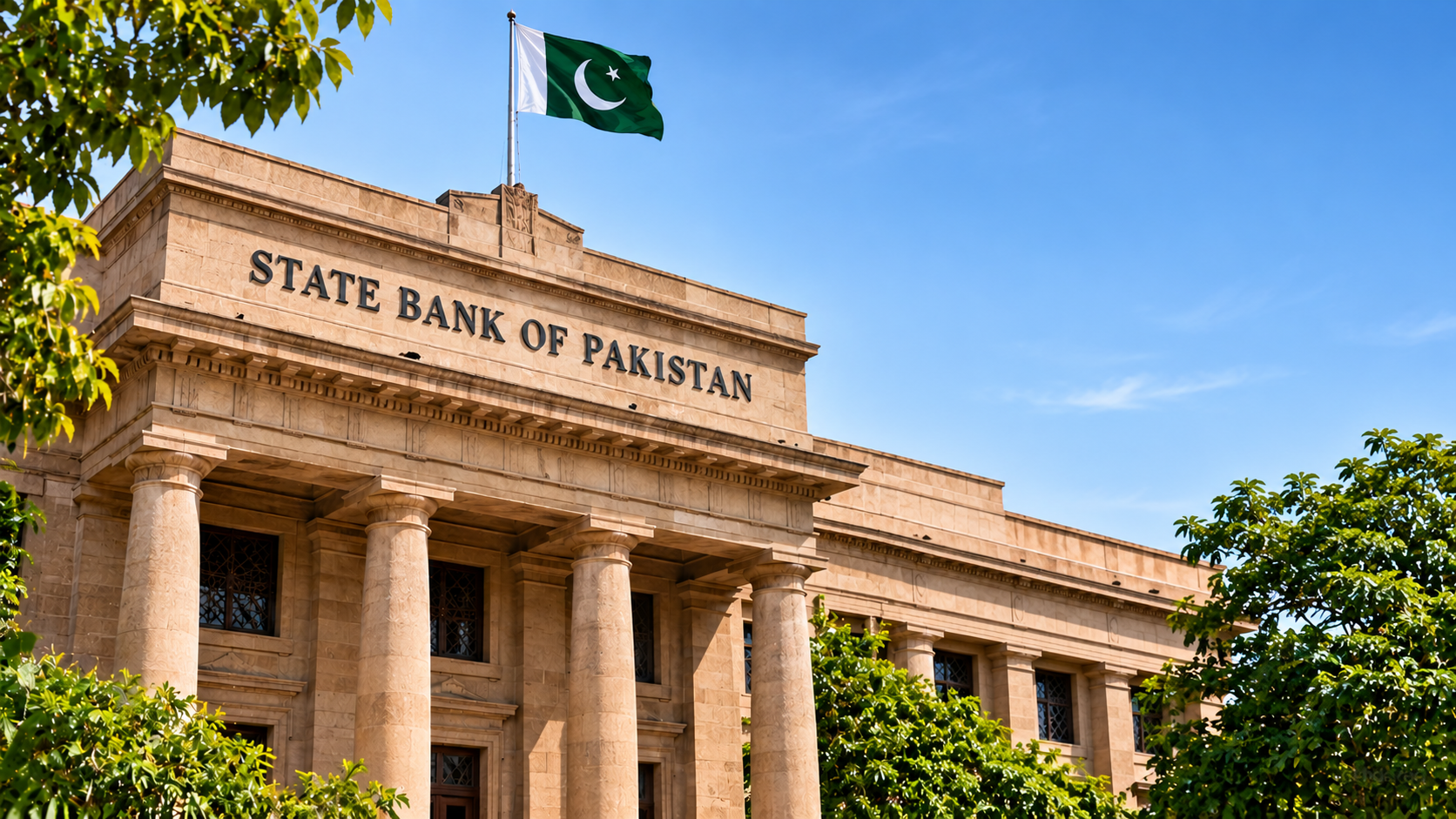
KARACHI, 16 November 2026 — The State Bank of Pakistan (SBP) expects inflation to gradually move towards its medium-term target range of 5–7% during FY2027, while forecasting economic growth of 3.5–4.5% despite continued pressure from international energy prices and external economic uncertainty.
In its annual report released on Monday, the central bank projected that Pakistan’s current account deficit would remain between zero and 1% of gross domestic product (GDP), while the fiscal deficit is expected to range between 3% and 4% of GDP.
Inflation and economic growth
The inflation outlook follows renewed price pressures during recent months. Consumer price inflation stood at 10.3% in September, compared with 11.1% in August, remaining above the SBP’s target range.
The central bank expects inflation to moderate gradually, although higher international oil prices, supply disruptions and geopolitical tensions could affect the pace of improvement.
Pakistan’s economy is projected to expand by 3.5–4.5% in FY2027, following estimated growth of 3.65% in FY2026.
Agricultural production, services and recovering economic activity are expected to support growth, while rising import costs and uncertain global conditions remain important risks.
External account and government finances
The SBP expects the current account deficit to remain contained at up to 1% of GDP, supported by workers’ remittances and export earnings.
However, the external account has faced pressure from higher imports. The country recorded a current account deficit of $874 million during the first quarter of FY2027, according to figures cited in the central bank’s October monetary-policy statement.
The projected fiscal deficit of 3–4% of GDP will depend on government revenue collection, expenditure management and debt-servicing costs.
Interest rates and economic outlook
The SBP raised its benchmark policy rate by 50 basis points to 12% on October 26 amid concerns about inflation and international energy prices.
The central bank has emphasised the importance of maintaining price stability while supporting sustainable economic growth.
Its latest projections indicate continued economic expansion, although the inflation outlook and external balances remain vulnerable to global commodity prices, supply disruptions and domestic economic conditions.