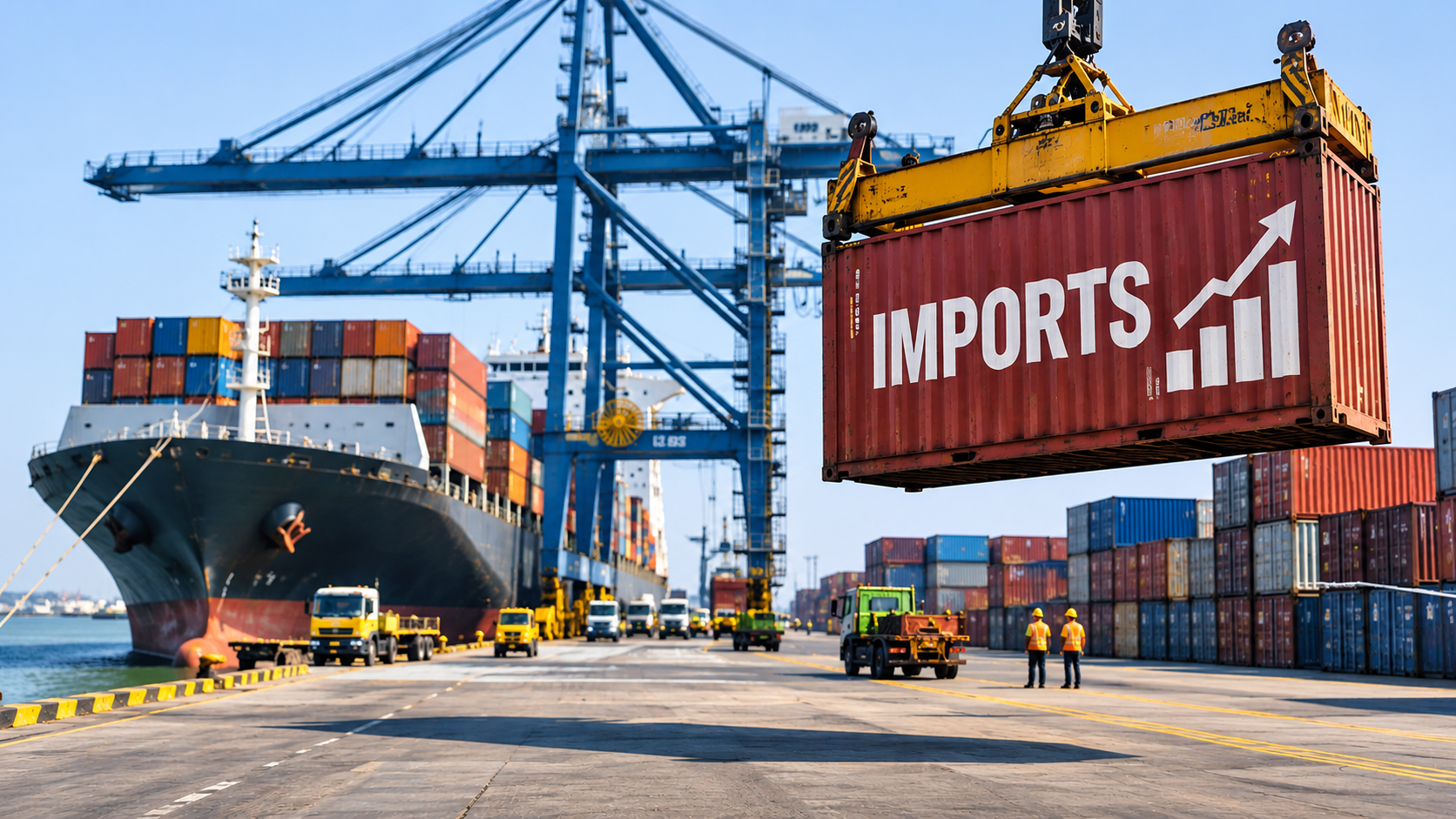
ISLAMABAD, 17 November 2026 — Pakistan’s goods import bill rose 8.6% year-on-year to $5.87 billion in October 2026, driven by higher spending on petroleum, vehicles and industrial materials, according to trade figures released by the State Bank of Pakistan (SBP).
Despite the annual increase, imports declined 4.74% from September’s $6.16 billion, indicating some easing in monthly import payments.
Petroleum remained Pakistan’s largest import category, with spending reaching approximately $1.60 billion, an increase of 19.27% compared with October last year. Fuel purchases accounted for more than 27% of the country’s total goods imports.
Industrial and vehicle imports increase
Import spending also increased across several industrial sectors.
Machinery imports reached $770.58 million, up 4.81% year-on-year, while chemicals and allied products rose 18.53% to $750.13 million.
Imports of base metals and related products increased 16.63% to nearly $650 million, reflecting higher spending on materials such as iron and steel.
Vehicle and transport equipment imports recorded one of the sharpest increases, rising 35.68% to approximately $368 million.
Fertiliser imports more than doubled to $185.51 million, while pharmaceutical imports declined 13.66% to $41.66 million.
Imports rise during first four months
During July–October of the current financial year, Pakistan’s goods imports totalled $23.64 billion, compared with $20.96 billion during the same period last year.
Petroleum imports reached $5.91 billion over the four months, accounting for roughly one-quarter of the total import bill.
The increase in import spending contributed to a wider goods trade deficit compared with the corresponding period last year.
However, Pakistan recorded a current account surplus of $39 million in October, supported by stronger workers’ remittances and a narrower monthly goods trade deficit.
The figures highlight Pakistan’s continued reliance on imported energy and industrial supplies, even as higher remittance inflows help support the country’s external financial position.