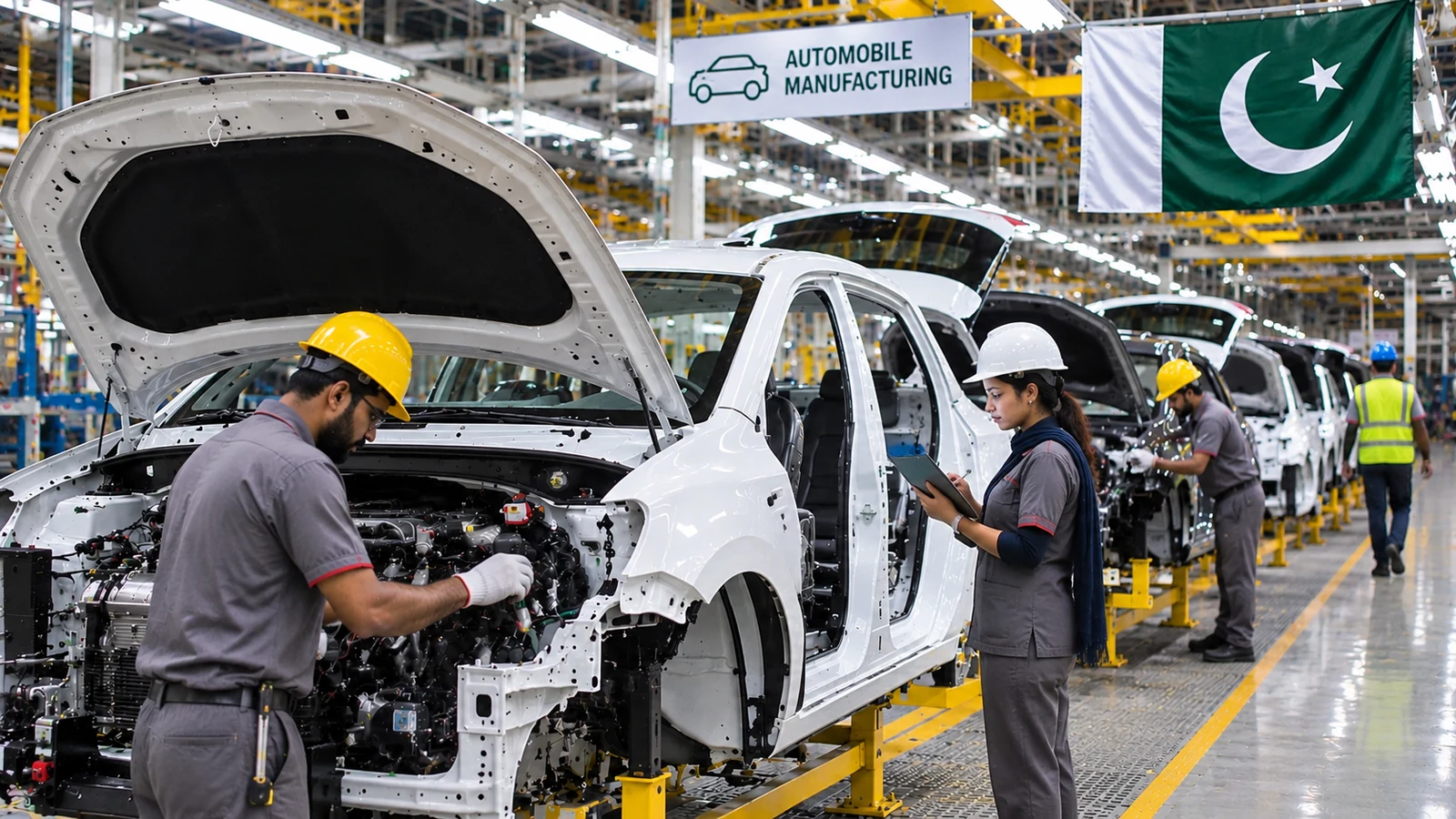
ISLAMABAD, 20 November 2026 — Pakistan plans to introduce financial incentives for automobile and auto parts manufacturers as part of a new automotive policy targeting approximately $6 billion in cumulative exports between 2026 and 2031.
The proposed Autos and Auto Parts Manufacturing Policy 2026–31 aims to shift the industry towards export-oriented production, greater use of locally manufactured components and stronger participation in international supply chains.
Under the proposed Drawback of Local Taxes and Levies (DLTL) scheme, eligible exporters would receive support equivalent to 5% of the net free-on-board value of qualifying exports.
Additional Incentives for Export Growth
Manufacturers could receive an additional 10% incentive on qualifying incremental exports, provided their export value increases by at least 5% compared with the previous year.
The scheme would cover locally manufactured automobiles and auto parts, subject to registration with the Engineering Development Board and minimum domestic value-addition requirements.
Payments would be linked to verified export proceeds and third-party audits, with the State Bank of Pakistan involved in disbursement.
The proposed policy allocates approximately $3.29 billion of the export target to auto parts manufacturers and $2.72 billion to vehicle manufacturers.
Policy Seeks Greater Local Manufacturing
Adviser to the Prime Minister on Industries and Production Haroon Akhtar Khan said the policy was intended to reduce reliance on imported components and strengthen domestic manufacturing.
The government also plans to support around 2,200 local auto parts manufacturers through industrial development measures, including a Rs. 2.1 billion vendor upgradation programme.
Pakistan’s auto parts exports reached approximately $190 million in FY2025–26, with major destinations including the United States, European Union, Afghanistan and United Arab Emirates.
The broader policy also proposes stronger localisation requirements and links certain import concessions to manufacturing and export commitments.
Prime Minister Shehbaz Sharif approved the draft policy earlier this month, with further government approval and legislative measures required for parts of the framework.